Silicon Lens Manufacturer IL Science
CEO Song Seong-geun, Self-Made Entrepreneur
Challenging the 49 Trillion Won Global Vehicle Lamp Market
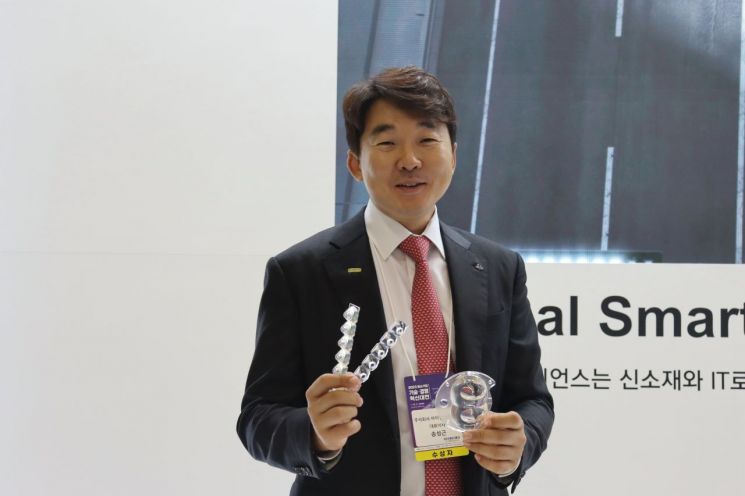
"We want to revolutionize the industrial ecosystem by replacing existing lenses in the global optical market worth 24 trillion KRW, which consists of three materials?PC (polycarbonate), PMMA (polymethyl methacrylate), and glass?with our silicon lenses."
Song Seong-geun, CEO of IL Science, said this during the 'Inno-Biz PR Day' held at the '2023 Small and Medium Enterprise Technology and Management Innovation Expo' on the 18th at BEXCO, Busan, which highlighted outstanding Inno-Biz companies. IL Science is a small and medium-sized enterprise that developed the world’s first silicon lens for LEDs in 2015. The company received the Presidential Award in the 'Technology Innovation' category at this Innovation Expo. CEO Song expressed confidence, saying, "Silicon lenses have higher light transmittance and heat resistance than traditional materials like glass or plastic, are lighter, and do not yellow over time. They will bring innovation to next-generation mobility markets such as electric vehicles and drones."
Born in 1985, CEO Song is a self-made entrepreneur. His parents divorced when he was in elementary school, and due to difficult family circumstances, he worked various delivery part-time jobs throughout his school years. As a high school student, he lived for three years in a container at a traditional market. In 2008, while a university student at his alma mater Gachon University, he founded the solar lighting company Solar Science (now IL Science) with 5 million KRW borrowed from an acquaintance at the university’s startup incubation center. In the early days, he focused on wholesale and retail by visiting lighting stores before moving into manufacturing. The journey was not smooth. At age 26, he went bankrupt under a debt of 1.8 billion KRW. CEO Song recalled, "I covered 400 million KRW with delivery payments and paid off 1.4 billion KRW over a year with sheer determination. It was during this time that I decided to develop a new technology that no one else had." After successfully restarting his business, CEO Song’s silicon lens technology was recognized, and the company was listed on the KOSDAQ market in 2019. Last year, the company recorded sales of 49.1 billion KRW.
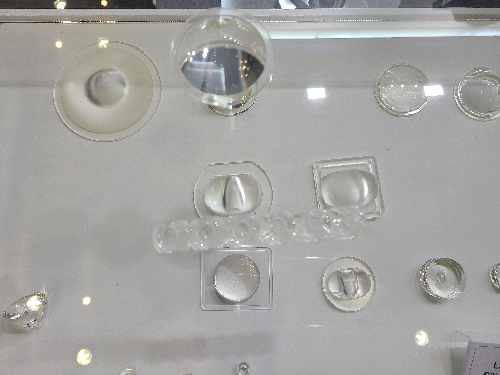
Unlike conventional lenses, silicon lenses do not require mold production. The manufacturing period is short?within two weeks?and mass production of various types is possible. Recently, as design emphasis has increased in mobility sectors such as electric vehicles with curved lamps, the advantage of customized production for customers has become apparent. CEO Song explained, "Traditional optical lenses take about six weeks for mold design and production, but we can complete it in two weeks using the dispensing method. Manufacturing costs are reduced by 51%, and production volume is tripled."
In 2019, IL Science was selected for a Korea-Israel joint national research project and changed the curing method of liquid silicon raw materials from conventional thermal curing to UV (ultraviolet) curing. This doubled production capacity. IL Science supplies silicon lenses to various fields including medical, display, defense, IT, and healthcare. CEO Song said, "Although silicon lenses may look easy to make on the surface, without long-accumulated know-how such as the mixing ratio of curing agents, bubble removal technology, and strict thermal conditions, it is impossible to produce the highest quality. We have found the optimal production point through extensive R&D."
Since last year, IL Science has been mass-producing silicon lenses for automotive lamps, aiming to challenge the global vehicle lamp market worth 49 trillion KRW. The company is currently a partner of Hyundai Mobis and is collaborating with other domestic automotive electronics companies to apply silicon lenses. Hyundai Mobis is investing 1.3 billion USD (about 1.8 trillion KRW) to build a parts factory for electric vehicles in Georgia, USA, and CEO Song is coordinating the timing of the company’s entry into the US market in relation to this. He said, "Following my participation in President Yoon Seok-yeol’s economic delegation to the US last April, we are exploring business opportunities in the US and Mexico," adding, "There will be good news next year."
© The Asia Business Daily(www.asiae.co.kr). All rights reserved.


















