Cultural Heritage Administration "Promoting Registration in Cooperation with Local Governments and Related Organizations"
On the 20th, the Cultural Heritage Administration announced that 'Korean Tidal Flats Phase 2' and 'Heritage of Busan, the Refuge Capital during the Korean War,' which were submitted to the UNESCO World Heritage Tentative List last May, have been registered with the World Heritage Centre. With this, the number of Korean heritage sites on the World Heritage Tentative List has reached fourteen.

The World Heritage Tentative List is a preliminary list that grants eligibility for World Heritage registration. A site must be listed at least one year before submitting a nomination dossier to be considered for inscription. The newly registered 'Korean Tidal Flats Phase 2' serves as an intermediate stopover on the East Asian-Australasian Flyway for migratory birds and is internationally recognized for its contribution to bird habitats. When 'Korean Tidal Flats Phase 1' was inscribed as a World Heritage site in 2021, the Cultural Heritage Administration received recommendations to expand the components of the serial property, leading to the pursuit of Phase 2 expansion. It currently consists of tidal flats in Muan, Goheung, and Yeosu in Jeollanam-do, with plans to further extend its scope.
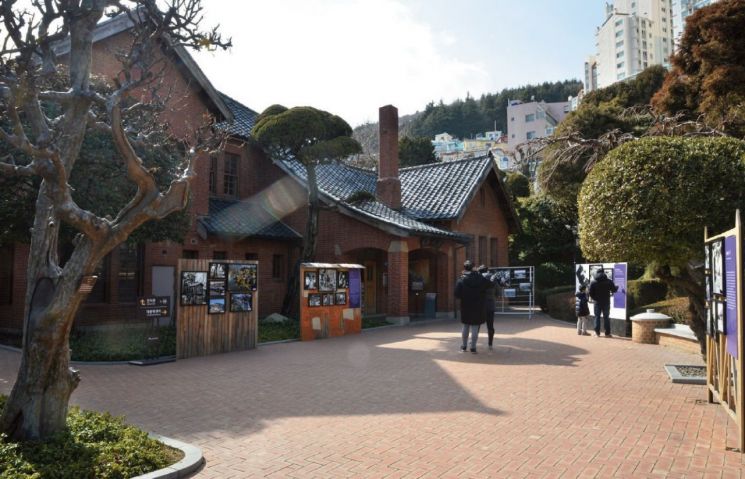
'Heritage of Busan, the Refuge Capital during the Korean War' comprises nine heritage sites within Busan Metropolitan City. These include Gyeongmudae (the Presidential Residence of the Temporary Capital), the Temporary Central Government Building (Busan Temporary Capital Government Office), Amidong Monument Refugee Housing, the National Central Meteorological Observatory (former Busan Signal Station), the U.S. Embassy and U.S. Information Service (Busan Modern History Museum), Busan Port Pier 1, Hayari Base (Busan Citizens Park), the United Nations Cemetery, and the Somak Refugee Housing in Uam-dong. Each site vividly reflects Busan’s role as the refuge capital during the Korean War, functioning as such for 1,023 days under urgent and critical circumstances. The heritage also explains the government’s maintenance, refugee life, and international cooperation during the refuge capital period.
The Cultural Heritage Administration stated, "We will achieve World Heritage inscription through proactive administration and close cooperation with relevant local governments and agencies."
© The Asia Business Daily(www.asiae.co.kr). All rights reserved.
![Clutching a Stolen Dior Bag, Saying "I Hate Being Poor but Real"... The Grotesque Con of a "Human Knockoff" [Slate]](https://cwcontent.asiae.co.kr/asiaresize/183/2026021902243444107_1771435474.jpg)

















