Professor Kim Yoon, Department of Medical Management, Seoul National University College of Medicine CBS Interview
"Doctor Shortage... Medical School Quota Must Be Increased to 2,500"
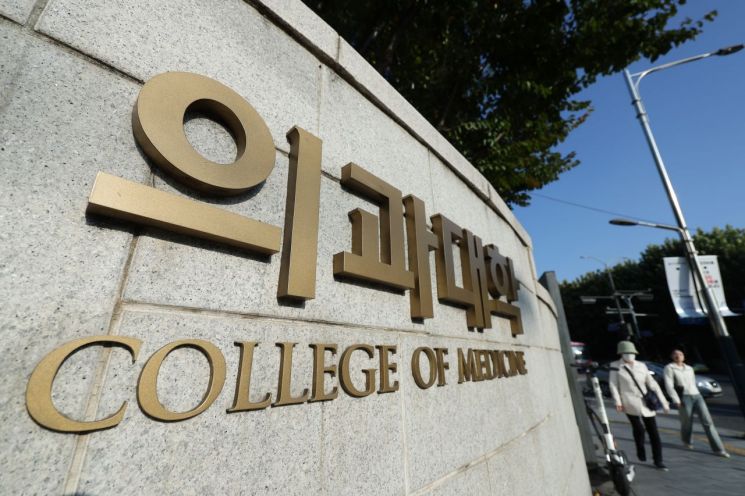
Professor Kim Yoon, from the Department of Medical Management at Seoul National University College of Medicine, expressed support for the government's plan to increase the number of medical school admissions, stating, "It is a clear fact that there is a shortage of doctors in our country."
In an interview on June 17th with CBS Radio's 'Kim Hyun-jung's News Show,' Professor Kim said, "What matters is what the public feels in their daily lives," pointing out, "Emergency patients have nowhere to be admitted and keep being sent around, and the cause is the lack of doctors. There is a pediatric care crisis, and in rural areas, even offering an annual salary of 400 million won cannot secure doctors, leading to emergency rooms operating on a rotating schedule. The shortage of doctors is evident throughout society."
Regarding the claim that there is no need to increase the number of doctors because the population is declining, Professor Kim countered, "The effect of an increasing elderly population and rising income levels, which increase medical demand, is five times greater than the effect of population decline."
He added, "For the same reason, most advanced OECD countries significantly expanded their medical schools and hospitals in the early to mid-2000s," and noted, "Currently, the number of medical school admissions per capita in our country is only about 55% of the OECD average." He continued, "To prevent the gap in the number of doctors between OECD countries and our country from widening further, the number of medical school admissions should be increased to 2,500. To reach the OECD average, it would need to be increased by 3,500 to 4,500."
Regarding the shortage of pediatric medical staff, Professor Kim diagnosed, "The problem lies in the lack of doctors in large general hospitals and university hospitals in essential and less-preferred specialties," explaining, "The reason is that the number of patients is too high, the workload is heavy, and the compensation is relatively low compared to the hard work."
As a solution, he said, "First, hospitals should hire more doctors, and second, the fees for essential medical fields should be increased so that doctors working in those areas receive higher compensation."
He emphasized, "In 2009, the government doubled the fees for thoracic surgery, but only a very small portion of that money went to the doctors, with most going to the hospitals. Moreover, the government did not take measures to require hospitals to hire additional thoracic surgeons, so despite the 100% fee increase, the situation in thoracic surgery has not changed much over the past decade. Policies on increasing numbers and distribution must be implemented together," he stressed.
© The Asia Business Daily(www.asiae.co.kr). All rights reserved.
![Clutching a Stolen Dior Bag, Saying "I Hate Being Poor but Real"... The Grotesque Con of a "Human Knockoff" [Slate]](https://cwcontent.asiae.co.kr/asiaresize/183/2026021902243444107_1771435474.jpg)











