Participation in Hotel Market by Nittetsukoa and NTT Urban Development
Office Rental Income Slumps... Targeting Increasing Tourists
Japanese real estate companies have started rushing into hotel investments. As demand for new hotels and offices has sharply declined due to population decrease, this strategy takes into account the increasing number of tourists visiting Japan after COVID-19.
On the 16th, Nihon Keizai Shimbun (Nikkei) reported that several real estate companies, including Nittetsu Kowa Real Estate and NTT Urban Development, will officially start their hotel businesses from next year.
According to Nikkei, Nittetsu Kowa Real Estate will open its first hotel, "And Here," in Ueno, Tokyo, in March next year. The hotel will have 145 rooms, with accommodation fees ranging from 30,000 to 50,000 yen (270,000 to 450,000 KRW) per night, and suites priced between 100,000 and 120,000 yen (900,000 to 1,080,000 KRW). Reservations have already been accepted before opening, with 80% reportedly from tourists visiting Japan.
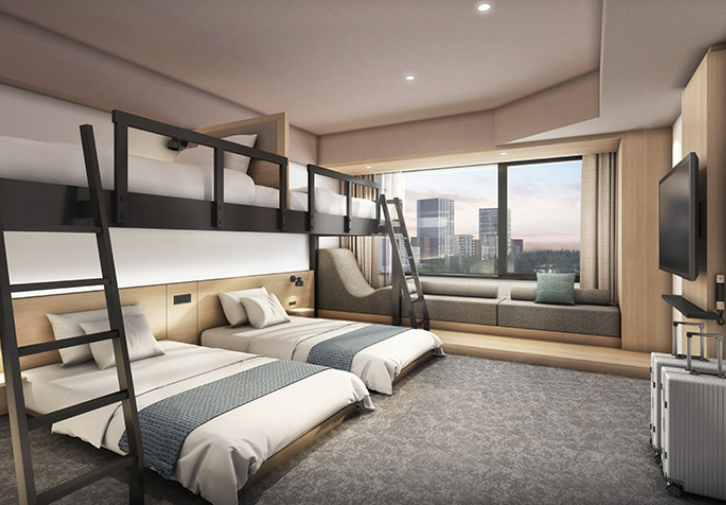 'Nittetsukowa Real Estate' to launch 'And Here' in March next year. (Photo source: Nittetsukowa Real Estate website)
Following the Ueno hotel, Nittetsu Kowa Real Estate plans to open additional hotels in Shinjuku and Osaka Namba in 2025. Masahiro Miwa, president of Nittetsu Kowa Real Estate, stated, "We assume that 70% of our guests will be tourists visiting Japan," adding, "We plan to operate with a small number of staff by introducing unmanned check-in machines and outsourcing cleaning services."
Another Japanese real estate company, NTT Urban Development, plans to open hotels with a total of 526 rooms in Kyoto, Osaka, and Hokkaido between 2024 and 2026. The number of new rooms will be 50% higher than the pre-COVID-19 period from 2017 to 2019.
At the same time, NTT Urban Development is focusing on attracting overseas hotel chains such as the Capella luxury hotel in Singapore and Hyatt-affiliated hotels in the United States. They plan to build hotels as close as possible to places where visitors can experience traditional Japanese culture, such as near Osaka Castle, to meet tourist demand.
In addition, Mitsui Real Estate and Hulic are focusing on hotel and ryokan businesses targeting tourists.
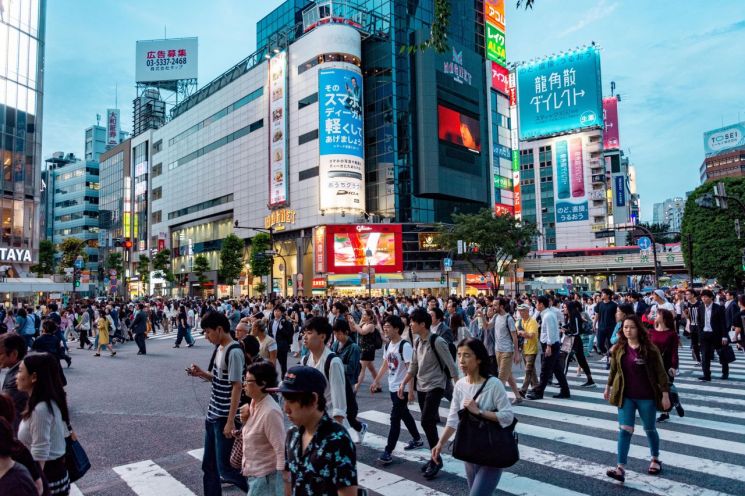
According to global real estate services company JLL, hotel investment in Japan reached 203.4 billion yen from January to June this year, a 1.7-fold increase compared to the same period last year. Overseas investment amounts also increased significantly. Yukio Abe, Managing Director of JLL, said, "In addition to the weak yen phase, the low-interest-rate environment is favorable for loans, attracting overseas investment funds."
According to the Japan Tourism Agency's accommodation travel statistics survey, the number of hotel and ryokan guests in August recovered to a level similar to that before the COVID-19 pandemic in 2019, reaching 62.27 million. Among them, foreigners numbered 10.34 million, surpassing pre-COVID-19 levels. With the lifting of group tours from China, there is also a possibility of further increases in tourists.
Nikkei explained the industry's policy shift, stating, "The number of new housing starts has recently decreased in the real estate industry, and office buildings supplied in large quantities face the threat of no demand and inability to receive rental income."
A representative from a major Japanese real estate company also said, "Following tourists, there is potential for the hotel market to grow targeting wealthy domestic customers."
© The Asia Business Daily(www.asiae.co.kr). All rights reserved.
![Clutching a Stolen Dior Bag, Saying "I Hate Being Poor but Real"... The Grotesque Con of a "Human Knockoff" [Slate]](https://cwcontent.asiae.co.kr/asiaresize/183/2026021902243444107_1771435474.jpg)












