Dobong-gu to Conduct Socially Isolated Single-Person Household Survey Until February Next Year...Targeting Middle-Aged Single-Person Households in Vulnerable Areas, Survey Refusers, and Existing Solitary Death Risk Groups Using Crisis Information Big Data for Blind Spot Discovery and Solitary Death Risk Assessment
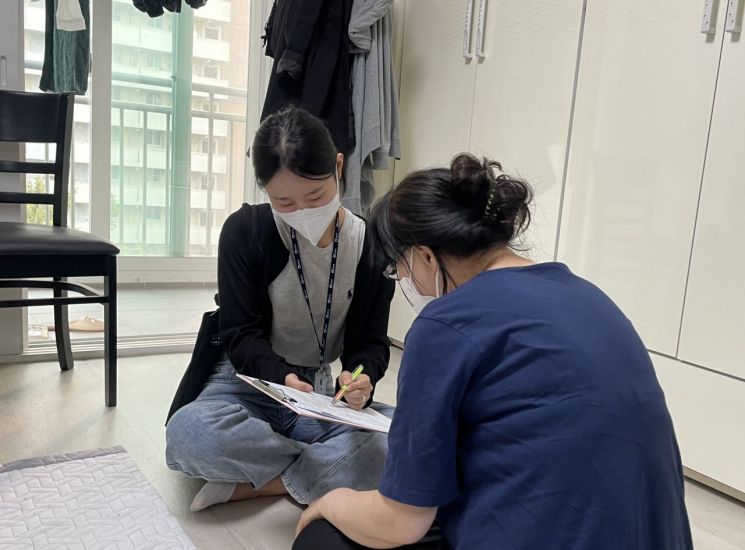
As household compositions change centered around single-person households and socially isolated households increase due to deteriorating social networks, Dobong-gu has stepped forward to early detect socially isolated single-person households and provide customized welfare services.
Dobong-gu (Mayor Oh Eon-seok) announced that it will conduct a survey on socially isolated single-person households from October to February next year.
This survey will enhance accuracy by conducting a blind spot discovery survey using crisis information big data alongside an assessment of the risk group for solitary death. The survey form from 2021 and 2022 has been simplified to achieve a high response rate from the subjects.
The survey targets include ▲middle-aged single-person households living in vulnerable residential areas who are in crisis situations such as public utility bill arrears ▲households that refused the 2022 survey on socially isolated single-person households ▲and solitary death risk groups identified through the 2021 and 2022 surveys. Welfare planners will visit these households directly to check living conditions such as housing status and residential environment and confirm the need for support.
This year, the existing "Single-Person Household Survey Form," which covers living conditions such as social relationships, housing, economy, health, social participation, and health and welfare needs, has been supplemented with ▲emergency contact information for single-person households and ▲whether to add the Kakao Channel Dobong Crisis Household Discovery Platform. This aims to establish a detailed monitoring system for single-person households lacking guardians and social relationships. The district expects this will encourage socially isolated single-person households with reclusive tendencies to request help remotely.
For solitary death risk groups identified through the survey, welfare services such as welfare checks will be linked using local human resource networks like Our Neighborhood Care Group and Bonggu's Hope workers. The Smart Care System (AI welfare check service, smart plugs, etc.) will enable rapid response to crisis situations. Those classified as non-risk for solitary death will receive welfare services corresponding to the risk group upon their request.
Oh Eon-seok, Mayor of Dobong-gu, said, "We expect to carefully review the living environments of those in need through this survey," and added, "We will continue to provide welfare services close to the residents so that not a single citizen is left behind."
© The Asia Business Daily(www.asiae.co.kr). All rights reserved.
![Clutching a Stolen Dior Bag, Saying "I Hate Being Poor but Real"... The Grotesque Con of a "Human Knockoff" [Slate]](https://cwcontent.asiae.co.kr/asiaresize/183/2026021902243444107_1771435474.jpg)
















