Criminal penalties (imprisonment or fines) imposed on debtors who flee to evade court summons will be converted into administrative fines. Additionally, those who fail to fulfill the continuing education obligations of social workers will also be subject to administrative fines instead of criminal fines.
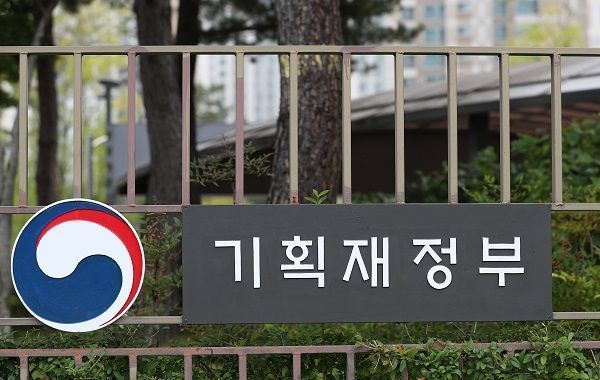
On the 12th, the government announced the "3rd Improvement Task on Economic Criminal Penalties" at the "Economic Criminal Penalty Regulation Task Force (TF) 3rd Meeting" held at the Government Seoul Office. The plan is to ease excessive criminal penalties for minor violations related to economic activities such as document preparation or reporting by converting them into administrative sanctions like fines, thereby addressing side effects such as the proliferation of criminal records.
The inter-ministerial Economic Criminal Penalty Regulation Task Force focused on discovering "life-oriented regulations" that cause inconvenience to citizens such as self-employed and small business owners, who directly filed complaints, through analysis of the 국민신문고 (People's Petition) database in this 3rd task.
Specifically, improvement plans were finalized for 10 ministries, 22 laws, and 46 criminal penalty provisions. By type of improvement, they include △conversion to administrative sanctions (20 cases), △administrative sanctions first, then conversion to criminal penalties (19 cases), △utilization of existing administrative sanction provisions (1 case), and △adjustment of penalty levels (6 cases).
First, those who display outdoor advertisements without notification in urban areas, etc., will see the existing fine of 5 million KRW changed to an administrative fine of 5 million KRW. Cases of failing to input or falsely input waste disposal site information, previously punishable by imprisonment of up to 2 years or fines up to 20 million KRW, will be changed to administrative fines of up to 1 million KRW.
Ten obsolete regulations, including those under the Road Traffic Act and the News Communication Act, will also be revised. Based on an analysis of the Prosecutor General’s database, regulations with no cases filed in the past five years and those enacted or amended over five years ago were selected for improvement. For traffic safety diagnosis institutions that performed traffic safety diagnosis work during a business suspension period after receiving a business suspension order, penalties will be changed from imprisonment of up to 2 years or fines up to 20 million KRW to an administrative fine of 20 million KRW. Also, for persons who are ineligible to be CEOs or editors of news communication businesses but assumed such positions, the existing fine of 10 million KRW will be changed to an administrative fine of 20 million KRW.
However, regulations where achieving legislative purposes would become difficult or where there is a risk of serious infringement on safety or other significant legal interests will be maintained as is. The economic criminal penalty improvement plan prepared by this task force will be promptly submitted to the National Assembly through a comprehensive amendment process led by the Ministry of Government Legislation, and efforts will be made to ensure that the previously submitted 1st and 2nd tasks are also promptly amended through National Assembly review.
Kim Byung-hwan, 1st Vice Minister of the Ministry of Economy and Finance, stated, "We will improve by enhancing consistency in sanction levels among similar laws, reasonably adjusting penalty levels, and curbing excessive criminal penalties by converting them to administrative fines."
© The Asia Business Daily(www.asiae.co.kr). All rights reserved.
![Clutching a Stolen Dior Bag, Saying "I Hate Being Poor but Real"... The Grotesque Con of a "Human Knockoff" [Slate]](https://cwcontent.asiae.co.kr/asiaresize/183/2026021902243444107_1771435474.jpg)











