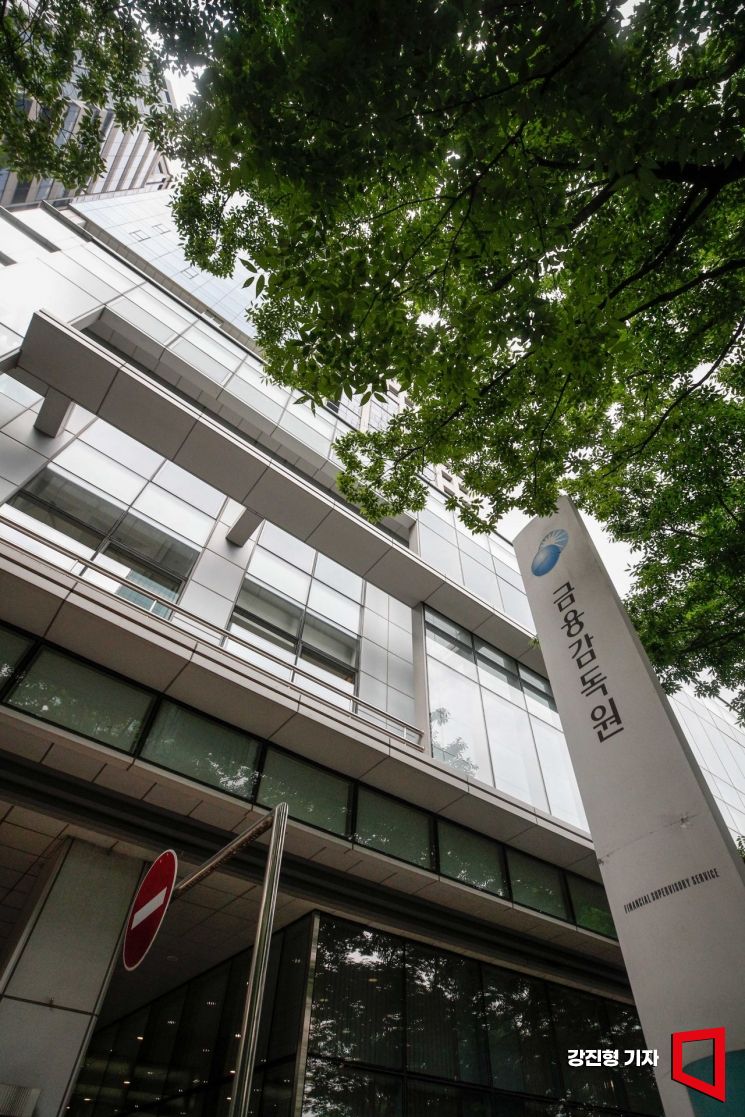
The scale of overseas real estate alternative investments managed by domestic financial companies has been revealed to approach 56 trillion KRW. As concerns about losses arose due to the contraction of the overseas real estate market, the Financial Supervisory Service (FSS) stated that the impact on the financial system is limited.
According to the "Status of Overseas Real Estate Alternative Investments by Financial Companies as of the End of June This Year," released by the FSS on the 10th, the balance of overseas real estate alternative investments in the financial sector was 55.8 trillion KRW, an increase of 2 trillion KRW compared to last year, accounting for about 0.8% of the total financial sector assets (6762.5 trillion KRW).
By sector, insurance leads with 31.7 trillion KRW, followed by banks with 9.8 trillion KRW, securities with 8.3 trillion KRW, mutual finance with 3.7 trillion KRW, credit finance with 2.1 trillion KRW, and savings banks with 100 billion KRW.
By region, North America (35.8 trillion KRW) accounts for the largest share, followed by Europe (11 trillion KRW), Asia (4.2 trillion KRW), and other/multiple regions at about 4.9 trillion KRW.
Overseas alternative investments will mature by 14.1 trillion KRW by next year and 43.8 trillion KRW by 2030.
Among the overseas real estate assets invested in by domestic financial companies, 1.3 trillion KRW is likely to become non-performing. The FSS explained that among the 35.9 trillion KRW invested in single projects (real estate) by financial companies, 1.33 trillion KRW (3.7%) has triggered events of default (EOD).
However, even in cases where EOD has occurred, the FSS explained that business normalization is possible through loan condition adjustments, maturity extensions, and restructuring if profitability is maintained through long-term lease contracts, and that full or partial recovery of investments is possible through asset sales.
As of the end of June, the cumulative valuation loss of securities worth 45.7 trillion KRW among overseas real estate alternative investment assets was recorded at -2.36%.
The FSS stated, "There is a possibility of increased losses for financial companies due to the prolonged overseas real estate market caused by the establishment of remote work in developed countries and continued high interest rates," but added, "The scale of domestic financial companies' investments in overseas real estate is less than 1% of total assets, which is not large, and considering their loss absorption capacity, the impact of losses from overseas real estate alternative investments on the financial system is limited."
In particular, the FSS added that among the 14.1 trillion KRW maturing by the end of next year, 10.9 trillion KRW (77.3%) was invested before 2019 when overseas real estate prices surged, indicating a relatively low risk of price decline. The FSS plans to establish a reporting system in case of losses and non-performing assets by financial companies and to closely manage new investments and loss asset status by selecting companies of interest.
© The Asia Business Daily(www.asiae.co.kr). All rights reserved.

















