Mohamed El-Erian, Chief Economic Advisor at Allianz, warned on the 9th (local time) that investors are facing three threats: a sharp rise in government bond yields, rising oil prices, and a strong dollar. Regarding the armed conflict between Israel and the Palestinian militant group Hamas, he identified whether tensions escalate as a key factor going forward.
El-Erian appeared on CNBC's Squawk Box that day and pointed out three factors recently observed in financial markets: the benchmark 10-year U.S. Treasury yield surge, rising oil prices, and the strengthening dollar. He said, "Historically, these three things cause something to collapse," adding, "What the market is worried about is that we still cannot handle the interest rate risk."
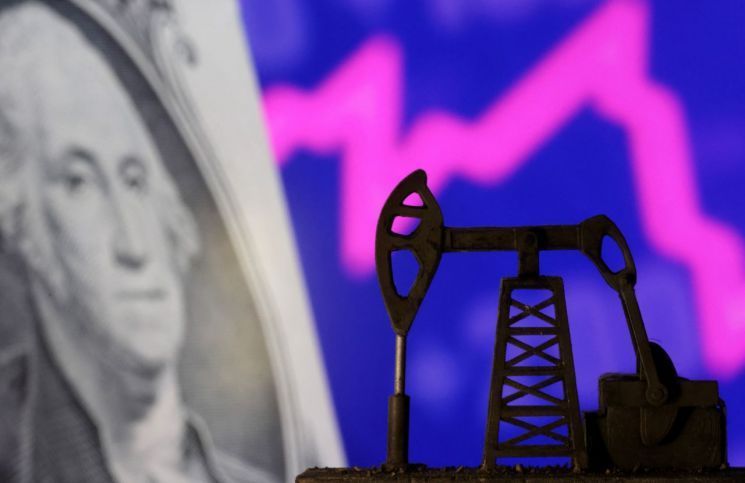
He also cited the armed conflict between Israel and Hamas that occurred over the past weekend as a risk. El-Erian said, "The current market reaction suggests that investors believe the (Israel-Hamas) conflict will calm down," and diagnosed, "Looking at the immediate trading, the risk of escalation is slightly higher, but not on a large scale. This is typical in geopolitical risk situations."
However, the key issue is whether tensions will escalate going forward. Concerns are also raised that geopolitical uncertainty worldwide will significantly increase. El-Erian emphasized, "At this point, what will happen with Ukraine and Russia? What about China? The biggest question in the market and economy is whether tensions will escalate." He added, "If it draws in other parties, inflationary pressures will increase further and the global economy will weaken more," and "The market will find it difficult to cope with this."
Market veteran Ed Yardeni, CEO of Yardeni Research, expressed similar concerns. In an investor memo last weekend following the armed conflict, Yardeni diagnosed that oil prices could be an effective way to assess the possibility of a broader conflict going forward. He predicted that if oil prices rise further, it could push government bond yields higher and drag the S&P 500 index below its 200-day moving average.
As geopolitical risks escalated, oil prices surged more than 4% that day. On the New York Mercantile Exchange, the November delivery West Texas Intermediate (WTI) crude oil price closed at $86.38 per barrel, up $3.59 (4.34%) from the previous session. This is the highest closing price since October 3. The December Brent crude price also rose more than 4% that day, closing at $88.15 per barrel. Meanwhile, the New York stock market closed slightly higher.
© The Asia Business Daily(www.asiae.co.kr). All rights reserved.
![Clutching a Stolen Dior Bag, Saying "I Hate Being Poor but Real"... The Grotesque Con of a "Human Knockoff" [Slate]](https://cwcontent.asiae.co.kr/asiaresize/183/2026021902243444107_1771435474.jpg)
















