Press Corps Workshop
"Market Volatility Expansion Will Not Persist"
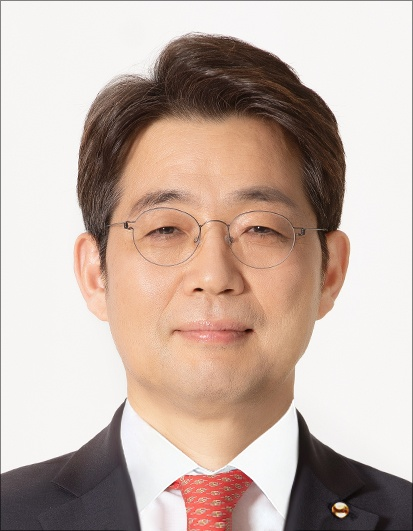
"The recent market volatility occurred because issues that had accumulated over the holiday period were all reflected in the market on the same day once it reopened. This is a temporary phenomenon and will not persist."
Yoo Sang-dae, Deputy Governor of the Bank of Korea, made these remarks during a press workshop on the afternoon of the 5th, addressing the sharp rise in the won-dollar exchange rate and government bond yields, which caused significant fluctuations in the domestic financial and foreign exchange markets.
Amid growing market concerns over increased volatility, Deputy Governor Yoo diagnosed, "The volatility increased due to two combined factors: issues accumulated during the holiday period and the possibility of prolonged high interest rates in the U.S." He added, "As I mentioned during the market situation review meeting, there is no problem with such volatility being reflected all at once, and if it continues, market stabilization measures can be taken. However, the volatility will not persist as it did on the 4th." He explained that it remains to be seen whether the market can absorb the possibility of prolonged high U.S. interest rates.
When asked whether the Bank of Korea should further tighten monetary policy due to the prolonged high U.S. interest rates, Deputy Governor Yoo drew a line, saying, "It is not yet that situation." He evaluated, "If there is a difference in interest rates between the U.S. and Korea, various factors such as exchange rates, interest rates, market prices, and foreign capital outflows become intertwined and affected. So far, some of this has been reflected in exchange rates and interest rates and seems to have been appropriately absorbed."
However, he noted the need to pay attention to the speed of changes. Deputy Governor Yoo emphasized, "The basic premise for the Bank of Korea to take market stabilization measures is that the speed should not be so fast that economic agents find it difficult to adjust. Since interest rates and exchange rates are market prices, the speed should be moderated to give economic agents time to prevent concentration."
Regarding criticism that monetary policy and macroprudential policy are out of sync amid the recent surge in household debt, Deputy Governor Yoo strongly refuted this. He said, "Since the Ministry of Economy and Finance, the Financial Services Commission, and the Financial Supervisory Service have slightly different policy tools, it may appear as if there is a mismatch, but that is not the case." He added, "Last year, there were concerns about a hard landing due to the Legoland incident, but this is a temporary occurrence as we move from a hard landing to a soft landing." He explained that this was a preventive measure against a hard landing and that inter-agency cooperation is relatively well coordinated.
Regarding the outlook for household debt in the third quarter, Deputy Governor Yoo said, "The third-quarter figures are not yet available," but predicted, "If no new expectations form in the housing market and only economic conditions are considered, looking at borrowing costs and economic growth overall, it is more likely that the increase in loans will slow down and the ratio relative to gross domestic product (GDP) will decrease." He continued, "In Korea, loans are not taken with fixed interest rates but with variable rates over a short period, and refinancing is done whenever necessary. This is a structural issue of household debt in Korea, but it is not particularly more risky."
On the other hand, he expressed concern about the increase in debt among self-employed individuals. Deputy Governor Yoo said, "We are monitoring the increase in self-employed debt classified as corporate debt," adding, "If borrowing capacity is excessively exceeded or if it grows to a level that adversely affects the economy, management will be necessary."
© The Asia Business Daily(www.asiae.co.kr). All rights reserved.
![Clutching a Stolen Dior Bag, Saying "I Hate Being Poor but Real"... The Grotesque Con of a "Human Knockoff" [Slate]](https://cwcontent.asiae.co.kr/asiaresize/183/2026021902243444107_1771435474.jpg)
















