As Japan proceeded with the second phase of releasing contaminated water from the Fukushima Daiichi Nuclear Power Plant into the ocean, China has announced retaliatory measures in the export and tourism sectors.
On the 5th, China's state-run Global Times (GT) reported, "Despite international outrage, Japan has begun the second release of contaminated water," adding, "Chinese experts warn that this irresponsible action will not only damage Japan's international reputation but also erode Japan's exports to China and dampen travel to Japan."
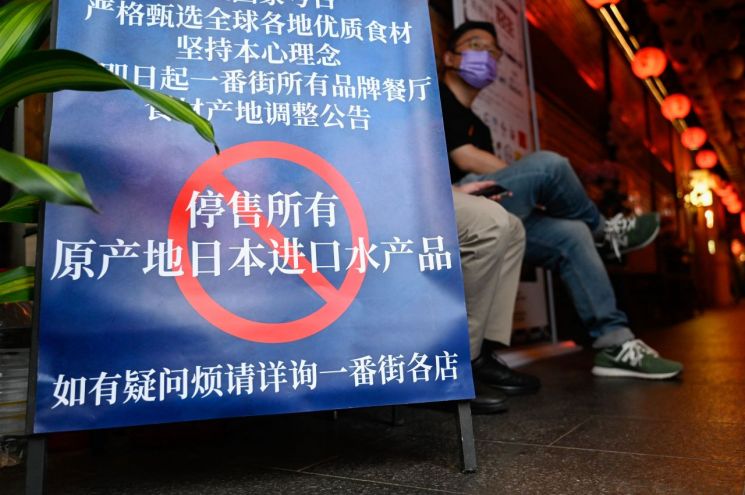
Tokyo Electric Power Company (TEPCO) started the second ocean discharge of contaminated water from the Fukushima Daiichi Nuclear Power Plant at around 10:20 a.m. on the same day. Approximately 7,800 tons are expected to be released into the sea by the 23rd. The daily discharge volume is estimated to be about 460 tons.
China maintained a firm stance against Japan's contaminated water discharge. On the same day, a spokesperson for the Ministry of Foreign Affairs stated, "We firmly oppose the unilateral ocean discharge measure," urging, "The Japanese government must comprehensively respond to the concerns of the international community, engage in sincere and sufficient consultations with neighboring countries, and take responsibility for the treatment of contaminated water." Che Ching-wan, Hong Kong's Secretary for Environment and Ecology, said the previous day, "There are no plans to ease restrictions on imports of Japanese seafood," adding, "The ball is in Japan's court. If Japan does not change its approach, there will be no conditions for lifting the ban."
Since August 24, China's General Administration of Customs has banned all seafood imports from Japan. According to Kyodo News, China's seafood imports from Japan in August dropped sharply by 67.6% year-on-year to 149.02 million yuan.
Lv Xiang, a researcher at the Chinese Academy of Social Sciences, explained, "Japan has opened Pandora's box by disposing of contaminated water, and the damage to Japan's fisheries will worsen," adding, "If Japan continues to discharge contaminated water, it will face more international condemnation that could potentially destroy the Japanese seafood export market."
The state-run media Huanqiu Shibao also reported that during the eight-day Mid-Autumn Festival and National Day golden holiday period from the 29th of last month to the 6th of this month, most restaurants in downtown Beijing were crowded, but Japanese restaurants were empty. Huanqiu Shibao stated, "On the 4th, when visiting Solana, a famous shopping mall in Beijing, there was no one dining in two Japanese restaurants within the shopping complex."
GT noted, "The wastewater issue has impacted not only seafood exports but also the demand from Chinese tourists planning to travel to Japan," adding, "Travel cancellations had already begun before the holiday." Some Japanese media reported that flights from China to Japan were nearly full, but Da Zegang, director of the Northeast Asia Research Institute at Heilongjiang Academy of Social Sciences, countered this by saying, "There are factors such as the resumption of group tours and increased demand for business trips and family visits," and "October is also a peak season for student mobility." Director Da pointed out, "Many passengers include businesspeople and students, as well as Japanese nationals," criticizing, "It is incorrect to generalize all these passengers as Chinese tourists traveling to Japan."
© The Asia Business Daily(www.asiae.co.kr). All rights reserved.
![Clutching a Stolen Dior Bag, Saying "I Hate Being Poor but Real"... The Grotesque Con of a "Human Knockoff" [Slate]](https://cwcontent.asiae.co.kr/asiaresize/183/2026021902243444107_1771435474.jpg)
















