The issue of discharging contaminated water from Japan's Fukushima Daiichi Nuclear Power Plant did not reach a conclusion again amid disagreements between China, Russia, and Western countries including the United States over whether it falls under the discussions of the London Convention and the London Protocol.
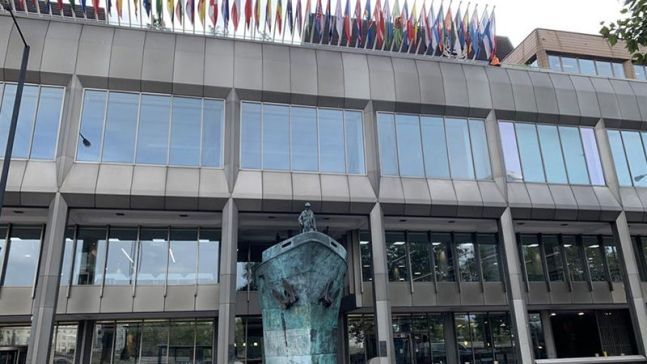
On the 5th (local time), at the 45th Meeting of the Parties to the London Convention and the 18th Meeting of the Parties to the London Protocol held at the International Maritime Organization headquarters in London, the issue of Fukushima contaminated water was raised but no consensus was reached.
During the afternoon session on "Matters concerning the management of radioactive waste," the parties presented their positions on Japan's discharge of contaminated water over a period of 50 minutes.
When the International Atomic Energy Agency (IAEA) explained the monitoring process, the Chinese side criticized Japan, calling it a "selfish and irresponsible act" and stating, "If it were truly safe, there would be no need to discharge it into the sea." The Chinese representative emphasized the need for in-depth discussion on whether this constitutes marine dumping subject to the London Convention and London Protocol.
The Russian representative also stated, "We consider this a violation of the London Convention and London Protocol," and requested Japan to "share information regarding the volume and composition of the discharge."
Greenpeace also expressed, "Serious concerns continue to arise from the scientific community," and said, "We hope discussions on Japan's nuclear contaminated water continue in this forum."
On the other hand, the Japanese representative reiterated the position that discharge through tunnels does not constitute marine dumping as defined by the London Convention and Protocol.
Korea stated, "The initial discharge was reported to have been reviewed scientifically and technically by the international community including the IAEA, and carried out according to a discharge plan that meets international standards."
The Ministry of Oceans and Fisheries said, "The Republic of Korea has consistently expressed the view that Fukushima nuclear contaminated water should be treated in a safe and reasonable manner," and added, "Considering that all parties must comply with Articles 2 and 3(1) of the London Protocol, we would like to request Japan to safely manage the treatment and discharge of Fukushima nuclear contaminated water in accordance with marine environmental protection standards."
Spain requested Japan to continue providing information to the IMO.
The United Kingdom and Canada expressed full support for the judgments of Japan and the IAEA. In response, the Chinese representative rebutted, saying, "The IAEA evaluation is based on data and information unilaterally provided by Japan."
The United States representative strongly defended Japan, emphasizing that the discharge of Fukushima contaminated water has been scientifically proven safe. The U.S. side stated, "We urge all countries and the public to rely on science-based information and not spread false stories," and added, "According to the Japanese government’s plan, the radioactivity level of the contaminated water discharged into the sea will be within the levels of water discharged from coastal facilities in other parts of the world."
Australia also expressed trust in the IAEA and Japan, and Italy added that it does not agree to review the Fukushima issue under the London Convention and London Protocol.
© The Asia Business Daily(www.asiae.co.kr). All rights reserved.

















