China Announces Law to Punish 'Attire Damaging National Spirit'
"Strong Public Criticism Over Vague Punishment Rules"
Chinese authorities have proposed an amendment to the law that would impose fines or detention for wearing "clothing that damages the national spirit" in public places, sparking strong opposition within China.
According to Chinese private economic media Caixin on the 2nd, the National People's Congress (NPC), China's parliament, announced the draft amendment to the "Public Security Administration Punishments Law" for public comment from the 1st of last month for one month. As a result, about 126,000 suggestions were submitted online, indicating high public interest.
Caixin reported, "The draft amendment to the Public Security Administration Punishments Law received nearly 100,000 people submitting 114,000 suggestions in less than half a month," and explained that "since China is punishing acts that were not previously considered crimes, and this is the first large-scale amendment in 17 years since the law was enacted, it has attracted public attention."
The Public Security Administration Punishments Law is an administrative law, but since punishments such as fines and administrative detention directly affect citizens' rights and freedoms, it is called a 'minor criminal law' comparable to formal criminal law. The draft amendment has been controversial since its announcement, as it criminalizes acts that were not previously offenses and has been criticized for excessive collection of suspects' biometric information by authorities.
For example, according to the draft amendment, not only "public security violations" such as throwing objects from high places or seizing a car's steering wheel, but also "wearing clothing that damages the spirit of the Chinese nation and harms the feelings of the Chinese nation," or "producing, spreading, or distributing items or writings that damage the spirit and feelings of the Chinese nation" will be considered crimes punishable by 5 to 10 days of detention or fines ranging from 1,000 to 3,000 yuan (approximately 190 to 560 USD). If the crime is deemed severe, detention can be extended to 10 to 15 days, and fines can increase to 5,000 yuan (approximately 940 USD).
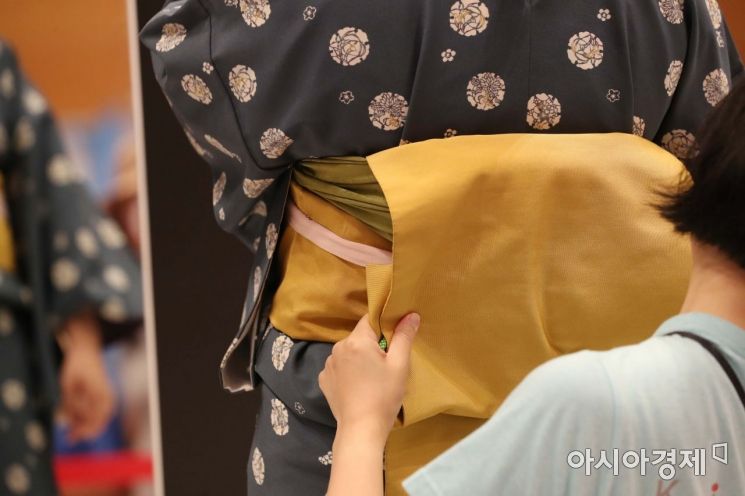
There is no clause defining specifically what clothing, items, or writings that harm the national spirit and feelings refer to, leaving room for arbitrary interpretation. Among these, recently in China, women wearing the Japanese traditional garment kimono have faced criticism as "clothing that incites ethnic resentment" or have been detained, leading to speculation that the law targets Japan, which has stirred anti-Japanese sentiment over the contaminated water discharge issue.
The legal community pointed out, "The freedom to wear clothes is an obvious part of bodily freedom, and the amendment should present clear standards rather than vague concepts such as 'damage to national spirit' or 'harm to national feelings.'" Legal scholars also criticized the provisions on collecting personal biometric information as excessive data collection that carries risks of personal information leakage and abuse, calling it a violation of the presumption of innocence principle.
In response to the criticism, a spokesperson for the NPC Standing Committee's Legislative Affairs Commission stated, "The public's submission of opinions on the draft law through normal channels concretely demonstrates the public's interest in and orderly participation in national legislative work," adding, "This is of great significance, and we sincerely welcome it." Furthermore, they said, "The NPC Standing Committee's Legislative Affairs Commission will seriously organize and study the various opinions submitted on the draft law, including the provisions that have attracted social attention, and will revise, supplement, or appropriately handle them."
© The Asia Business Daily(www.asiae.co.kr). All rights reserved.

















