Increase to 20 Dollars Starting April 2025
Delivery workers in New York City, USA, are now guaranteed an hourly wage of 20,701 KRW under the minimum wage law.
On the 28th (local time), according to the Wall Street Journal (WSJ) and others, Nicholas Moyin, a judge at the New York State District Court, dismissed most of the injunction requests filed by delivery platform companies such as Uber Eats to suspend the application of the minimum wage.
Earlier, New York City announced that starting in July, it would apply a minimum wage law setting the hourly wage for delivery workers at $17.96 (approximately 20,701 KRW). In response, Uber Eats and others filed for an injunction to suspend the minimum wage application, arguing that “New York City’s policy would lead to increased delivery fees and harm consumers.” The court initially granted the injunction, temporarily halting the minimum wage increase.
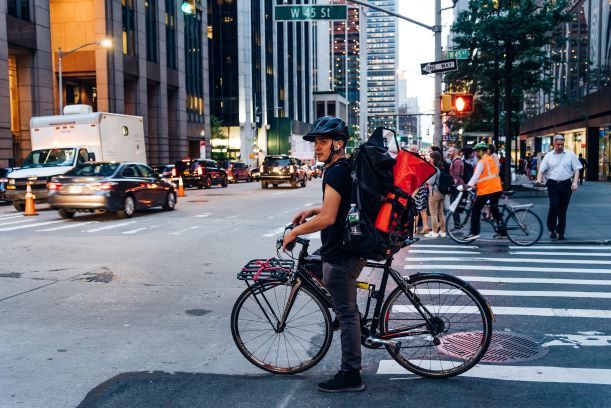 Delivery workers in New York City, USA, are now guaranteed an hourly wage of 22,701 KRW due to the application of the minimum wage. The photo is not directly related to the article. [Image source=Getty Images]
With this decision, the hourly wage for delivery workers will be applied at 20,701 KRW according to the minimum wage law, and it will be further raised to $19.96 (approximately 27,000 KRW) starting from April 2025.
It is estimated that 60,000 delivery workers in New York City previously earned an average hourly wage of $11 (approximately 13,942 KRW) before the minimum wage application. They were not subject to the minimum wage law as they were not directly employed.
However, interpretations among delivery workers regarding the minimum wage application are divided. Some hold a skeptical view, saying, “It sounds good on the surface, but we don’t know where the repercussions will spread.” Delivery workers have also expressed concerns such as, “It doesn’t seem possible to pay this increased hourly wage to all delivery workers,” and “The intention is good, but if you look closely, there are hidden difficulties.”
One delivery worker said, “We learned how supply and demand worked during the pandemic,” and evaluated, “This minimum wage will compensate for the decrease in delivery orders and the loss of tips.” Another delivery worker questioned, “If someone orders $30 worth of food and sees the total become $55 excluding the tip, will that customer choose delivery or pick up the order themselves? And how many customers will tip after paying such a high delivery fee?”
Some delivery platforms warned of further legal actions, stating, “The extreme minimum wage level set by New York City will reduce employment opportunities and increase the cost burden on New Yorkers.”
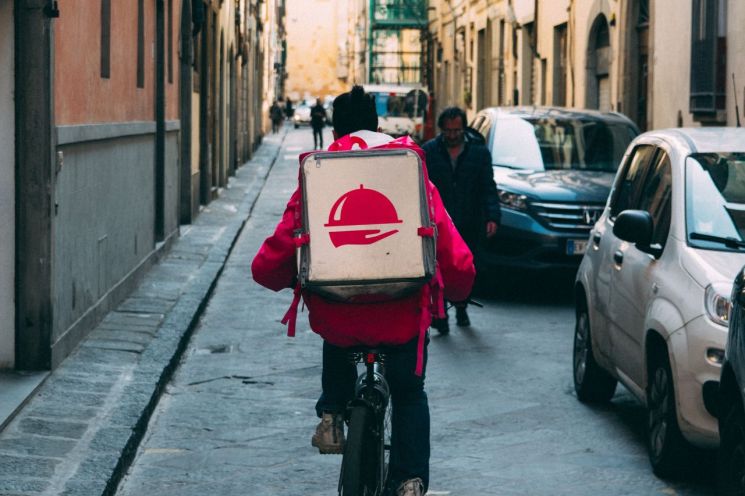
In South Korea, the minimum wage issue for delivery workers is also a hot topic. The Rider Union branch of the Korean Public Transport Workers’ Union (branch chief Gu Gyo-hyun) conducted a survey of 109 delivery workers in May, revealing that the actual monthly income of delivery workers was 2.2 million KRW, with an average hourly wage of 8,600 KRW. This is below the 2023 minimum wage of 9,620 KRW. The industry demands, “The biggest demand of workers outside labor law coverage is to improve income instability,” and argues, “Since there is a basis in the minimum wage law and a system to track income by industry has been established during the expansion of employment insurance and industrial accident insurance, the application of the minimum wage law should be expanded.”
© The Asia Business Daily(www.asiae.co.kr). All rights reserved.


















