"Mandu-like"... Songpyeon made as big as a fist
Filled with beans, red beans, dried radish greens, and potatoes instead of sesame
South enjoys the holiday again this year... North only rests on the day
In North Korea, families gather during Chuseok to make songpyeon. While in South Korea, the filling is made with savory sesame seeds and sweet sugar, in North Korea, depending on the region, 'unique' fillings are used, which is a key difference. Let's take a look at the Chuseok scenes in the North.
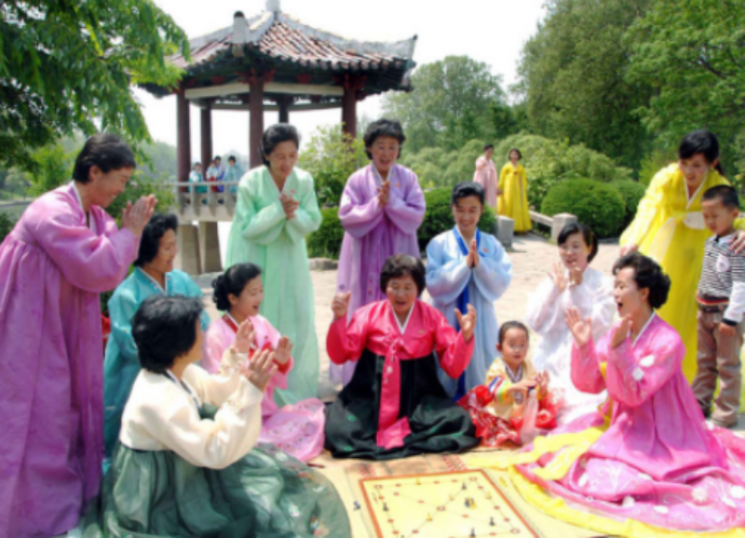
In the past, North Korean authorities only recognized the solar New Year (January 1st, our New Year's Day) as a holiday. This was because Chairman Kim Il-sung labeled ethnic holidays as 'old' feudal remnants and abolished the customs. Specifically, from 1967, holidays were completely banned, citing that they were "contrary to the socialist way of life." Due to the long-standing control by the authorities, political holidays such as Kim Il-sung's birthday, the 'Day of the Sun,' are still regarded as bigger events than folk holidays in North Korea.
Nowadays, North Korea also regards 'Chuseok' as a holiday. From the 1972 Chuseok, ancestral grave visits were permitted, and in 1988, Chuseok was officially recognized as a holiday. This means that it has been less than 40 years since North Korean residents began celebrating Chuseok again as a holiday. The term 'Hangawi' for Chuseok was only allowed about 20 years ago, in 2003. According to North Korean state media, 'Han' means big, and 'Gawi' means a good time. North Korea interprets the origin of the Chuseok holiday as coming from the tradition of moon viewing on Chuseok night.
Like dumplings... Large-sized, vegetable-filled North Korean songpyeon
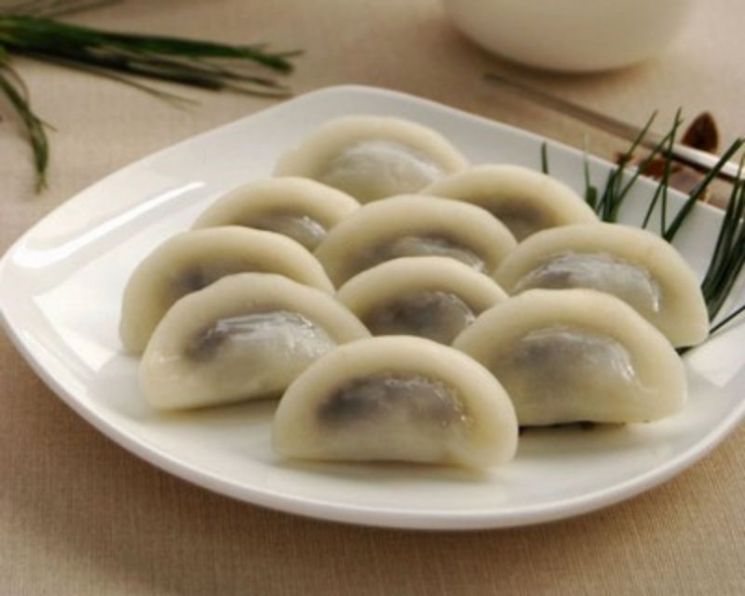
North Korea also makes Hangawi songpyeon, which resemble dumplings in shape and size. North Korean songpyeon are made about 2 to 3 times larger than those in South Korea, roughly the size of an adult man's fist. They are often filled with beans, red beans, and dried radish greens. In the mountainous northern regions where rice and crops are scarce, fillings such as radish strips, mung bean sprouts, and potatoes are used. Unlike South Korean songpyeon, which use savory sesame seeds, sweet sugar, or chestnuts, North Korean songpyeon are characterized by their generous size and mild flavor.
During Chuseok, North Korean residents make various types of rice cakes besides songpyeon. Unlike South Korea, the northern part of the Korean Peninsula generally has cold weather and has historically struggled with rice production. Perhaps because of this, North Koreans make plenty of rice cakes during holidays like Chuseok, which are otherwise hard to come by, and store them to eat over a long period. Shin Ji-hye (a pseudonym), a defector who left North Korea in her teens, recalled, "During Chuseok, we made rice cakes to eat our fill, and the state sometimes distributed rice and pork, which were hard to come by normally."
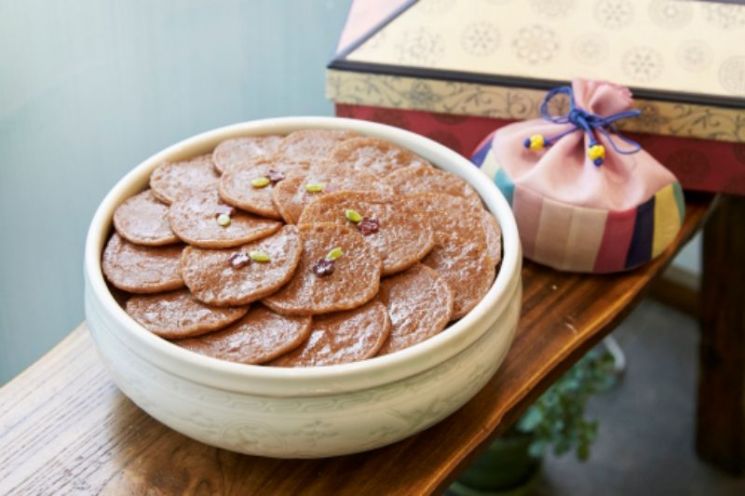
There is also a rice cake called 'Nochi (Noti),' shaped like a full moon. It was served as a snack during the April 2018 inter-Korean summit. It is said to have a chewy texture with a sweet and slightly tangy taste. First, glutinous rice, millet, and glutinous millet powders are mixed with hot water to make dough. Then, it is fermented by placing it in malt powder. Finally, it is pan-fried with oil. Due to the fermentation process, it can be stored and eaten throughout the winter after Chuseok.
However, such stories are only possible in well-off households. In South Korea, traditional methods are followed, and jujubes, chestnuts, pears, persimmons, apples, three-colored vegetables, and sweet rice drink (sikhye) are placed on the ancestral ritual table. In North Korea, residents with limited means prepare a simple table with rice cakes, alcohol, vegetables, and foods enjoyed by the deceased during their lifetime. When making songpyeon is difficult, they make plain white rice cakes without filling.
South Koreans eagerly await holiday breaks every festive season... North Koreans rest only on the holiday itself
The most familiar scene during holiday breaks is the 'heavily congested' roads. The highways become like parking lots, filled with vehicles heading home or going on trips. It is truly a 'mass migration of the people.' In contrast, in North Korea, travel is unimaginable due to restrictions on interregional movement. One must obtain a 'travel permit' from the authorities, and transportation conditions are quite poor.
Another difference is the 'holiday break.' In South Korea, at least three days off are given, including the day before and after Chuseok. This allows people to visit distant hometowns or travel abroad. This year, the government designated October 2nd as a substitute holiday, resulting in a six-day holiday from September 28th to October 3rd (National Foundation Day). However, in North Korea, only the day of Chuseok itself is recognized as a holiday.
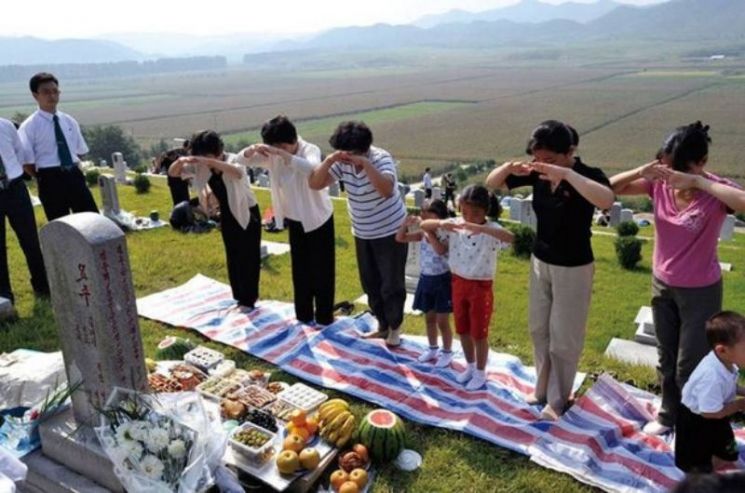
Because of this, in North Korea, it is common to skip the ancestral rites at home and instead visit graves to perform memorial services. In South Korea, people perform ancestral rites at home and then visit graves separately, but in North Korea, due to difficulty in travel, relatives tend to live close to each other, and gravesites are naturally near their homes. It is said that neighbors met during grave visits gather the food they each brought and share it together.
© The Asia Business Daily(www.asiae.co.kr). All rights reserved.



















