Sharp Criticism from the Start of IAEA General Conference
China: "Japan Defies Strong International Opposition"
At the International Atomic Energy Agency (IAEA) General Conference, Japan and China clashed once again over the issue of releasing contaminated water from the Fukushima Daiichi Nuclear Power Plant into the ocean. While China strongly criticized Japan for pushing ahead with the ocean discharge despite opposition from various countries, Japan countered by pointing out that the amount of tritium released from Chinese nuclear power plants is 5 to 10 times greater than that from Fukushima Daiichi, continuing the dispute between the two nations.
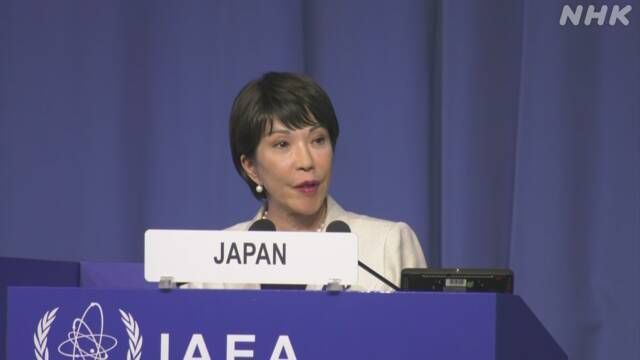 Sanae Takaichi, Japan's Minister of Science and Technology, speaking at the IAEA representative speech. (Photo by NHK)
On the 26th, NHK reported that tensions between Chinese and Japanese representatives continued at the IAEA annual conference, which opened the previous day in Vienna, Austria. China was the first to speak. During the speeches by representatives of various countries, Liu Jing, Deputy Director of the China National Nuclear Corporation, directly referred to Japan's term for the contaminated water, "treated water," as "nuclear contaminated water." He then strongly criticized Japan, saying, "Japan started ocean discharge despite strong opposition from related countries, causing concern in the international community."
In response, Sanae Takaichi, Minister of Science and Technology, immediately rebutted, saying, "Among IAEA member countries, China is the only one spreading misinformation and imposing import restrictions on (Japanese seafood). Please act based on scientific evidence and provide accurate information."
Minister Takaichi further emphasized, "The IAEA investigation concluded that Japan's handling is safe based on scientific standards. The Japanese government is explaining the situation to the international community with high transparency based on scientific evidence. Moreover, many countries understand and support Japan's efforts."
She added, "Under the continuous involvement of the IAEA, we will ensure safety until the 'last drop' of ocean discharge is completed," requesting support from the international community.
In response, the Chinese side requested another opportunity to speak, claiming, "Japan's explanation of the impact of contaminated water on the environment and human health is insufficient." Then, Takeshi Hikihara, Japan's resident representative to international organizations in Vienna, criticized, "Isn't the amount of tritium released annually from Chinese nuclear power plants 5 to 10 times the planned amount released from Fukushima Daiichi?"
Afterward, Minister Takaichi held individual meetings with officials from the United States and other countries, and told reporters, "I feel that we have received broad support regarding the discharge of contaminated water. Since China appears to be the only country criticizing Japan in the speeches, I believe understanding of the ocean discharge is spreading."
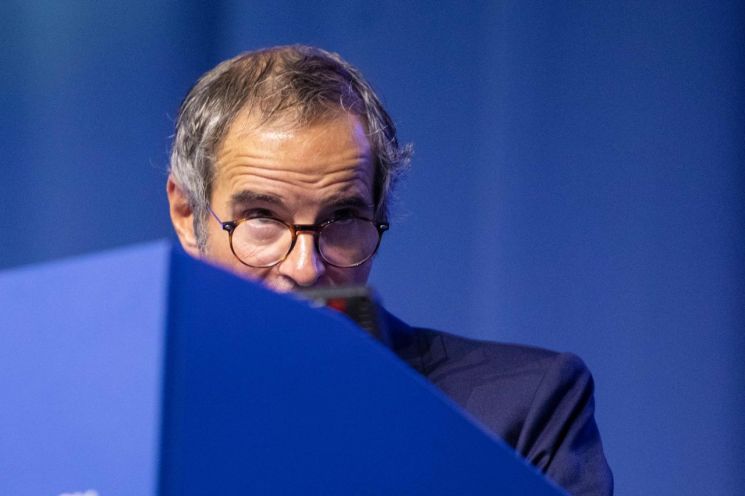
IAEA Director General Rafael Grossi also stated in his opening remarks that day, "The IAEA is conducting evaluations and analyses of the Fukushima situation from an independent standpoint," and added, "We have also established an office on-site to manage the situation thoroughly to ensure there is no impact."
Meanwhile, within Japan, public opposition to the discharge of contaminated water is subsiding. According to a public opinion poll conducted on the 16th and 17th and released by the Asahi Shimbun on the same day, 66% responded positively, saying they "approve" of the ocean discharge of contaminated water, significantly outnumbering the 28% who "do not approve." Notably, the female public opinion, which had consistently shown high opposition, shifted to approval. According to Asahi, 61% of women responded "approve," surpassing the 31% who said "do not approve."
However, responses by age group stood out for those aged 18 to 29. Among them, 51% "approve" and 47% "do not approve," showing a divided opinion. Asahi analyzed, "Since this age group will have to continue dealing with the ocean discharge of contaminated water and decommissioning work for decades to come, it is likely they evaluated the issue strictly."
© The Asia Business Daily(www.asiae.co.kr). All rights reserved.
![From Bar Hostess to Organ Seller to High Society... The Grotesque Con of a "Human Counterfeit" [Slate]](https://cwcontent.asiae.co.kr/asiaresize/183/2026021902243444107_1771435474.jpg)

















