Disagreement Persists on First Day of CCTV Mandatory System
Patient Side: "Video Retention Period Should Be Extended to Aid Medical Disputes"
Medical Community: "Consultation Will Be Restrained and Medical Staff's Portrait Rights Violated"
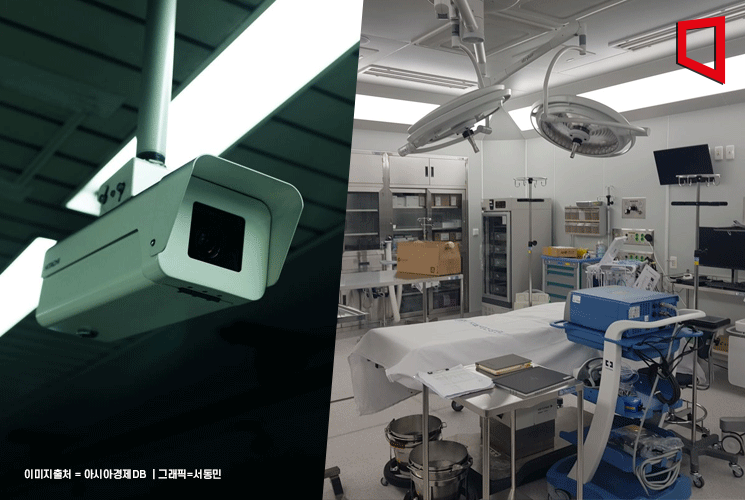
On the first day of the mandatory installation of closed-circuit television (CCTV) in operating rooms on the 25th, debates continue as patient groups and the medical community fail to reach a consensus.
The mandatory CCTV installation in operating rooms was enacted to prevent unethical medical practices by some medical staff, such as proxy surgeries. In particular, public opinion for mandatory CCTV surged after the 2016 incident involving the late Kwon Dae-hee, who died during surgery at a plastic surgery clinic in Gangnam, Seoul. The full circumstances of Kwon's death were revealed through CCTV footage installed in the operating room at the time.
However, the medical community has opposed the measure, citing concerns about medical staff becoming inhibited and practicing defensive medicine. They argue that demands for CCTV recording undermine trust between patients and medical staff and infringe on basic rights such as the medical staff’s portrait rights and freedom to perform their duties. The Korean Medical Association and the Korean Hospital Association filed a constitutional appeal against the mandatory installation of operating room CCTV on the 5th.
Patient groups have also pointed out that the law lacks effectiveness. They argue that the 30-day minimum retention period for recorded footage is too short and that numerous exceptions allowing refusal of recording make it difficult for the footage to be used as evidence in actual medical disputes.
According to the Ministry of Health and Welfare’s "Operating Room CCTV Guidelines," medical institutions may refuse recording in cases of ▲ emergency surgery ▲ surgery requiring active measures to save the patient’s life ▲ concerns about hindering resident training ▲ requests for recording at a time when surgery cannot be performed as scheduled ▲ and force majeure such as natural disasters.
The Ministry of Health and Welfare, having enacted the law after more than two years of grace period, emphasizes that the operation of the system is important to achieve the legislative intent. Lee Hyung-hoon, Director of Health and Medical Policy at the Ministry of Health and Welfare, stressed on the 22nd, "The legislation mandating operating room CCTV installation was made with the participation of many stakeholders over a long period, and since it is being implemented after more than two years, it is important to operate it well to achieve the legislative intent of preventing illegal acts in operating rooms."
Lee added, "Since this is a system newly introduced in medical settings, both patients and medical staff may face difficulties adapting to it in the early stages of implementation. The government will actively communicate with the field during the implementation process to ensure thorough enforcement and will continue efforts to help build trust between patients and medical staff and create a safe medical environment."
Discussions on measures to supplement the system are expected to continue. The challenge lies in finding a compromise between patient groups, who demand specific revisions to the video retention period and exceptions for refusal to ensure CCTV footage can be used in medical disputes, and medical organizations, which seek to prevent medical staff from becoming inhibited due to CCTV installation.
Lee Na-geum, representative of the Medical Justice Practice Solidarity and mother of the late Kwon, appeared on MBC Radio that day and said, "The restrictions on recording are too subjective and broad, and the conditions for viewing are too stringent," but also evaluated, "Having it is better than not having it."
She added, "In university hospitals, conditions such as hindrance to resident training can be grounds for restriction, but in local clinics, especially in plastic surgery and orthopedic surgery, it will be difficult to avoid. Proxy surgeries, which are often called ghost surgeries, frequently occur in plastic surgery, so in those areas, having CCTV is better than not having it."
She continued, "The mandatory installation of CCTV in daycare centers also started imperfectly, but as problems were identified, improvements became easier. Although it is difficult to create laws, it is easier to amend them, so having CCTV is better than not having it. Also, it is meaningful that this exists only in South Korea and nowhere else in the world."
© The Asia Business Daily(www.asiae.co.kr). All rights reserved.
![Clutching a Stolen Dior Bag, Saying "I Hate Being Poor but Real"... The Grotesque Con of a "Human Knockoff" [Slate]](https://cwcontent.asiae.co.kr/asiaresize/183/2026021902243444107_1771435474.jpg)
















