Acquisitions Focused on Logistics Centers and Hotels
GIC Emerges as Major Player in Japanese Real Estate
US Investors Also Enter Japanese Hotel Market
Singapore engaged in $3 billion (approximately 4 trillion 95 billion KRW) worth of real estate shopping in Japan last year. Following the end of the pandemic and the increase in tourism demand, along with a significant drop in the value of the yen, Singapore has been actively acquiring real estate focused on logistics centers and hotels.
Bloomberg reported on the 24th (local time), citing a report released this month by the UK real estate information firm Knight Frank, that $3 billion flowed from Singapore into the Japanese real estate market this year. This is the largest amount of capital flowing into the Japanese real estate market from overseas. Following Singapore, the United States, Canada, and the United Arab Emirates ranked next.
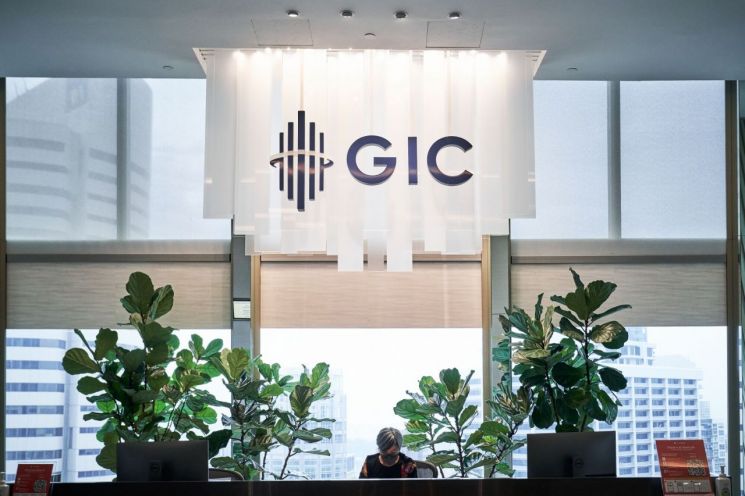
In particular, Singapore's sovereign wealth fund, the Government of Singapore Investment Corporation (GIC), has emerged as a major player in the Japanese real estate market. In April, GIC purchased six logistics warehouses in Japan from Blackstone, the world's largest private equity firm, for $800 million. This accounts for 26% of the total investment amount from Singapore.
GIC is the world's largest sovereign wealth fund, managing $690 billion. It has been actively acquiring Japanese real estate since the 1990s. According to Bloomberg, as of March last year, Japanese-related assets accounted for 7% of GIC's investment portfolio.
GIC appears to have anticipated an increase in logistics demand due to post-pandemic consumption growth and has been securing various warehouses to build logistics hubs. For the same reason, as tourism demand grows, it is also actively purchasing hotels. The number of foreign visitors to Japan last month was 2,156,000, recovering to 85.6% of the level in the same month of 2019 before the COVID-19 outbreak. Hotels are more attractive investments than commercial real estate and apartment buildings, where it is difficult to quickly raise rents, because they can immediately reflect inflation trends and raise room rates in real time. The decline in the yen's value is also a factor driving inflows into the Japanese real estate market. The yen-dollar exchange rate surpassed the 148 yen level, reducing borrowing costs.
On the other hand, GIC is considering selling its commercial real estate holdings, anticipating a decline in yields. Bloomberg reported on the 5th that GIC is discussing the sale of the Dentsu headquarters building in Shiodome, Tokyo, expecting an increase in vacancy rates of its owned buildings as high-rise buildings are constructed in Tokyo's business district. The market estimates the value of the Dentsu headquarters building at a minimum of $2 billion, and if the sale is completed, it would be the most expensive commercial real estate transaction in Japan.
Global investors other than Singapore are also rushing to purchase hotels in Japan. According to Bloomberg, Goldman Sachs, one of the largest private equity firms in the United States, Kohlberg Kravis Roberts (KKR), and Blackstone have spent $2 billion on hotel transactions this year. This amount exceeds last year's total investment of $1.4 billion.
Bloomberg explained, "Singapore has become the largest investor in Japan's real estate sector this year, supported by the weak yen and increased accommodation demand due to rising tourist numbers," adding, "In an inflationary environment, hotel buildings become more attractive investment targets than office apartments."
© The Asia Business Daily(www.asiae.co.kr). All rights reserved.

















