Despite high interest rates and concerns about an economic slowdown, the U.S. economy, which has shown stronger-than-expected resilience, faces the risk of encountering four major adverse factors this fall. Starting in October, the likelihood of a federal government shutdown is increasing, coinciding with an expansion of the United Auto Workers (UAW) strike, the resumption of student loan repayments, and rising oil prices.
On the 24th (local time), The Wall Street Journal (WSJ) highlighted these four challenges in an analysis titled "The U.S. Economy Can Weather One Shock, But Can It Handle Four at Once?" WSJ warned, "Strikes, the possibility of a shutdown, student loans, and oil prices will put the U.S. economy to the test," adding, "While each factor alone may not cause significant harm, combined with the economy already cooling due to high interest rates, the impact could be much greater."
Currently, many analysts on Wall Street expect a mild economic slowdown rather than a recession in the fourth quarter, given the recent stronger-than-expected performance of the U.S. economy. According to Goldman Sachs, the U.S. economic growth rate is projected to shrink from 3.1% in the third quarter to 1.3% in the fourth quarter. EY-Parthenon forecasts 3.5% growth in the third quarter and 0.6% in the fourth quarter.
Among these, the four adverse factors are considered threats that could further contract the U.S. economy. Gregory Daco, EY-Parthenon's chief economist, described it as a "quadruple threat to economic activity." These are also external factors that Jerome Powell, Chairman of the Federal Reserve (Fed), who took a hawkish stance last week by maintaining rates, identified as potential impacts on the U.S. economy.
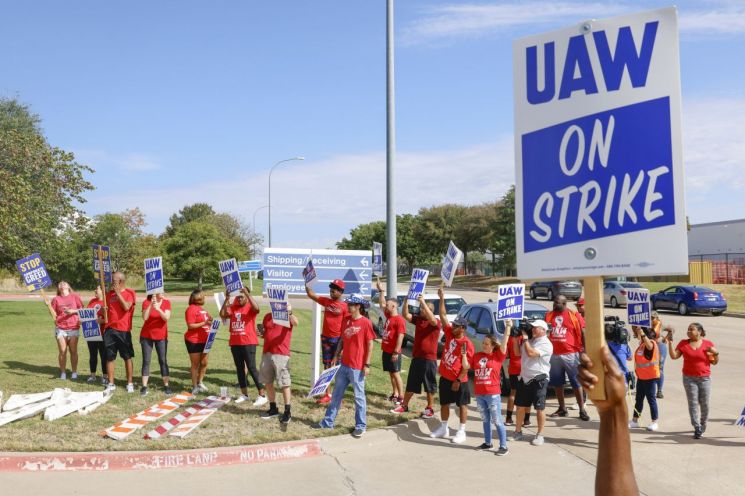
Labor negotiations in the three major U.S. automakers have made little progress, leading the UAW to expand its strike. UAW President Shawn Fain announced in a speech to union members that the strike would expand from the initial three plants to General Motors (GM) and Stellantis' 38 parts distribution centers (PDCs) across about 20 states. WSJ noted, "The initial impact may be minimal," but warned, "Widespread work stoppages could disrupt vehicle production and contribute to higher car prices." If prolonged, the strike will inevitably affect jobs at parts suppliers.
Goldman Sachs estimates that a large-scale strike could reduce the weekly economic growth rate by an annualized 0.05% to 0.1%. Additionally, such strikes could worsen supply chains, which had been improving since the pandemic. Gabe Ehrlich, a professor at the University of Michigan, stated, "The strike itself will not push the national economy into a recession," but added, "Considering all these factors together, the fourth quarter looks challenging."
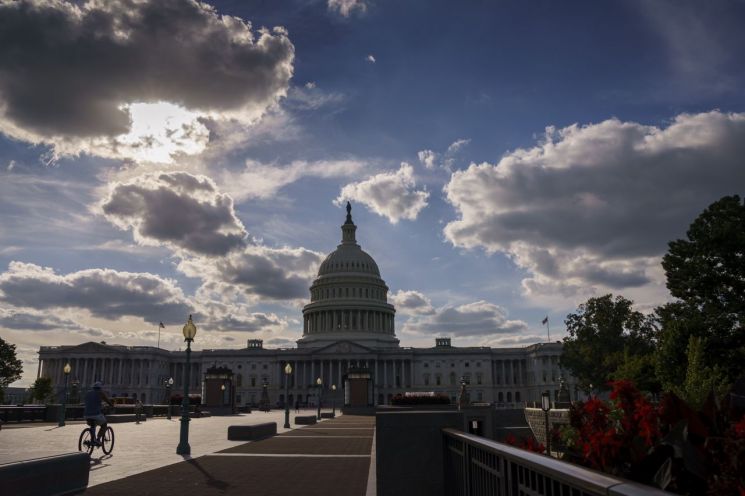
Meanwhile, the growing possibility of a federal government shutdown, which would temporarily halt government operations, is another threat increasing concerns around the U.S. economy. To prevent a shutdown, the budget must be passed before October 1, when the 2024 fiscal year begins. However, hardliners within the House Republican majority, who control budget negotiations, are demanding significant cuts, and with only a few days left, no breakthrough in talks is in sight. The Republican leadership is pushing for a one-month continuing resolution (CR) to buy time, but even its passage is uncertain.
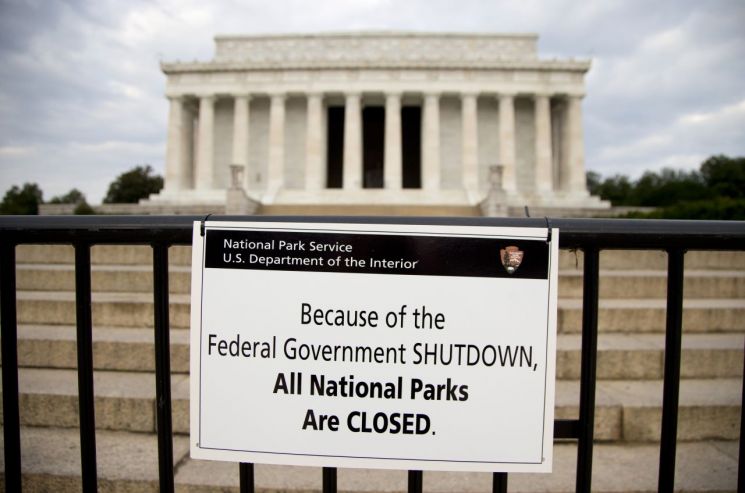
In the event of a shutdown, federal employees except essential personnel will be furloughed without pay, and some social welfare programs, such as food assistance for low-income groups, will be disrupted. WSJ reported, "This will negatively affect overall consumer spending and temporarily reduce government expenditures," adding, "At this point, there is still a long way to go before a budget agreement is reached."
A shutdown could also impact financial markets. At a critical time when inflation concerns are resurfacing, delays or suspensions in the release of key economic indicators will increase uncertainty surrounding monetary policy. In December 2018, a partial shutdown lasting about five weeks occurred due to a deadlock in congressional negotiations, affecting 300,000 federal employees. The Congressional Budget Office (CBO) analyzed that the shutdown led to a 0.1% contraction in growth in Q4 2018 and a 0.2% contraction in Q1 2019.
Additionally, the resumption of student loan repayments starting October 1, affecting approximately 43.8 million Americans, raises concerns about a broad contraction in consumer spending. According to Wells Fargo, up to $100 billion could be withdrawn from Americans' pockets next year due to repayment resumption. Although the average monthly repayment amount of $200 to $300 is not a large share of annual U.S. consumer spending, experts still view it as a concern. They particularly caution that credit card debt and other liabilities have simultaneously increased during the three and a half years of repayment deferral caused by the pandemic.
The final threat is high oil prices. The international benchmark Brent crude oil price was slightly above $70 per barrel last summer but recently has exceeded the $90 mark. Concerns about supply shortages in the fourth quarter have led to predictions that prices will soon surpass $100 per barrel. Rising oil prices increase gasoline prices and place additional burdens on households. According to the U.S. Department of Labor, gasoline prices surged 10.6% in August compared to the previous month, marking the highest increase since June 2022.
Headline inflation, which had been easing recently, has also risen again due to high oil prices. Although the Fed's preferred inflation measures exclude volatile energy prices, rising oil costs ultimately increase overall economic expenses, exerting upward pressure on inflation. In this case, the Fed's tightening measures are likely to continue at higher levels for a longer period than expected. After the September Federal Open Market Committee (FOMC) meeting, Chairman Powell cited the ongoing auto strike, the possibility of a federal government shutdown, the resumption of student loan repayments, and high oil prices as concerns, stating, "There is a great deal of uncertainty."
© The Asia Business Daily(www.asiae.co.kr). All rights reserved.
![Clutching a Stolen Dior Bag, Saying "I Hate Being Poor but Real"... The Grotesque Con of a "Human Knockoff" [Slate]](https://cwcontent.asiae.co.kr/asiaresize/183/2026021902243444107_1771435474.jpg)


















