Kim Gisu and Other Second Largest Shareholders Change 'General Investment Purpose' to 'Management Influence'
Need to Clearly State Holding Purpose to Exercise Voting Rights at March Shareholders' Meeting Next Year
Possibility of Considering Director Candidate Recommendations Due to Stock Market Slump
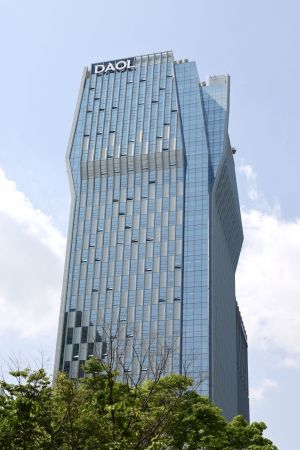
Attention is focused on the next move of Kim Kisoo, CEO of Presto Investment Advisory, who changed the purpose of holding shares in Daol Investment & Securities to 'influence over management rights.' He may either propose shareholder proposals to participate in the management of Daol Investment & Securities or work to enhance shareholder value, such as expanding dividends.
According to the Financial Supervisory Service's electronic disclosure system, Kim, who holds 14.34% (8,736,629 shares) of Daol Investment & Securities, along with Choi Soonja and Sunsu Asset, changed their purpose of holding shares from 'general investment purpose' to 'influence over management rights.'
By changing the holding purpose to influence over management rights, Kim's side can request ▲appointment, dismissal, or suspension of duties of directors and auditors ▲amendments to the articles of incorporation related to the company's institutions such as the board of directors ▲mergers, splits, and split mergers of the company. The financial investment industry analyzes that Kim's side is following the planned steps. A financial investment industry official explained, "(Kim's side) invested over 30 billion KRW in purchasing shares of Daol Investment & Securities," adding, "It is unlikely that they invested without an exit (investment recovery) strategy."
Last month, the average daily trading value of Daol Investment & Securities was only 1.26 billion KRW, down to half compared to 2.52 billion KRW in July. At the end of April, when Kim and his co-holders concentrated their stock purchases, hundreds of billions of KRW worth were traded daily, but recent trading volume has sharply declined. Considering the average daily trading value of Daol Investment & Securities, if Kim starts realizing profits, the stock price is likely to fluctuate. If the second-largest shareholder begins selling shares and announces it through disclosure, an overhang (potential sell-off volume) issue is inevitable.
In this process, if shareholders who expected a sharp rise in stock price due to management disputes leave, Kim's side could incur losses. Kim and co-holder Choi spent 15.2 billion KRW and 14.1 billion KRW respectively to acquire their shares. They explained that funds were raised through business income and financial income. Sunsu Asset borrowed all 2.2 billion KRW acquisition funds from Kim. The average purchase price per share was 3,610 KRW. The closing price on the 25th was 4,075 KRW, recording a 12.9% unrealized gain.

The market conditions are also not favorable for realizing profits on the exchange. On the 1st of last month, the KOSPI reached an annual high of 2,668.21, but the index has since fallen below the 2,500 level. Inflation concerns have grown again, resulting in a sluggish trend. The average daily trading value has also decreased compared to the previous month this month. Park Kwangnam, a researcher at Mirae Asset Securities, explained, "The relative attractiveness of the stock market has decreased due to rising interest rates," adding, "The U.S. Federal Reserve raised its dot plot forecast at the September Federal Open Market Committee (FOMC), increasing concerns about prolonged high interest rates."
A financial investment industry official said, "They probably did not set only one exit strategy while investing a large amount of funds in a securities company, which is not a general listed company," adding, "It seems they coordinated the timing of changing the holding purpose considering market conditions and stock prices."
The Capital Markets Act stipulates that those who report false information or omit important information regarding significant matters cannot exercise voting rights for the portion exceeding 5% of the total issued shares related to the violation. The voting rights restriction period is determined by the Financial Services Commission within six months. To fully exercise voting rights at the regular shareholders' meeting in March next year, it is necessary to clarify the purpose of holding shares.
Kim's side likely considered various variables, such as the possibility of recommending director candidates at the regular shareholders' meeting, amid the recent sluggish domestic stock market. On the 20th, Kim changed the investment purpose and stated in an interview with some media, "I changed the holding purpose to more actively propose opinions to increase shareholder value and improve the company's management situation." He explained, "I sent a letter requesting answers from the company regarding risk management and response measures, but there was no specific reply," adding, "I concluded that it would be better to change the holding purpose to management participation to realize shareholder value enhancement and management improvement." In response, a Daol Investment & Securities official rebutted, "We responded to the second-largest shareholder's letter within the scope allowed by current regulations," adding, "Even if they are the second-largest shareholder, we do not provide materials that cannot be disclosed to general shareholders or outsiders."
After Kim changed the holding purpose, the stock price of Daol Investment & Securities actually declined. On the day after the disclosure was posted, the stock price rose to 4,645 KRW early in the session but closed at 4,100 KRW. This is interpreted as due to high uncertainty until the second-largest shareholder makes a shareholder proposal. Competition to secure shares with a view to a vote battle at the shareholders' meeting can affect the stock price, but at this stage, efforts to increase the shareholding ratio or secure friendly shareholders seem premature.
Some in Yeouido analyze that Kim's acquisition of less than 10% shareholding is intended to avoid being subject to the major shareholder suitability review of financial companies. The financial authorities review capital capacity, sound financial status, and credit through the pre-approval system for major shareholders. According to the 'Act on the Governance of Financial Companies,' if a person holds more than 10% of voting shares issued by a financial company, they become subject to the major shareholder suitability review.
© The Asia Business Daily(www.asiae.co.kr). All rights reserved.
![Clutching a Stolen Dior Bag, Saying "I Hate Being Poor but Real"... The Grotesque Con of a "Human Knockoff" [Slate]](https://cwcontent.asiae.co.kr/asiaresize/183/2026021902243444107_1771435474.jpg)

















