Revision of the Classification-Based Additional Payment System Introduced in 1977
Differential Compensation by Medical Type
The government will increase fees for severe surgeries and hospitalizations starting next year to strengthen essential medical care. Fees refer to the amounts that medical institutions receive from patients and the National Health Insurance Corporation for providing health insurance-covered medical services.
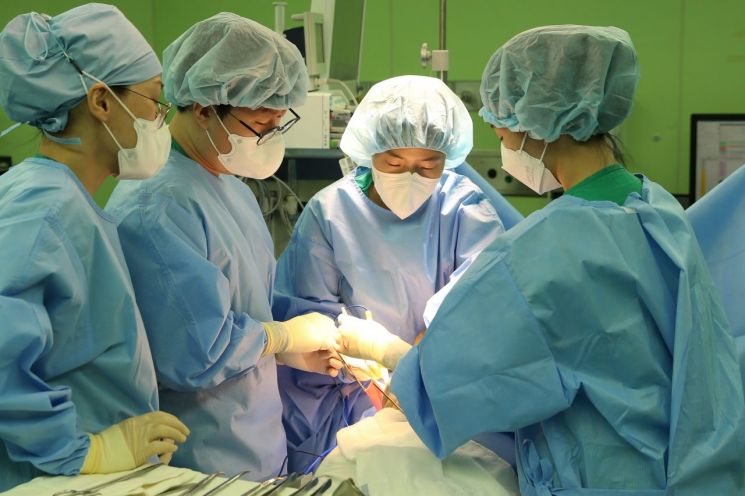
On the 21st, the Ministry of Health and Welfare held the 17th Health Insurance Policy Deliberation Committee meeting and announced the finalization of the detailed implementation plan for the 3rd relative value revision. The core of the plan is to reform the differential fee system by increasing compensation levels in the treatment and surgery fields where medical staff experience high fatigue, and reducing compensation in the specimen and imaging examination fields, which were evaluated as low cost. Through this, additional health insurance funds secured will be used to raise fees for endoscopic surgeries such as laparoscopy and thoracoscopy.
Korea’s health insurance fee system is based on relative value scores introduced in 2001. Each medical procedure is converted into points based on physician workload, treatment costs, and risk, and the government compensates medical institutions accordingly. However, despite two major revisions in 2008 and 2017, concerns have been raised that imbalances among medical procedures have not been resolved.
The Ministry of Health and Welfare views this as a result of the differential fee system, introduced in 1977, which compensates medical institutions differently by size but applies the same compensation for medical types such as treatment and surgery, functional tests, and specimen and imaging tests. Because of this, medical staff tend to avoid undervalued severe surgeries and hospitalizations.
Meanwhile, the additional fee system for internal medicine and psychiatric patients will be abolished. Instead, the funds will be used to increase undervalued medical fees in internal medicine-related specialties. Representative examples include hematopoietic stem cell transplantation, mechanical ventilation, cardiopulmonary resuscitation, and gastric lavage. Investment will focus on fees for closed ward beds to prevent acute symptom exacerbation in psychiatric patients.
Additionally, hospitalization fees will increase compensation as the number of medical staff assigned to patients rises to improve patient safety and quality of medical services. For intensive care unit hospitalization fees, fees will be higher when fewer patients are assigned per dedicated specialist and nursing staff.
Currently, a single daily fee of 44,000 KRW is given when one dedicated specialist covers 30 beds in a general intensive care unit. This will be subdivided into 45,000 KRW for 20 beds per specialist and 174,000 KRW for 5 beds per specialist. Also, compensation for intensive care units and general ward hospitalization fees will be increased as the nurse staffing ratio rises.
To maintain and expand essential special beds that are not always in use but necessary, related hospitalization fees will also be increased. Isolation rooms for infectious disease patients and sterile treatment rooms used for hematopoietic stem cell transplantation are essential for these treatments. Therefore, isolation room hospitalization fees will be increased by 20% for tertiary general hospitals, 15% for general hospitals, and 10% for hospitals and clinics. The government plans to establish and support policy fees for government-designated negative pressure isolation beds.
The relative value scores resulting from this revision will be applied from January next year after revising the health insurance procedure list and other related items within this year.
© The Asia Business Daily(www.asiae.co.kr). All rights reserved.

















