Fair Trade Commission "Non-refundable clause imposes excessive damage obligation on customers" correction order
Law "Accommodation reservation platform is an 'intermediary' between hotel and consumer... difficult to determine unfair clause"
The Fair Trade Commission (FTC) ultimately lost a lawsuit seeking to cancel its corrective order against Agoda and Booking.com, online accommodation reservation service platforms, regarding their 'non-refundable' accommodation booking methods.
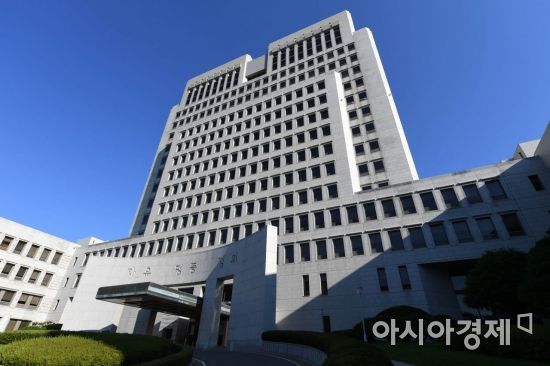
The Supreme Court's 3rd Division (Presiding Justice Ahn Cheol-sang) on the 21st upheld the lower court's ruling in favor of the plaintiffs, Agoda and Booking.com, who requested the cancellation of the FTC's corrective order.
Many accommodation reservation platforms sold non-refundable lodging products that were cheaper than those with free cancellation. For these products, once the reservation was completed, the full payment had to be paid as a cancellation penalty regardless of the remaining days of stay, leading to a flood of consumer complaints.
In response, the FTC identified seven major overseas hotel reservation sites with non-refundable clauses in 2017. Among them, three companies voluntarily removed the non-refundable clauses, but the FTC issued corrective recommendations to the four companies that did not remove the clauses. Two of these companies complied, but Agoda and Booking.com did not follow the corrective recommendations until the end, prompting the FTC to issue a corrective order. Agoda and Booking.com then filed a lawsuit.
However, the court ruled that the corrective order should be canceled. The first trial court viewed Booking.com, Agoda, and others as merely 'intermediaries' connecting hotels and consumers, not parties directly entering into accommodation contracts with consumers. The first trial court ruled, "It is difficult to conclude that the non-refundable clause is an unfair term that imposes an unduly heavy compensation obligation on customers." The Supreme Court also agreed that the lower court's judgment was correct.
© The Asia Business Daily(www.asiae.co.kr). All rights reserved.
![Clutching a Stolen Dior Bag, Saying "I Hate Being Poor but Real"... The Grotesque Con of a "Human Knockoff" [Slate]](https://cwcontent.asiae.co.kr/asiaresize/183/2026021902243444107_1771435474.jpg)
















