O Ja-kyung, Chair of Judges for the Korea International Organ Competition
Opening on the 21st, Held for the First Time in 3 Years Due to COVID-19 Impact
10 Contestants Compete, 5 Finalists on the 26th
"The organ, capable of producing sounds ranging from a quiet flute to a loud roar, has a wide spectrum, making it an instrument with no definitive answer to its charm. This competition will evaluate not only adherence to principles in performance but also how much the performer makes the piece their own."
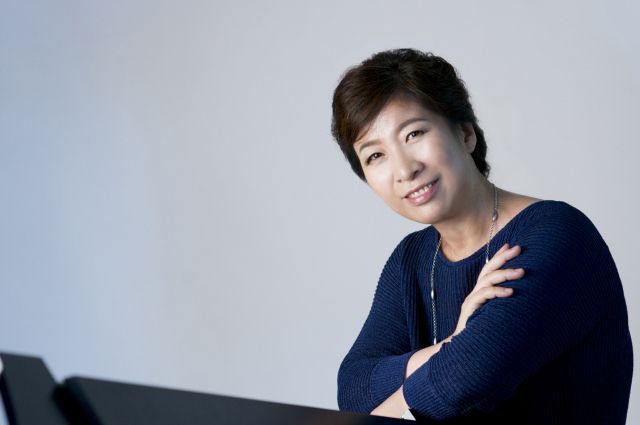 Ojagyeong, Chairperson of the Jury for the Korea International Organ Competition.
 [Photo by Lotte Cultural Foundation]
The Lotte Cultural Foundation announced on the 21st that it will hold the '2nd Korea International Organ Competition,' Korea's first international organ competition.
Oh Ja-kyung, professor at the Korea National University of Arts and organist serving as the chair of the competition jury, said at a press conference held at Lotte Concert Hall in Songpa-gu, Seoul, "Although it may be unfamiliar, I hope people can feel what good music is and what valuable music is through this competition."
The foundation established the international competition in 2019 to promote the status of Korean classical music domestically and internationally, coinciding with the opening of Lotte Concert Hall in 2016, which installed a pipe organ. However, due to COVID-19, the first competition in 2020 ended regrettably with only the selection of finalists.
For this second competition, about 50 organists from various countries including Korea, China, Russia, the United States, Germany, Canada, Poland, Japan, France, the Czech Republic, and Australia applied.
Applicants submitted videos performing one fast and one slow movement from either Bach's Concerto in G minor or A minor, as well as one piece from the Romantic era, along with a list of organ stops. Through video screening, 11 finalists were selected.
One finalist withdrew due to health reasons, resulting in 10 finalists competing: five Koreans including Min Chae-won, Choi Min-ji, Lee Min-jun, Noh Seon-kyung, and Noh Yoo-jin; two from the United States; one from France; one from Australia; and one from China. The jury included chair Oh Ja-kyung (Korea), Shin Dong-il (Korea), Wolfgang Zerer (Germany), Martin Jean (USA), and Henry Fairs (UK).
The finalists will perform the first round on the GoArt organ at the Korea National University of Arts' Lee Kang-sook Hall on the 21st, and the second round on the Rieger organ at Lotte Concert Hall on the 24th.
The final round will be held on the 26th at Lotte Concert Hall. The five finalists will freely compose a program of about 50 minutes, including designated pieces by J.S. Bach and contemporary works composed after 1960. Winners will be announced immediately after the final. On the 27th, the awards ceremony and winners' recital will take place.
The organ used at the Korea National University of Arts is an authentic North German Baroque-style organ, restored following the organ-building methods of Arp Schnitger (1648-1719), a master of North German organ construction. It responds sensitively to the performer's intentions through delicate mechanical key action and possesses tonal colors that express the essence of Baroque organ music.
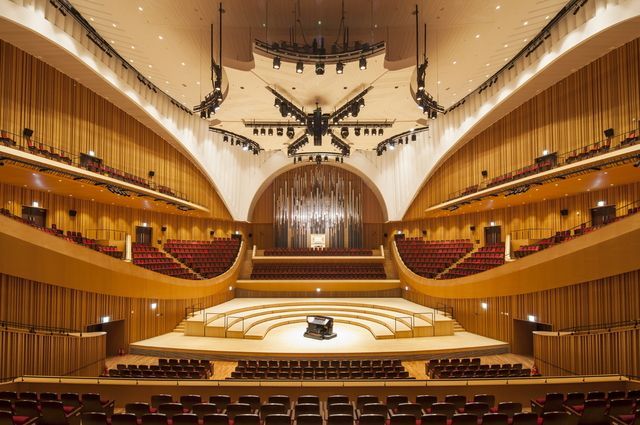
The Lotte Concert Hall organ is a universal organ capable of handling diverse repertoires from all eras and genres, including contemporary music. Chair Oh explained, "In the classical world, organ competitions using multiple instruments receive overwhelmingly high evaluations. Our competition also uses two instruments, with the Korea National University of Arts GoArt organ being a Baroque-style instrument preserving historical methods."
The first-place winner of the competition will receive a prize of 11 million KRW and opportunities to perform in planned concerts at Lotte Concert Hall over the next two years. The second-place winner will receive 5 million KRW, and the third-place winner 3 million KRW. Participants demonstrating outstanding performance and interpretation skills will receive special awards.
Chair Oh emphasized, "The organ is such an important instrument in Europe that there is hardly a university without a major in it. I believe it is impossible to understand Western music without the organ."
Compared to its importance in Europe, the organ is not a familiar instrument to the public in Korea. Venues equipped with organs are limited to places like Lotte Concert Hall, Bucheon Art Center, and Yeongsan Art Hall.
Although Korean organists' skills and status have risen, exemplified by organist Choi Gyu-mi winning the St Albans International Organ Competition in 2019 as the first Asian winner, domestic organ-related activities remain slow. This contrasts with Japan, which established the Tokyo Musashino Organ Competition in 1981, and China, which launched the Shanghai International Organ Competition in 2017.
Chair Oh stated, "The music industry has been generally struggling even before COVID-19, but through efforts such as holding competitions, institutions hope to install more organs and create more stages where organists can perform."
© The Asia Business Daily(www.asiae.co.kr). All rights reserved.
![Clutching a Stolen Dior Bag, Saying "I Hate Being Poor but Real"... The Grotesque Con of a "Human Knockoff" [Slate]](https://cwcontent.asiae.co.kr/asiaresize/183/2026021902243444107_1771435474.jpg)












