The Supreme Court confirmed heavy sentences, including life imprisonment, on the 21st for three heinous criminals tried on charges of murder or attempted murder.
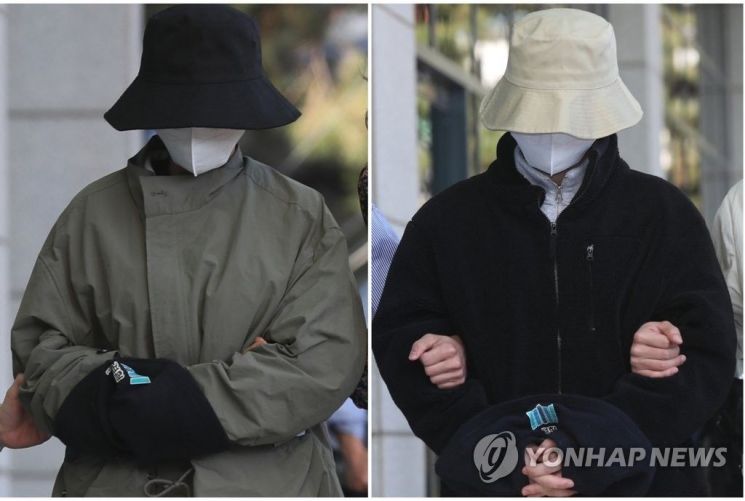 On April 16 last year, Lee Eun-hae and Jo Hyun-soo, suspects in the 'Valley Murder' case, were being escorted to the Incheon District Prosecutors' Office in Michuhol-gu, Incheon.
‘Valley Murder’ Lee Eun-hae Sentenced to Life Imprisonment... Accomplice Jo Hyun-soo Sentenced to 30 Years
Lee Eun-hae (32, female), who was tried on charges of the ‘Valley Murder,’ was sentenced to life imprisonment.
The Supreme Court’s First Division (Presiding Justice Kim Seon-su) on the day upheld the original sentences of life imprisonment for Lee and 30 years imprisonment for her accomplice Jo Hyun-soo (31) in the appeal trial for charges including murder.
The court stated the reason for dismissing the appeal, saying, "There is no error in the original judgment that found the defendants guilty of murder and attempted murder, nor any violation of the rules of logic and experience, nor any overstepping of the limits of free evaluation of evidence, nor any misunderstanding of the principles of no incrimination or exculpation, indictment amendment, impossibility of attempt, or establishment of murder by omission."
Lee was arrested and indicted on charges of killing her husband A (39 years old at the time of death) by forcing him to jump from a 4-meter-high rock into a 3-meter-deep valley pool without rescue equipment at Yongsogye Valley, Gapyeong-gun, Gyeonggi Province, on June 30, 2019, together with her lover Jo.
They were also charged with attempting to kill A by feeding him food mixed with pufferfish poison and drowning him in a fishing spot in February and May 2019.
Investigations revealed that Lee had exploited A financially for years, and when his financial value diminished due to bankruptcy, she planned with Jo to kill A and claim 800 million won in life insurance, committing the crime accordingly.
The first and second trials judged, "The defendants committed two attempted murders and a murder aiming for the 800 million won insurance money, and their guilt is very serious." However, the court did not recognize the prosecution’s claim of ‘active murder’ by gaslighting (psychological control).
Meanwhile, Lee lost a civil lawsuit against the insurance company on November 2020, demanding 800 million won in life insurance from A, on the 5th of this month. Lee had registered marriage with A in 2017 and signed three insurance contracts the following year with A as the insured and herself as the beneficiary.
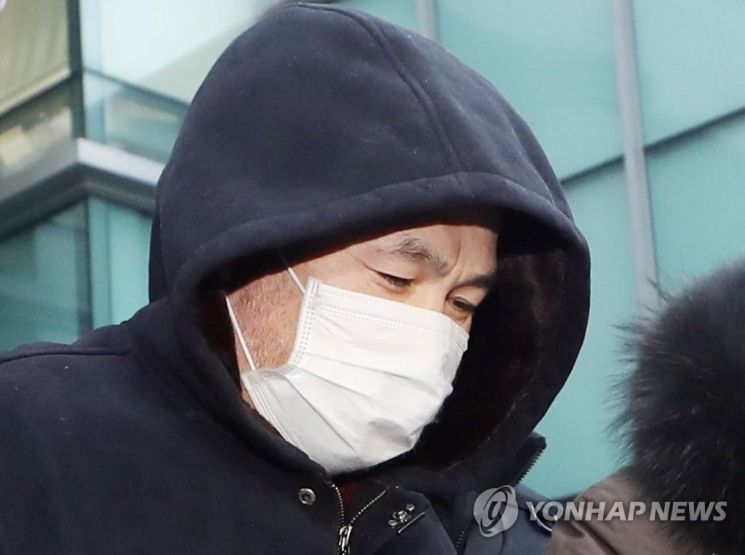 On December 14, 2021, Kwon Jae-chan leaving Michuhol Police Station in Michuhol-gu, Incheon, being transferred to the prosecution.
‘Serial Murderer’ Kwon Jae-chan Sentenced to Life Imprisonment... "Cannot Appeal Because Life Sentence Is Not Too Light"
Kwon Jae-chan (54, male), who was tried for killing middle-aged men and women in succession over two days, was also sentenced to life imprisonment on the same day.
The Supreme Court’s First Division (Presiding Justice Kim Seon-su) upheld the original sentence of life imprisonment in the appeal trial of Kwon, who was charged with robbery-murder, special theft, and corpse disposal.
The court explained the reason for dismissing the appeal, stating, "There is no error in the original judgment violating the rules of logic and experience or misunderstanding the legal principles regarding the establishment of robbery-murder."
Regarding the prosecutor’s appeal for the death penalty, the court said, "Even when a defendant is sentenced to death, life imprisonment, or imprisonment or detention for 10 years or more, under Article 383, Clause 4 of the Criminal Procedure Act, the prosecutor cannot appeal solely because the sentence is excessively light."
Article 383 of the Criminal Procedure Act, which stipulates grounds for appeal, lists reasons such as ▲violation of the Constitution, laws, orders, or regulations affecting the judgment (Clause 1), ▲abolition or change of sentence or pardon after judgment (Clause 2), ▲grounds for retrial (Clause 3), and Clause 4 includes cases where death, life imprisonment, or imprisonment/detention for 10 years or more is sentenced and there is a significant factual error affecting the judgment or a manifestly unfair sentencing.
Kwon was indicted for strangling and killing a woman in her 50s, A, whom he knew, in the underground parking lot of a commercial building in Michuhol-gu, Incheon, on December 4, 2021, 3 years and 8 months after being released from prison after serving 15 years for murder. He then disposed of the body in the trunk of a passenger car and stole belongings worth about 11 million won, including A’s diamond ring, gold necklace, and cash.
He also involved a colleague B to withdraw 4.5 million won in cash using A’s check card on the day of the incident, and the next day lured B to a mountain near Eulwang-ri, Jung-gu, Incheon, under the pretext of burying A’s body, then killed B by hitting with a blunt weapon and secretly buried the body.
Investigations revealed that Kwon, burdened with debts exceeding 90 million won due to gambling, was sued for fraud by creditors and became credit-impaired, suffering economic difficulties. He targeted A, whom he met at a gambling venue, and planned the crimes.
The first trial found him guilty of robbery-murder and other charges, sentencing him to death and ordering 30 years of electronic location tracking. However, the second trial judged it difficult to conclude that Kwon had planned and prepared the murders in advance, sentencing him to life imprisonment.
The second trial court stated, "The death penalty is an extremely exceptional punishment that permanently deprives human life and should only be imposed when there are clear special circumstances. Although it is acknowledged that the defendant planned the robbery, it is difficult to conclude that he planned the murders as well."
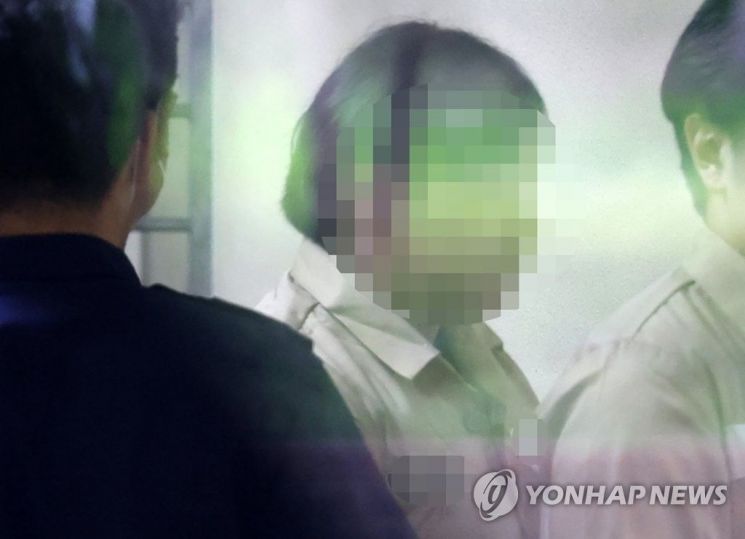 On June 12, at the Busan Court Complex in Yeonje-gu, Busan, defendant Lee Mo, involved in the 'Busan Dollyeochagi' case, is seen boarding a transport vehicle after being sentenced to 20 years in prison at the appellate trial sentencing hearing.
‘Busan Roundhouse Kick’ Perpetrator Sentenced to 20 Years... "No Problem with Permission to Amend Indictment"
The perpetrator of the so-called ‘Busan Roundhouse Kick’ case, who indiscriminately assaulted a woman in her 20s on her way home, raped her, and attempted to kill her but failed, was sentenced to 20 years in prison.
The Supreme Court’s First Division (Presiding Justice Seo Kyung-hwan) upheld the original sentence of 20 years imprisonment for Lee (surname), who was indicted for violating the Sexual Violence Punishment Act (rape resulting in attempted murder).
The court stated, "There was no error in the original court’s procedure for permitting indictment amendment or infringement on the defendant’s right to defense," and "It cannot be said that the original court’s sentence of 20 years imprisonment is excessively unfair."
Lee was indicted for chasing the victim home around 5 a.m. on May 22 last year in Seomyeon, Busanjin-gu, and attempting to kill her by assaulting her at the shared entrance of an officetel.
Initially, Lee was indicted for attempted murder and sentenced to 12 years in prison in the first trial. However, during the appeal trial, the prosecution found additional evidence, including Lee’s DNA on the victim’s jeans at the time of the incident, and amended the indictment to attempted rape-murder.
The appellate court recognized Lee’s guilt and sentenced him to 20 years imprisonment, ordering 10 years of information disclosure, 10 years of employment restriction in child and youth-related institutions, 20 years of electronic location tracking, and completion of 80 hours of sexual violence education.
This case sparked social discussions on improving the personal information disclosure system and the victim’s right to appeal after becoming publicized.
© The Asia Business Daily(www.asiae.co.kr). All rights reserved.



















