The rain cloud band that brought heavy rain across the country as the easterly winds from the east of Korea and the southwesterly winds converged is expected to move out of the Korean Peninsula on the 21st, marking the beginning of clear autumn weather.
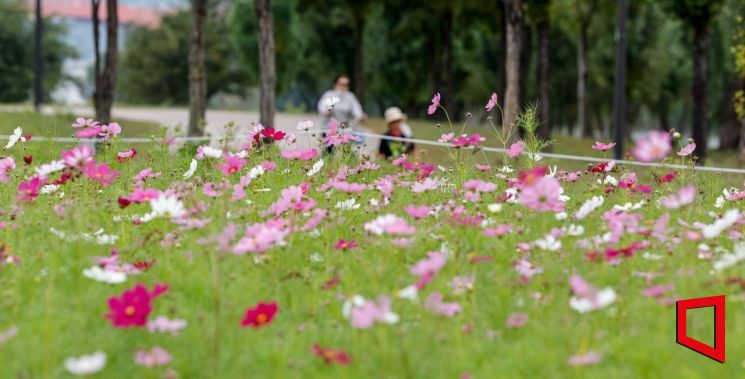
The Korea Meteorological Administration forecasted rain until the morning of the day in Gangwon Yeongdong, until the afternoon in eastern Jeonbuk and Gyeongbuk, and until night in the southern regions except for these two areas and western Jeolla. The expected rainfall amounts are 5-30mm in Jeju and Yeongnam, 5-20mm in eastern Jeolla, 5-10mm in central and southern Gangwon Yeongdong, and less than 5mm in northern Gangwon Yeongdong. This rain cloud band was formed as a low-pressure system developed in the west passed between the cold and dry high pressure in the north of Korea and the warm and humid subtropical high pressure in the south.
After the autumn rain passes, the late summer heat that hovered around 30 degrees Celsius during the daytime is expected to ease. The highest daytime temperatures nationwide on this day are forecasted to be between 22 and 27 degrees Celsius, similar to the average (24-27 degrees). By region, the temperatures are Seoul 24°C, Incheon 24°C, Suwon 24°C, Chuncheon 24°C, Gangneung 22°C, Cheongju 25°C, Daejeon 24°C, Jeonju 24°C, Gwangju 24°C, Daegu 23°C, Busan 25°C, and Jeju 27°C. On the 22nd, when the rain cloud band has completely cleared, the area will be on the edge of a high pressure system near the Shandong Peninsula in China, and due to the influence of daytime sunlight, the highest temperatures will rise slightly to 24-28 degrees Celsius, but the heat is not expected to be felt directly.
Large temperature differences between day and night are expected to continue for the time being. Even if temperatures rise during the day under the shining sun, nighttime temperatures will drop due to radiative cooling, showing typical autumn weather with a large temperature gap between day and night. The lowest temperatures on the morning of the 22nd are expected to fall to around 12-21 degrees Celsius. The Korea Meteorological Administration advised that, especially in the central inland areas where the temperature difference between day and night is expected to be around 15 degrees, people should take care of their health. Over the weekend, the weather will remain cool with many clouds nationwide, morning temperatures ranging from 14 to 20 degrees Celsius, and daytime temperatures between 24 and 28 degrees Celsius.
© The Asia Business Daily(www.asiae.co.kr). All rights reserved.
![Clutching a Stolen Dior Bag, Saying "I Hate Being Poor but Real"... The Grotesque Con of a "Human Knockoff" [Slate]](https://cwcontent.asiae.co.kr/asiaresize/183/2026021902243444107_1771435474.jpg)
















