Malware Installation Induced via Text Messages
Smishing Damage Surges 79% This Year
The police have urged caution against smishing scams disguised as parcel deliveries ahead of the Chuseok holiday.
According to the Gyeonggi Nambu Provincial Police Agency on the 19th, there were 156 cases of smishing damage reported in the southern Gyeonggi region from January to August this year, a 79.3% increase compared to 87 cases during the same period last year.
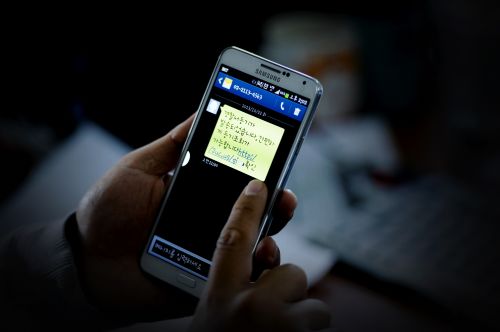 These smishing messages increase significantly around holidays when parcel deliveries rise. They mainly contain content such as gifts have arrived or there is a delivery error that requires confirmation.
 [Photo by Asia Economy DB]
Such smishing messages tend to increase significantly around holidays when parcel deliveries rise. In particular, messages claiming that a gift has arrived or that there was a delivery error requiring confirmation are common.
Outside of holiday periods, many messages impersonate mobile wedding invitations or health checkup results. In the past, clicking on messages containing malware typically resulted in small payments under 2 million KRW, but as financial transactions via smartphones have become routine, malware can now be used not only to withdraw deposits but also to obtain non-face-to-face loans, leading to damages amounting to hundreds of millions of KRW in some cases.
Internet scam damages increasing alongside smishing
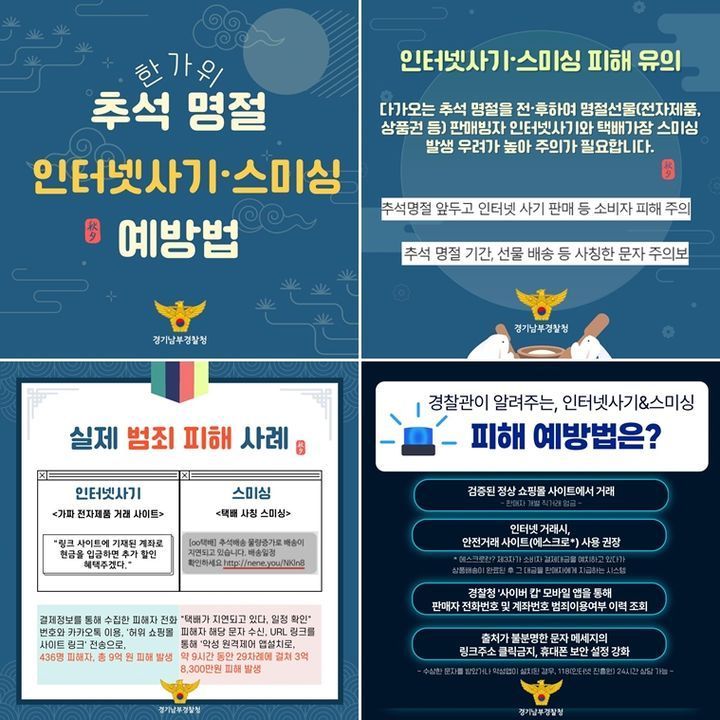
Along with smishing, internet scam damages are also on the rise. In the southern Gyeonggi region, there were 19,674 internet scam cases reported up to August this year, a 3.2% increase from 18,287 cases last year.
Among the scam cases where suspects were arrested during this period, electronic products-related scams were the most frequent with 11 cases, followed by gift certificates with 5 cases, accommodation and camping goods with 2 cases each, and one case involving concert tickets. The main method involves luring victims with discount sales and then taking the money without delivering goods.
On the 25th of last month, the Suwon Western Police arrested four suspects who created fake shopping mall websites, induced cash payments by offering discounts, and swindled about 930 million KRW from 436 people. In May, the Gimpo Police arrested one suspect who deceived 10 people by falsely selling gift certificates cheaply on a secondhand trading app, embezzling 154.47 million KRW.
The police emphasized that since it is difficult to recover damages once a scam occurs, efforts to prevent such incidents are crucial. A police official advised, "Never click on links in text messages from unknown sources. If you have already clicked and notice suspicious activity on your phone, install the 'CitizenConan' app to perform a self-check or report and consult through 118 (Korea Internet & Security Agency)."
They added, "Use only verified official websites for online shopping, and when trading directly between individuals, use safe transaction sites (escrow services), but make sure these are also verified. Checking the seller’s contact information and account number in advance through the 'CyberCop' app operated by the National Police Agency can also help prevent scams."
© The Asia Business Daily(www.asiae.co.kr). All rights reserved.
![Clutching a Stolen Dior Bag, Saying "I Hate Being Poor but Real"... The Grotesque Con of a "Human Knockoff" [Slate]](https://cwcontent.asiae.co.kr/asiaresize/183/2026021902243444107_1771435474.jpg)

















