Bundesbank Report Released
29% of German Companies Import Essentials from China
Germany Also Shaken by China's Economic Crisis
Growth Rate This Year Expected to Reach Only 0.3%
Germany, which had maintained a close relationship with China, has been cornered by the Chinese economic crisis. Within Germany, voices calling for decoupling from China to reduce risks arising from internal issues such as the Chinese real estate slump and the US-China conflict are gradually growing louder.
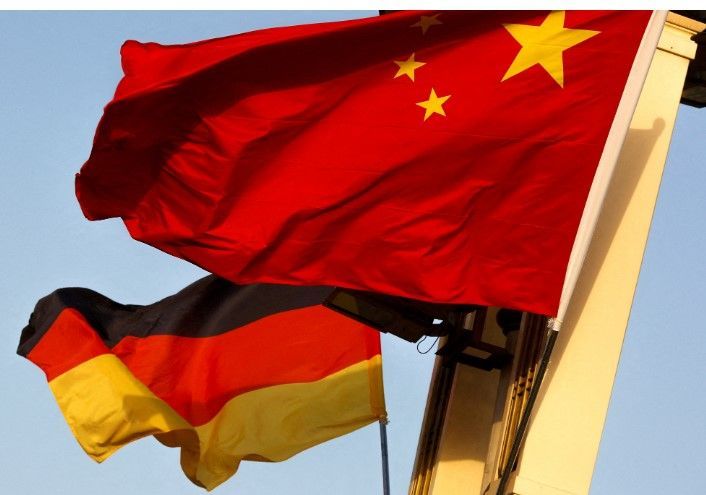
The Bundesbank, Germany's central bank, stated in its monthly report released on the 18th (local time) that "29% of German companies import essential materials and components from China," and warned that "if trade is disrupted due to escalating geopolitical tensions, significant damage could occur to business operations." Germany imports a wide range of products and raw materials from China, from intermediate goods such as batteries and electronic components to data processing, telecommunications equipment, home appliances, and critical minerals.
The Bundesbank emphasized, "Over the past few years, strong and unilateral dependence on these products has exposed the economy to risks," adding, "It is necessary to reduce dependence on China, especially on basic products that are very difficult to substitute."
This warning from the central bank aligns with remarks made the previous day by German Foreign Minister Annalena Baerbock. In an interview with Bloomberg TV, Minister Baerbock stated that the European Union (EU) "could put itself at risk if it is too closely tied to China."
German Chancellor Olaf Scholz also recently mentioned that Germany's economic downturn is "due to the weakening of export markets, especially China," noting that "this has a significant impact on export-driven countries like ours."
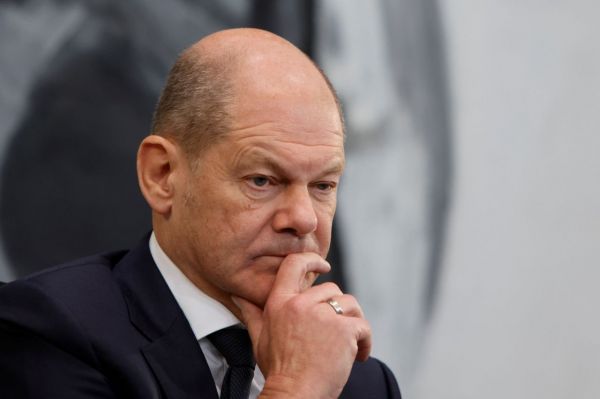
As he said, the sluggish Chinese economy is delivering a shock to the German economy. Despite the lifting of COVID-19 lockdowns at the end of last year, China’s economy remains mired in a slump due to weak consumption, employment contraction, and a collapsing real estate market. This has directly affected the German economy, with Germany’s gross domestic product (GDP) shrinking by -0.4% in the fourth quarter of last year and -0.1% in the first quarter of this year, marking two consecutive months of negative growth, followed by zero growth in the second quarter (compared to the previous quarter). The International Monetary Fund (IMF) forecasts Germany’s economic growth rate to be only 0.3% this year.
However, lowering German companies’ dependence on China is expected to be difficult. The Bundesbank pointed out that efforts by German companies to diversify supply chains are still insufficient. According to the Bundesbank, among companies dependent on Chinese imports due to US-China tensions, 40% have reduced their dependence on China, and 16% are considering doing so. However, the remaining 40% have yet to take any action.
The Bundesbank stated, "A sudden decoupling from China could cause widespread disruption to German supply chains and production in the short term," but emphasized that "considering escalating geopolitical tensions and risks, companies and politicians need to reconsider the evolution of supply chain structures and further expansion of direct investment in China."
Germany has strengthened its coupling with the Chinese economy during the 16 years from 2005 to 2021 when former Chancellor Angela Merkel, known for her pro-China and mercantilist pragmatic approach, was in office. According to a Bundesbank survey, German companies importing key materials and components from China account for a quarter of total domestic manufacturing sales. German companies have also viewed China as a major export market and increased investments accordingly. As of 2022, China ranks third among countries with the largest direct investments by German companies, accounting for 6% of total investment. The first and second places are held by the United States and Luxembourg, respectively. Notably, in the automotive manufacturing sector, a core engine of German industry, the share of German investment in China reaches 29%.
© The Asia Business Daily(www.asiae.co.kr). All rights reserved.


















