Starting with the U.S. Federal Reserve (Fed) this week, major central banks around the world will announce their monetary policy decisions over approximately 36 hours. With expectations that high interest rates will be maintained for some time even after the rate hike cycle ends, and recent concerns over oil-driven inflation rising, attention is increasingly focused on the messages these central banks will deliver.
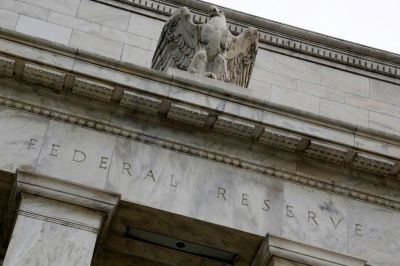
According to Bloomberg News and others on the 17th (local time), beginning with the Fed’s announcement of the results of the September Federal Open Market Committee (FOMC) meeting on the afternoon of the 20th, central banks from the UK, Switzerland, Sweden, Norway, the Philippines, Indonesia, T?rkiye, Brazil, South Africa, Egypt, Mozambique, and Japan will hold monetary policy meetings. Bloomberg reported, "Starting with the Fed on Wednesday and continuing until the Bank of Japan (BOJ) two days later, nearly half of the Group of Twenty (G20) countries will be involved," adding, "As the world conforms to U.S. pressure to keep interest rates at high levels, this 36-hour stretch of major countries’ monetary policy decisions could set the tone for the remainder of the year."
Particularly noteworthy is that this week’s central bank actions come right after the recent rise in crude oil prices has been repeatedly confirmed in U.S. inflation indicators. The Fed is expected to maintain the current rate of 5.25?5.5% at the September FOMC meeting but signal the possibility of further hikes within the year through the dot plot and press conference, delivering a hawkish (monetary tightening) message. Economic growth and inflation forecasts are also expected to be revised upward. Stuart Paul, an economist at Bloomberg Economics, predicted, "I think the Fed will hold rates steady this month but maintain a tightening stance to prevent financial conditions from easing, showing a balanced tone."
Contrary to market expectations, there are also views that the Fed may push harder on further tightening. A survey conducted by the University of Chicago Booth School of Business and others found that about half of economists, over 40%, expect two or more additional rate hikes. Julie Smith, an economics professor at Lafayette College, said, "(The economy) is surprisingly strong," adding, "The signals we are receiving suggest that policy is not very restrictive." Furthermore, the majority of respondents expect the Fed to maintain rates at a high level for a considerable period even after reaching the peak. About 60% answered that rate cuts would not come until after the third quarter of next year.
This Fed stance is likely to have ripple effects on other countries. Following the Fed, the Bank of England (BOE), which will decide rates on the 21st, is expected to implement a baby step (a 0.25 percentage point increase). However, BOE Governor Andrew Bailey recently stated that "stock prices may be near their peak," and with signs of cooling confirmed in indicators, there is speculation that this could be the last hike. The BOE has so far pursued aggressive hikes 14 times.
Sweden’s Riksbank is also facing inflation concerns from officials, making further hikes likely. The Swiss National Bank and Norway’s Norges Bank have also left room for additional increases. Egypt, which surprised markets last month by raising rates by a full percentage point, is expected to continue tightening due to record-high inflation. South Africa, the Philippines, and Indonesia are likely to keep rates steady.
Bloomberg News stated, "Inflation is not fully under control in most parts of the world, and the continued rise in oil prices is raising concerns about additional pressure," adding, "No one will dare declare their work is done."
For the BOJ, which will announce its monetary policy on the 22nd, the key will be the remarks by Governor Kazuo Ueda rather than the interest rate itself. He has previously mentioned in an interview with the Yomiuri Shimbun the possibility of ending the large-scale monetary easing policy maintained since 2016. Additionally, on the 19th, the Organisation for Economic Co-operation and Development (OECD) will release its economic outlook.
© The Asia Business Daily(www.asiae.co.kr). All rights reserved.

















