As instability in the housing market grows due to concerns about an economic recession and a sharp downturn in the real estate market, the term "jeonse and monthly rent crisis" has emerged. In this context, demand is increasingly focused on private rental apartments that offer stable, long-term residency.
This is because residents are guaranteed a certain period of residence, and with clear business entities, worries about deposit fraud such as jeonse scams are reduced, allowing worry-free living. Additionally, residents are exempt from various taxes such as acquisition tax, property tax, comprehensive real estate tax, and capital gains tax.
Private rentals can be broadly categorized into three types. First is private entity private rentals, which are divided into short-term, long-term, and corporate types. In this model, the business entity directly operates rental housing on private land, with rental prices set at levels comparable to the surrounding market. After a recruitment announcement, tenants are recruited either through self-application or via the official subscription website, and rental prices can be adjusted within 5% annually relative to the surrounding market prices.
Second is public-supported private rentals, where the business entity develops private districts or creates more than 50% of the total units in a complex as private rentals, receiving public funds for construction. Tenants are recruited through the official subscription website after a recruitment announcement, and rental prices can be adjusted within 5% annually. However, tenants who win the lease do not have priority rights for conversion to sale and must vacate after a certain period. Since this is a public-supported model, priority is given to those without home ownership, and applicants must meet income and residency qualifications.
The last type is cooperative-type private rentals. In this model, a cooperative is formed on secured private land, and construction funds are borrowed through member contributions and housing finance guarantees from the Korea Housing Finance Corporation.
Tenant recruitment is conducted independently after a recruitment report, and residents can continue living at the initially set rental price without adjustments for a fixed period. The biggest advantage here is the priority right for conversion to sale. Rentals can last up to 10 years, after which residents can choose whether to purchase the unit or move out.
During the 10 years of rental residency, there are no restrictions on eligibility, and residents are exempt from taxes, allowing financial flexibility for housing payments and the possibility of stable living before purchasing their own home.
The priority right for conversion to sale is a definite advantage applied to cooperative-type private rentals among the three types. Confirmed-sale private rental apartments often boast a higher level of future premium compared to other complexes, which is noteworthy.
Among the various types of private rental apartments, a cooperative-type private rental apartment with confirmed sale premium has emerged in a central location, attracting attention. This is the '(tentative name) Seokjeong-dong Private Rental Housing.'
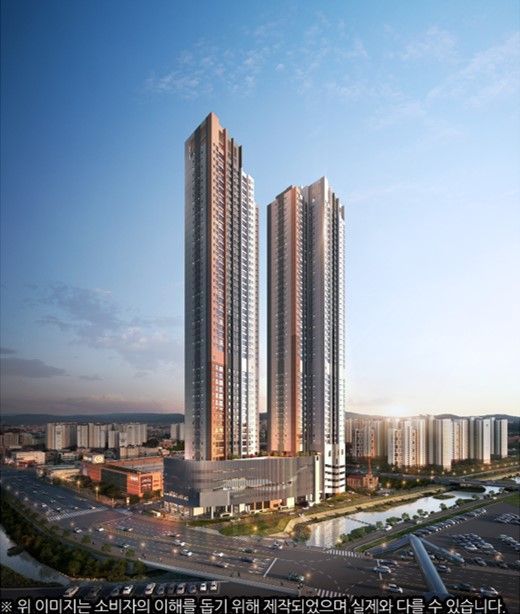
Located in the Seokjeong-dong area of Anseong City, Gyeonggi Province (next to E-Mart Anseong branch), the '(tentative name) Seokjeong-dong Private Rental Housing' is being developed by Seokjeong Na Jip Cooperative, implemented by L&B Co., Ltd., and constructed by a top-tier brand construction company. It will be the tallest building in Anseong City, consisting of two towers from basement level 4 to ground level 49, with a total of 466 apartment units and 42 officetel units, totaling 508 units. The units by exclusive area are ▲84㎡A with 155 units ▲84㎡B with 311 units ▲112㎡OA with 14 units ▲115㎡OB with 28 units, offering highly preferred medium-sized units.
Since the complex is located in a prime area, residents can enjoy various premiums. First, with the development of the Ayang and Dangwang districts, Anseong is becoming a transportation and logistics hub, offering excellent rapid transit access to the Seoul metropolitan area. According to the 4th National Railroad Network Plan, the Pyeongtaek-Bubal Line and the Metropolitan Inland Line will pass through Anseong Station, and an extension of the Gyeonggang Line is under review, which, if confirmed, will be accessible from Anseong Station. The nearby Jije Station SRT also provides a wide-area transportation network.
Additionally, access to highways is convenient via Anseong IC, Nam Anseong IC, and the tentatively named Anseong Matchum IC. The Seoul-Sejong Expressway is under construction, with the Seoul-Anseong section expected to be completed by mid-2024 and the Anseong-Sejong section scheduled for completion in 2025, providing excellent road transportation for vehicle users.
Meanwhile, the '(tentative name) Seokjeong-dong Private Rental Housing' opened promotional centers simultaneously on the 9th in the Oksan-dong area of Anseong City and near Pangyo Station Road in Bundang-gu, Seongnam City. The centers attracted many visitors immediately after opening, demonstrating high interest, and are currently recruiting cooperative members.
© The Asia Business Daily(www.asiae.co.kr). All rights reserved.

















