Efficient and Stable Budget Planning for Second Half Gujeong Operations, Catching Two Rabbits at Once
Focus on Promoting New Office Building Construction as a Hub for One-Stop Administrative Services and Regional Revitalization
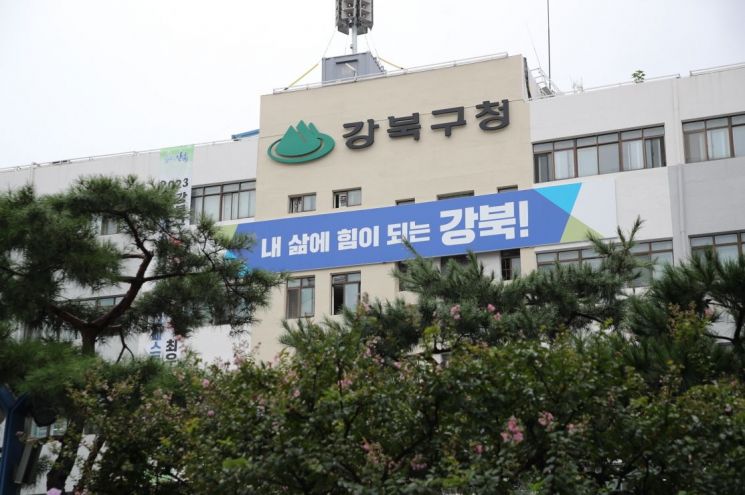
Gangbuk-gu, Seoul (Mayor Lee Soon-hee) announced that the first supplementary budget for 2023 was finally approved at the council plenary session on the 11th.
Excluding returned national and city funds, this year's supplementary budget resources amount to approximately 55.9 billion KRW, with 53.2 billion KRW allocated to the general account and 2.7 billion KRW to the special account designated for fund deposits. Of the 130.9 billion KRW surplus from last year's budget settlement, 75 billion KRW was included in the 2023 main budget, leaving 55.9 billion KRW as the actual surplus available for use this year.
Given the district's low financial independence, the district office carefully planned the budget to ensure funds are used for essential and urgent projects. This supplementary budget focuses on achieving both efficiency and stability in district administration during the second half of the year.
A particularly notable aspect is the ongoing push for the construction of a new district office building. The current Gangbuk-gu office was built about 50 years ago (in 1974) and shows severe deterioration. This not only raises safety concerns for residents and staff but also causes inconvenience in administrative services due to departments being scattered across multiple buildings in the area.
Given the urgency and necessity of the new office building, the district allocated about 62% of the entire supplementary budget to this project, aiming to maximize efficiency through selective and concentrated use of limited resources. Upon completion, the new building is expected to provide efficient one-stop administrative services and serve as a safe, comfortable community space and a hub for regional revitalization.
Reviewing the first supplementary budget for Gangbuk-gu, the general account (53.2 billion KRW) includes a 12.6 billion KRW reduction reflecting decreased property tax revenue due to the real estate market downturn. Additionally, 34.74 billion KRW is allocated to the office building fund for public and official use, 360 million KRW for wages of public workers, and 190 million KRW for information and communication facility maintenance, totaling 36.5 billion KRW for personnel and public operating expenses.
Furthermore, 2.9 billion KRW is allocated as the district's share for smoothly implementing national and city subsidy projects, including 1.24 billion KRW for issuing and operating the Gangbuk Love Gift Certificates, 420 million KRW for allowances for people with mild disabilities, and 230 million KRW for postpartum care expenses for mothers.
Additionally, 1 billion KRW is set aside for projects requiring urgency and regional development in the second half of the year, such as 230 million KRW for renovation of the district office and community facilities, and 120 million KRW for feasibility studies on complex facility construction and pedestrian-friendly street creation.
The district plans to enhance the efficiency of key projects with high urgency and importance through the approved supplementary budget, ensuring stable district administration by smoothly carrying out local economy, safety, and welfare projects directly related to residents' lives.
Lee Soon-hee, Mayor of Gangbuk-gu, stated, “This supplementary budget was carefully prepared to use the increasingly limited available resources, due to decreased property tax revenue, in the right places at the right times. We will do our best to faithfully carry out the planned projects until the end of this year to realize the vision of ‘Gangbuk that empowers my life,’ satisfying our residents.”
© The Asia Business Daily(www.asiae.co.kr). All rights reserved.

















