Last month, U.S. retail sales exceeded market expectations. It is understood that consumer spending increased due to the recent surge in gasoline prices amid rising oil prices. The impact of this oil price increase was also clearly reflected in the Producer Price Index (PPI) figures, which significantly surpassed expectations.
According to the U.S. Department of Commerce on the 14th (local time), August retail sales rose by 0.6% compared to the previous month. This figure not only exceeded the expert forecast (0.1%) compiled by The Wall Street Journal (WSJ) but also surpassed the revised figure for July (0.5%).
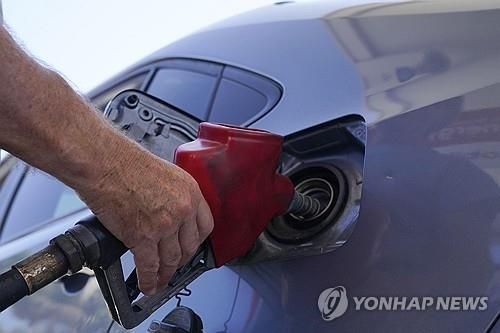
The Department of Commerce explained that the increase in gasoline prices last month led to higher consumer spending. Gas station sales in August increased by 5.2% month-over-month, marking the largest rise. Core retail sales, excluding the automobile and fuel sectors, rose by only 0.2%, falling short of Wall Street’s forecast of 0.3%.
Axios reported, "Consumers noticeably increased spending at gas stations and other outlets last month. This shows that they spent more due to the rise in gasoline costs." Although headline indicators surged due to the impact of rising oil prices, local media generally assess that excluding this effect, signs of consumer spending slowdown are also evident. Retail sales are considered a pillar accounting for two-thirds of the U.S. real economy and a comprehensive indicator for assessing overall economic health.
The impact of rising oil prices was reflected not only in the Consumer Price Index (CPI) released the previous day but also in the PPI released on the same day. According to the U.S. Department of Labor, the August PPI rose 0.7% month-over-month and 1.6% year-over-year. These figures significantly exceeded Wall Street forecasts (0.4% month-over-month, 1.2% year-over-year).
The month-over-month increase was the highest since June last year (0.9%), when U.S. inflation peaked. In particular, the PPI energy index surged more than 10% in one month, confirming the impact of rising oil prices. Price increases in diesel, jet fuel, steel, and scrap metal also contributed directly to the rise in PPI.
Core PPI, excluding energy and food, rose 0.3% month-over-month and 3.0% year-over-year. As the wholesale price index, PPI is generally considered a leading indicator because it is passed on to consumer prices with a certain time lag. The U.S. August CPI released the previous day also exceeded market expectations, rising 3.7% year-over-year due to the impact of gasoline price increases. During the same period, core CPI excluding energy and food rose 4.3%, continuing a slowdown trend.
Following the CPI, both PPI and retail indicators showed strength due to the impact of rising oil prices, raising concerns about inflation once again in the market. However, since concerns about rising oil prices have been raised early on, the Federal Open Market Committee (FOMC) meeting scheduled for next week is still expected to maintain the current interest rates. According to the Chicago Mercantile Exchange (CME) FedWatch tool, as of the morning of this day, federal funds futures markets reflect over a 97% probability that the Fed will keep rates unchanged in September. Investors expect the Federal Reserve (Fed) to maintain the current rate of 5.25?5.5% while delivering a hawkish message through the dot plot and press conference.
The unemployment data released on this day showed an increase for the first time in five weeks. According to the Department of Labor, the number of new unemployment claims for the week of September 3?9 rose by 3,000 from the previous week to 220,000. The number of continuing claims, for those applying for unemployment benefits for at least two weeks, increased by 4,000 to 1.69 million compared to the previous week.
© The Asia Business Daily(www.asiae.co.kr). All rights reserved.

















