The National Pension Service (NPS) is easing the criteria for performance-based bonuses for fund managers.
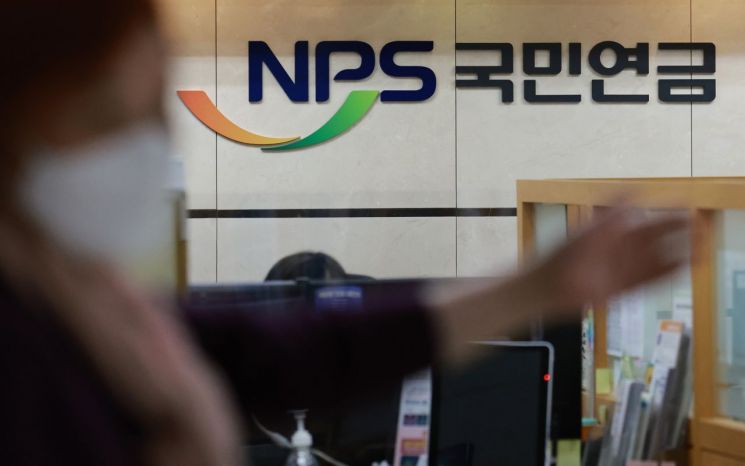
On the 14th, the National Pension Fund Management Committee held the 4th meeting of 2023, received the 2022 Fund Committee activity report, and approved the revision of the National Pension Fund Performance Evaluation and Compensation Guidelines.
The committee improved the minimum requirements for performance bonus payments, which had been controversial. Currently, performance bonuses for fund management personnel are paid only if the 3-year average fund return rate exceeds the 3-year average inflation rate.
Under this criterion, even if the fund management headquarters achieves returns higher than the market benchmark (BM return), there can be cases where no performance bonus is paid due to the fund return rate and inflation rate, and there have been criticisms that a 3-year evaluation period is not appropriate from a long-term investor’s perspective.
After discussing various improvement measures at this Fund Committee meeting, it was decided to abolish this criterion to enhance the rationality of the performance bonus payment system. Emphasizing the need to increase fund investment returns, this can be interpreted as a measure to prevent personnel turnover and improve long-term fund management returns.
Some have criticized that the principle for performance bonus payments has disappeared.
An industry insider from the IB sector said, "Despite a -8% return last year, the fund headquarters received about 52 million KRW per person in performance bonuses," adding, "This year’s management will fall short of the minimum standard, so the criteria were changed so they can still receive bonuses. This is all paid from the premiums contributed by subscribers."
Additionally, the Fund Committee adjusted the weighting of performance evaluations to balance the results of domestic and overseas assets. Currently, domestic stocks and bonds each account for 10%, and overseas stocks and bonds each account for 5%, a system established when over 90% of investments were in domestic assets.
Considering that the current overseas investment ratio reaches 50%, the evaluation weights for domestic and overseas assets were adjusted equally to 8% each.
On this day, the Fund Committee received the 2022 Fund Committee activity report. According to the report, the committee held a total of six meetings and discussed 34 agenda items.
Key activities included establishing the 2023?2027 medium-term asset allocation plan, revising the fiduciary responsibility activity guidelines to include environmental and social issues as key management matters, and adjusting overseas investment policies such as temporarily increasing the currency hedge ratio in response to changes in external conditions.
Finally, the Fund Committee changed the compliance monitoring role from the back-office (Back) to the middle-office (Middle) within the fund management personnel. Most domestic and international financial industries classify compliance monitoring as a middle-office function.
This revision is expected to motivate fund headquarters personnel and contribute to improving the fund’s returns. Going forward, the fund management system will be rationally improved considering changes in the fund environment and management objectives.
© The Asia Business Daily(www.asiae.co.kr). All rights reserved.

















