"Need for Specific Scope 3 Target Setting" Also Pointed Out
Samsung Electronics has increased its renewable energy transition rate by 11 percentage points (p) over the past year since joining the RE100 (Renewable Energy 100%) campaign. Last year, Samsung Electronics' renewable energy transition rate reached 31%. The renewable energy transition rate refers to the proportion of renewable energy usage, including solar and wind power, among all energy sources such as nuclear, coal, and liquefied natural gas (LNG). Samsung Electronics achieved RE31 last year. It reduced direct and indirect greenhouse gas emissions (Scope 1 and 2) by 59% compared to 2021 and disclosed for the first time the greenhouse gas emissions during product distribution and consumption stages (Scope 3). Scope 3 emissions are higher and more difficult to measure than emissions from factory manufacturing processes (Scope 1) and emissions caused by electricity used in manufacturing processes (Scope 2), but Samsung Electronics succeeded in establishing a related disclosure system.
Samsung Electronics joined RE100 on September 15 last year and announced a 'New Environmental Management Strategy' that includes achieving company-wide carbon neutrality by 2050. The strategy proposes solutions such as expanding ultra-low power semiconductor production, establishing a resource circulation system that produces products using recycled materials, and minimizing air and water pollutants.
The achievements over the past year can be evaluated through trends in power consumption, renewable energy transition rates, and disclosure status of Scope 1, 2, and 3 emissions. According to the 2023 Sustainability Management Report released by Samsung Electronics in July, last year's renewable energy transition rate was 31%, up 11%p from 20% in 2021. The DX (Consumer Electronics & Mobile) division achieved 93%, and the DS (Semiconductor) division achieved 23%. Renewable energy usage increased by 65% to 8,704 GWh compared to 5,278 GWh in 2021. The low transition rate in the DS division and slower transition speeds in some regions, including South Korea, Latin America, Southeast Asia, CIS (Commonwealth of Independent States), and Africa, were pointed out as limitations.
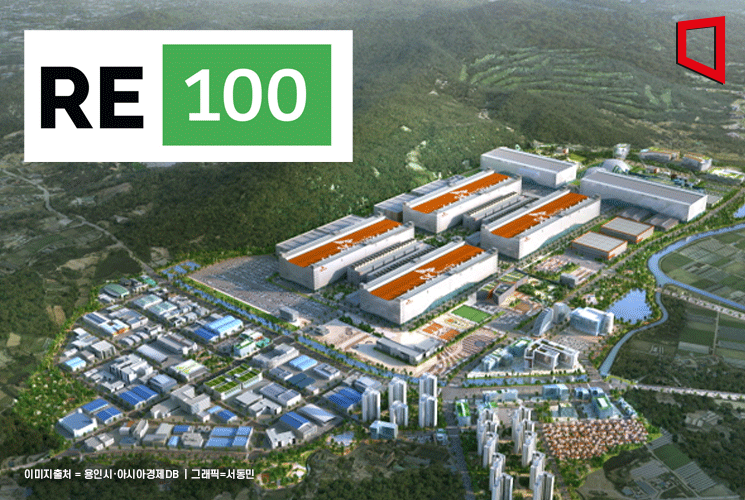
Reducing power consumption is not an easy task as facility investments are being significantly increased, such as the construction of a semiconductor plant in Yongin, Gyeonggi Province. Last year's power consumption was 28.3 TWh. It has steadily increased from 22.9 TWh in 2020, 25.8 TWh in 2021, to 28.3 TWh last year. Samsung Electronics' power consumption is the highest among the 34 domestic companies (including financial institutions) that have joined RE100.
Another notable achievement is the disclosure of Scope 3 figures, which account for 89.1% of the company's total greenhouse gas emissions. Samsung Electronics' Scope 3 emissions last year were 124.715 million tons. It aggregated greenhouse gas emissions from 2,131 domestic and overseas partner companies during manufacturing and logistics processes (upstream) and emissions generated during customer product usage (downstream).
The industry has evaluated that Samsung Electronics has been steadily achieving its goals over the year since announcing the New Environmental Management Strategy. However, environmental groups pointed out the need to present clearer reduction targets for Scope 3 emissions. Samsung Electronics has not presented specific company-wide targets for reducing Scope 3 emissions by a certain year. The company states that it is difficult to present specific targets due to challenges in collecting Scope 3 data. Samsung Electronics said, "To establish mid- to long-term Scope 3 reduction targets, we are continuously identifying various reduction tasks in supply chain, resource circulation, and logistics sectors."
© The Asia Business Daily(www.asiae.co.kr). All rights reserved.

















