Kim Sang-cheol, CEO of Seoul Welfare Foundation
Celebrates 20th Anniversary Since 2003 Launch
"An Opportunity to Lead International Welfare Policy"
"Seoul's welfare policy has already received international recognition through the 'Hope Plus Account.' Now is the time for us to lead international welfare policy with 'Ansim Income'."
Two recent key topics have taken root in the mind of Kim Sang-cheol, CEO of the Seoul Welfare Foundation. One is how to expand Seoul's welfare in the post-COVID era, and the other is how to draft the blueprint for Ansim Income, a core project of Seoul City. When we met Kim at the Seoul Welfare Foundation in Mapo-gu, Seoul, on the afternoon of the 11th, he especially said, "I have an infinite sense of mission regarding the Ansim Income project."
The Seoul Welfare Foundation has marked its 20th anniversary since its launch. In the early days, its main roles were research, development, and evaluation of welfare policies, but now it has expanded its scope to include welfare policy projects as well as financial and legal counseling.
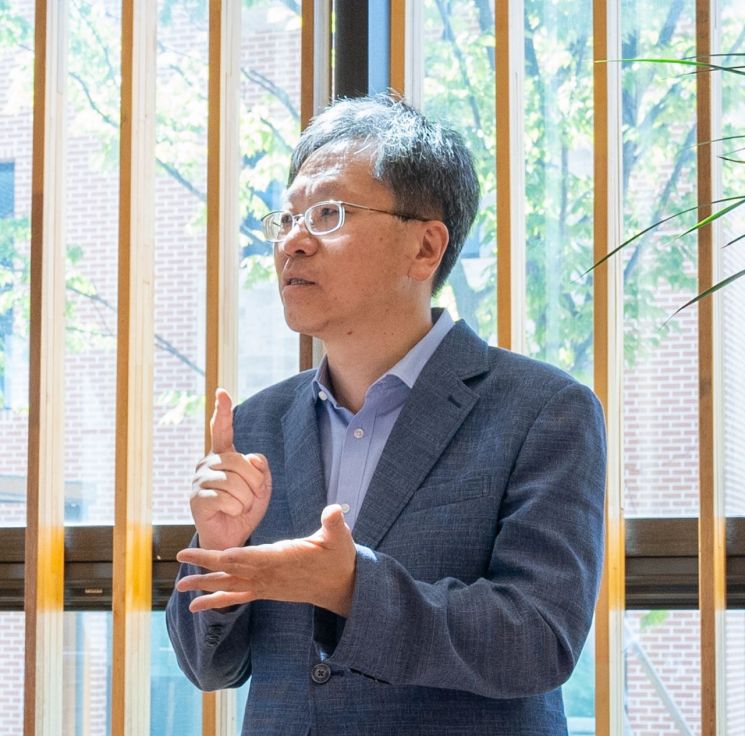
In particular, the Ansim Income project carries even greater weight on his shoulders because many countries are experimenting with similar policies. Depending on the policy outcomes, we can now leap from being a 'welfare policy follower country' to presenting a 'new paradigm of welfare policy.'
-What kind of organization is the Seoul Welfare Foundation?
▲The Seoul Welfare Foundation is a welfare-specialized institution established in 2003 with funding from Seoul City. In its early days, it conducted research and development on Seoul City's welfare policies and performed evaluation tasks to support the improvement of service quality in social welfare fields. These remain the foundation's core projects today.
However, it has now broadened its policy areas to include support for socially isolated households, asset-building support for low-income youth, and support for the independent living of people with disabilities leaving facilities. It has also expanded into areas previously not considered part of welfare, such as financial welfare counseling and legal service support.
-The foundation is celebrating its 20th anniversary. What are some of the representative projects so far?
▲Over the past 20 years, the foundation has accumulated many research achievements for the development of Seoul City's welfare policies. A representative project is the 'Hope Plus Account,' which started as a pilot project in 2008 and was expanded to a Seoul City project in 2009. The Hope Plus Account is a matched savings program created to support the self-reliance of citizens in the lower-income bracket.
This project was recognized for its effectiveness and has now been expanded nationwide under the name 'Hope Growth Account,' led by the Ministry of Health and Welfare. It also received international recognition by winning the UN Public Administration Award in 2010. In this way, Seoul City's welfare policies proudly play a leading role not only in South Korea but also in international welfare policy.
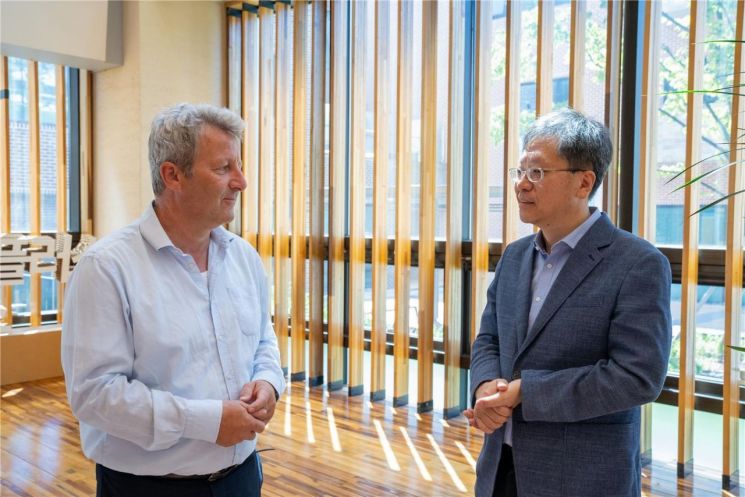 Kim Sang-chul, CEO of the Seoul Welfare Foundation (right), is having a conversation with Philip Manu, Professor of Social Policy at the University of Bremen, Germany, who gave the keynote speech at the 20th anniversary ceremony and international forum of the Seoul Welfare Foundation held on the 8th.
-What projects have you focused on since taking office as CEO?
▲Immediately after taking office in November 2021, I established a dedicated 'Ansim Income Task Force (TF)' within the foundation's research department. Ansim Income is a new system designed to complement the shortcomings of Korea's income security system and is an experimental new welfare policy introduced by Seoul Mayor Oh Se-hoon.
The pilot project recruited the first group of participating households last year and recently completed recruitment for the second group at the end of June. Over four years, data will be collected eight times every six months to enhance the policy's maturity.
-How does Ansim Income differ from existing welfare?
▲Ansim Income does not use the concept of recognized income but separates the income evaluation amount and asset criteria. Recipients of Ansim Income receive the difference between 85% of the median income standard and their household's income evaluation amount as Ansim Income. Therefore, unlike existing systems, it has a progressive structure where households with lower income receive more.
-Does this mean you can receive it even if you have income?
▲Yes. That is the biggest difference from existing systems. Ansim Income is designed so that even if recipients earn income, they can maintain a certain level of benefits. This naturally prevents discouragement of recipients' motivation to work. Accordingly, additional work incentives are expected through Ansim Income.
-It seems a very delicate policy design process is required.
▲Of course. For this reason, policy design is being carried out with not only the foundation's researchers but also domestic and international experts. There are many issues to resolve, such as how much benefit to provide based on income and how much total cost to estimate.
Many countries are experimenting with policies similar to Ansim Income. However, Korea has the optimal environment for experimenting with new welfare policies. Fundamentally, the information infrastructure is well developed, and there is abundant data accumulated from implementing welfare policies so far. Because of this, other countries experimenting with similar policies are highly interested in Korea's policy experiments.
The 'basic income,' which distributes a fixed amount uniformly to all citizens, is a method used when infrastructure is lacking. Since we have sufficient infrastructure, we can provide more help to those in greater need.
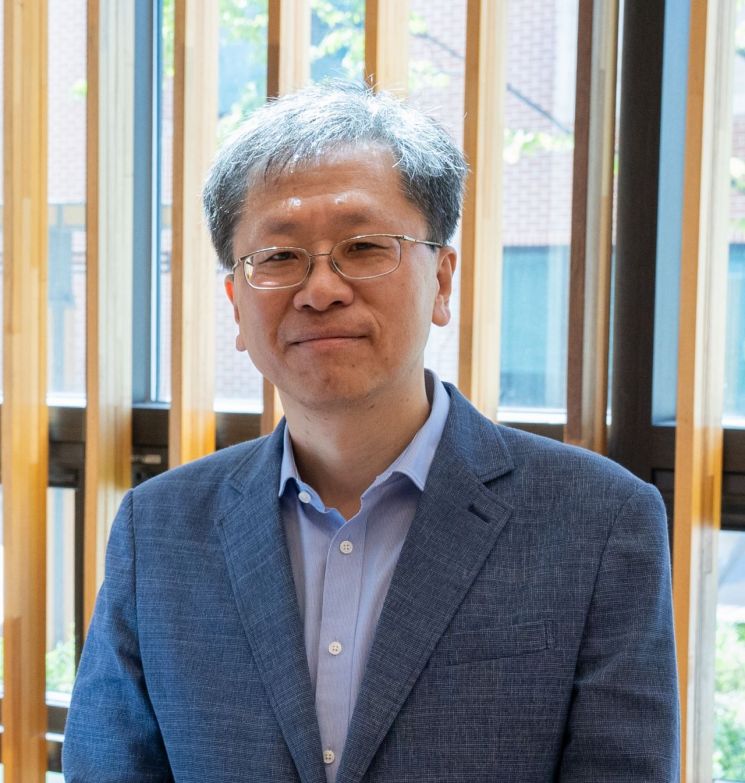
-What does 'welfare' mean to you, CEO Kim?
▲Welfare fundamentally means helping those in difficulty to stand up again and recover. It also means helping people live as members and protagonists of society, as free citizens, without discrimination.
First, there should be no isolated or marginalized citizens. Recent tragic incidents show that new blind spots are increasing, which cannot be resolved by existing welfare systems.
We must ensure that no one becomes socially isolated. One of the goals of Ansim Income is to encourage those in difficulty not only through financial support but also by stimulating their motivation to work so that social disconnection does not occur.
© The Asia Business Daily(www.asiae.co.kr). All rights reserved.
![Clutching a Stolen Dior Bag, Saying "I Hate Being Poor but Real"... The Grotesque Con of a "Human Knockoff" [Slate]](https://cwcontent.asiae.co.kr/asiaresize/183/2026021902243444107_1771435474.jpg)













