SK Hynix DRAM and NAND Flash
Equipped in Huawei 'Mate60 Pro'
SK Hynix "No Transactions Made"
Possibility of Leakage Through Distribution Channels
May Have Been Held Before US Sanctions
It has been confirmed that the new smartphone 'Mate60 Pro' released by Chinese company Huawei, which is under U.S. sanctions, is equipped with memory semiconductors from SK Hynix, which has ceased transactions with Huawei. SK Hynix emphasized that it is not conducting business with Huawei and is currently investigating the circumstances of the incident. Industry insiders are leaning toward the possibility that Huawei either purchased memory semiconductors in advance before the U.S. sanctions took effect in 2020 or secured them through a domestic Chinese distribution supply chain capable of gathering general-purpose memory semiconductors.
On the 8th, SK Hynix confirmed that its memory semiconductors were included in Huawei's new 'Mate60 Pro' model and began investigating how the products were leaked. Since the U.S. sanctions against Huawei were fully enforced in 2020, semiconductor companies both domestic and abroad, including SK Hynix, have stopped transactions with Huawei. SK Hynix stated, "Upon recognizing that our memory chips were used in Huawei's new product, we immediately reported it to the U.S. Department of Commerce's Bureau of Industry and Security," and added, "We have launched an investigation to understand the circumstances of the incident."
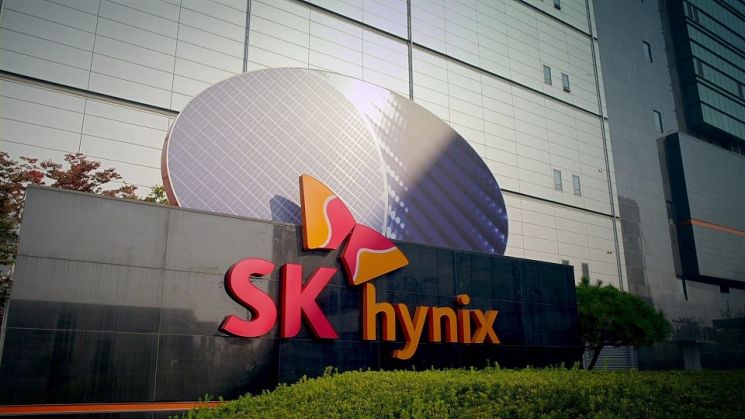
Earlier, Bloomberg News reported that, based on an analysis of a disassembled Mate60 Pro commissioned to semiconductor consulting firm TechInsights, the smartphone contained SK Hynix's mobile DRAM, specifically low-power double data rate (LPDDR) 5, and NAND flash. It also explained that while Huawei sourced most components for the smartphone from Chinese companies, exceptionally, products from the overseas company SK Hynix were included.
The industry is presenting various possibilities regarding how semiconductors made by SK Hynix flowed into Huawei. Given that SK Hynix produced LPDDR5 in 2020, there is a possibility that Huawei secured the supply before the U.S. sanctions. An industry official said, "Huawei may have stockpiled parts inventory up to 2020, before the full enforcement of U.S. sanctions, and utilized it." Since the LPDDR5 installed in Huawei's new phone is a widely used general-purpose product already prevalent in the market, there is also a possibility that Huawei secured quantities through intermediate supply chains that have accumulated large memory inventories. China has a complex structure of intermediate distribution supply chains capable of supplying general-purpose memory semiconductors. If the volume of Mate60 Pro releases increases in the future, it means there is a possibility that memory semiconductors from other companies capable of producing LPDDR5, such as Samsung Electronics and U.S.-based Micron, could also be utilized besides SK Hynix.
SK Hynix clearly stated that it has not conducted transactions with Huawei since the U.S. sanctions. It also explained that strictly complying with U.S. export regulations is its company policy. The industry expects that SK Hynix will not face legal sanctions from the U.S. government because it did not conduct business with Huawei.
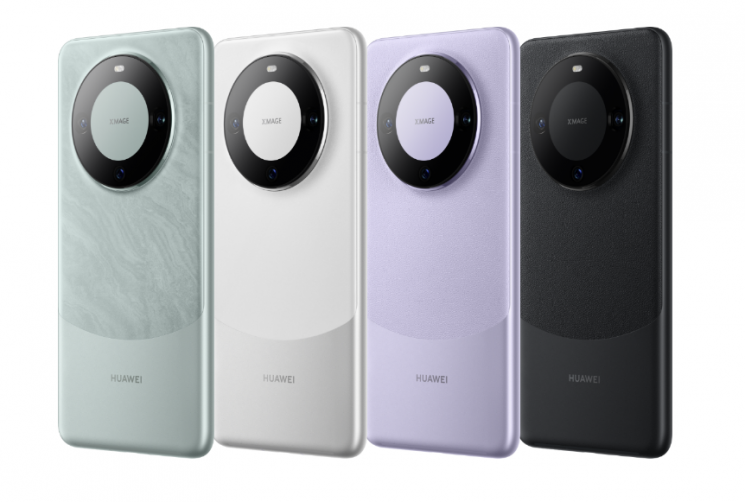
The smartphone in question is a new Huawei product equipped with the mobile application processor (AP) 'Kirin 9000s,' produced using a 7-nanometer (nm; 1 nm is one-billionth of a meter) process. The fact that Huawei released a product containing an AP manufactured with advanced process technology despite U.S. sanctions has become a subject of controversy.
The Kirin 9000s was designed by HiSilicon, a fabless (semiconductor design) company established by Huawei, and produced by the Chinese foundry company SMIC before being supplied to Huawei. In the U.S., there is public opinion calling for an investigation into whether SMIC violated sanctions.
© The Asia Business Daily(www.asiae.co.kr). All rights reserved.
![Clutching a Stolen Dior Bag, Saying "I Hate Being Poor but Real"... The Grotesque Con of a "Human Knockoff" [Slate]](https://cwcontent.asiae.co.kr/asiaresize/183/2026021902243444107_1771435474.jpg)

















