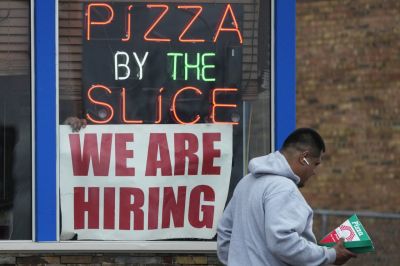
With stronger-than-expected solid economic indicators fueling hopes for a so-called soft landing, mentions of "recession" have disappeared from U.S. corporate earnings reports. Investment bank Goldman Sachs also lowered the probability of a U.S. recession within 12 months to 15%. However, concerns have been raised that the recent rise in international oil prices could contribute to prolonged inflation and tightening.
On the 5th (local time), economic media CNBC cited FactSet data reporting that a total of 62 companies mentioned the word "recession" in their Q2 earnings reports this year. Considering that 238 companies mentioned recession in their Q2 earnings reports last year, this represents a reduction to about one-quarter. This is even lower than the recent 5-year average (82), though it exceeds the 10-year average (60). CNBC stated, "The number of companies discussing recession risks with investors is decreasing," adding, "Mentions of recession by companies have declined for four consecutive quarters."
Goldman Sachs also revised downward its estimate of the probability of a U.S. recession. This is already the third time this year. Jan Hatzius, Goldman Sachs’ Chief Economist, said in a report released the day before, "Due to positive inflation and labor market news, we have lowered the probability of a U.S. recession within the next 12 months from 20% to 15%." He explained, "With continued employment growth and real wage increases, real disposable income is expected to rise again in 2024," and added, "We strongly disagree with the view that the long lag of tightening monetary policy will push the economy into a recession."
When the Federal Reserve (Fed) began its rate hike cycle to curb inflation early last year, the market widely expected the U.S. economy to enter a recession within this year. However, despite the Fed raising rates by more than 5 percentage points, recent economic indicators, including consumer spending, have demonstrated the U.S. economy’s strong resilience. Inflation indicators have also shown a easing trend, spreading expectations on Wall Street and beyond that the U.S. economy could avoid recession and achieve a soft landing.
Chief Economist Hatzius pointed out slowing factors such as the resumption of student loan repayments in Q4 and rising mortgage rates but predicted, "The economic slowdown will be shallow and short-term." He also analyzed that, based on Fed Chair Jerome Powell’s statement at last month’s Jackson Hole meeting about proceeding with rate hikes "cautiously," the possibility of a rate hike in September has effectively been taken off the table. He added, "There will be challenges even with a November hike," and "Confidence is growing that the Fed has finished raising rates."
Market expectations for the end of Fed tightening have increased following last week’s employment report. The August employment report released on the 1st showed the U.S. unemployment rate rising to 3.8%, the highest in about a year and a half, while wage growth slowed more than expected. Mark Zandi, Chief Economist at Moody’s, tweeted on X (formerly Twitter), "The August employment report couldn’t be better," and said, "The entire report spells out a soft landing."
According to the CME’s FedWatch tool, the federal funds futures market on that afternoon reflected over a 93% probability that the Fed will hold rates steady in September. Although the Fed’s June dot plot indicated the possibility of one more hike this year, investors are increasingly viewing a scenario with no further rate hikes as likely. The remaining FOMC meetings this year are in September, November, and December.
However, a variable is the recent upward trend in oil prices. Oil was one of the main culprits behind the worst inflation in about 40 years that the U.S. economy experienced last year. On that day, October delivery West Texas Intermediate (WTI) crude oil prices on the New York Mercantile Exchange closed at $86.69 per barrel, up $1.14 (1.3%) from the previous day. This marked an eighth consecutive day of gains and the highest closing price since November 15, 2022. Saudi Arabia, the largest oil producer, announced it would continue voluntary production cuts through the end of the year, and the benchmark November delivery Brent crude briefly surpassed $90 during the session.
This rise in oil prices not only increases inflationary pressures across the economy but could also dampen expectations for the Fed to end tightening based on the soft landing outlook. Case Runner, Co-Chief Investment Officer at Truist Advisory Services, noted, "If oil prices rise, inflation will reappear and make the Fed’s job more difficult."
© The Asia Business Daily(www.asiae.co.kr). All rights reserved.


















