Diplomatic normalization talks between Saudi Arabia and Israel are gaining momentum due to concessions from Palestine. If official diplomatic relations between Saudi Arabia and Israel are restored, the Middle East peace initiative promoted by the U.S. government is expected to accelerate, serving as a positive factor for U.S. President Joe Biden's reelection campaign.
According to the Wall Street Journal (WSJ) on the 31st (local time), the Palestinian leadership proposed to Saudi Arabia control over some areas of the West Bank and the dismantling of some illegally established outposts. This represents a significant softening from the previous stance, which demanded Israel’s complete withdrawal from the West Bank and Gaza Strip?territories illegally occupied since the 1967 Middle East War?and the establishment of an independent state with East Jerusalem as its capital.
WSJ interpreted this as "a signal that the softened Palestinian demands indicate a willingness to cooperate with U.S. mediation to resume Middle East peace negotiations." This contrasts with the harsh criticism Palestinians expressed when the United Arab Emirates (UAE) normalized relations with Israel in 2020 under U.S. mediation, which they felt was a betrayal. It is reported that Palestine has judged that cooperating with the U.S. and Saudi Arabia in this negotiation is more beneficial. William Wetzler, a Middle East expert at the U.S. think tank Atlantic Council, told WSJ, "For them, the prospect of diplomatic normalization between Israel and Palestine can be used to secure tangible benefits for their people."
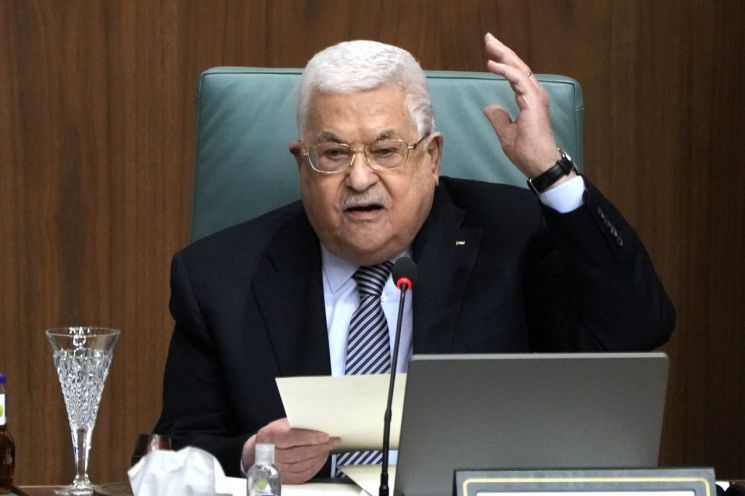
This demand follows Saudi Arabia’s indication that it would resume financial support to the Palestinian Authority, which had been cut off in 2021. Saudi Arabia, pursuing diplomatic normalization with Israel under U.S. mediation, needs the support of the Palestinian Authority, a key stakeholder. Mahmoud Abbas, head of the Palestinian Authority, reportedly expressed willingness to accept diplomatic relations between Saudi Arabia and Israel if Palestinian demands are met and explicitly stated in the agreement during a meeting with Egyptian President Abdel Fattah el-Sisi in early August. However, it remains uncertain whether Israel will accept the Palestinian demands, even if they have been scaled back.
The Netanyahu-led coalition government, regarded as the most right-wing in history, has maintained a hardline stance toward Palestine. Bezalel Smotrich, Israel’s Minister of Finance, recently dismissed the possibility of concessions, saying in local media, "If there is any concession to Palestine, that is fiction." Ahead of the Saudi-Israel normalization talks, Palestine reportedly demanded U.S. support for Palestine’s formal United Nations membership status.
The Biden administration views the normalization of relations between Saudi Arabia and Israel as a potential diplomatic achievement to showcase ahead of the presidential election in November next year. Pursuing the “two-state solution” (recognizing Palestine and Israel as independent states) as a core Middle East strategy, the Biden administration has worked to elevate relations with Palestine, including establishing a new special envoy position dedicated to Palestinian affairs within the State Department, in response to the upheaval caused by the rise of Israel’s far-right government.
President Biden aims to complete the normalization of relations between Israel and Saudi Arabia within his term. Efforts are accelerating to finalize an agreement within this year ahead of next year’s presidential election, but Saudi Arabia has stated it will not cooperate unless Palestinian demands are accepted.
© The Asia Business Daily(www.asiae.co.kr). All rights reserved.

















