[Fuel Efficiency AtoZ] Manufacturer's Key Technologies and Products
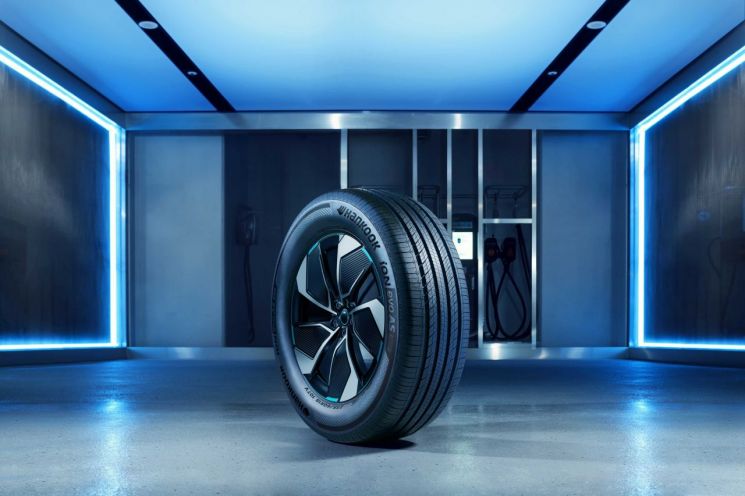
Hankook Tire has bundled its electric vehicle-exclusive tire lineup under the brand name ‘ION.’ Since electric vehicles are heavier than internal combustion engine vehicles and lack engine noise, tire road noise becomes more prominent, requiring more sophisticated technology for EV tires. A key feature of ION is its focus on energy efficiency. By reducing rolling resistance, which significantly affects the driving range of electric vehicles, it allows for longer travel distances while using less electricity. According to the company’s own measurements, the energy efficiency of ION tires is up to 6% higher compared to the company’s regular tires for internal combustion engine vehicles.
Major automakers emphasize good fuel efficiency in their new car marketing. Audi’s A7 55 TFSI e-quattro Premium, released last month, is a plug-in hybrid combining a 2.0ℓ gasoline engine with an electric motor. It offers three different driving modes that can be selected depending on driving conditions. Unless the driver presses the accelerator after passing a variable pressure point detectable by the driver, the vehicle operates in electric vehicle (EV) mode; there is also a battery hold mode where the motor is not used at all, and a hybrid mode where both engine and motor work together. In hybrid mode, the vehicle tries to use the electric motor for as many sections as possible.
Volvo released a model year update (2024 model) of its pure electric C40 Recharge, improving software and electric motors to extend driving range. The previous model had 204 horsepower motors on both front and rear wheels, while the new model has 150 horsepower in the front and 25 horsepower in the rear. While maintaining the same total output, the driving range per charge increased by 51 km to 407 km. The combined energy efficiency improved by 12% to 4.6 km per kWh, and charging time was also reduced.
Toyota used a bipolar nickel-metal battery in the new flagship sedan Crown. Compared to conventional nickel-metal batteries, it reduces electrical resistance to allow higher current usage. During initial acceleration, the motor is more actively engaged to improve fuel efficiency, and during deceleration, it can charge with higher current. The battery size is also reduced, which helps fuel efficiency. Lexus, which has long developed hybrid technology alongside Toyota, recently introduced the RZ in Korea, attracting attention as its first dedicated electric vehicle. It applies the pure electric vehicle platform e-TNGA and adopts a silicon carbide (SiC) inverter for the first time. This reduces power loss and improves energy efficiency by about 5%.
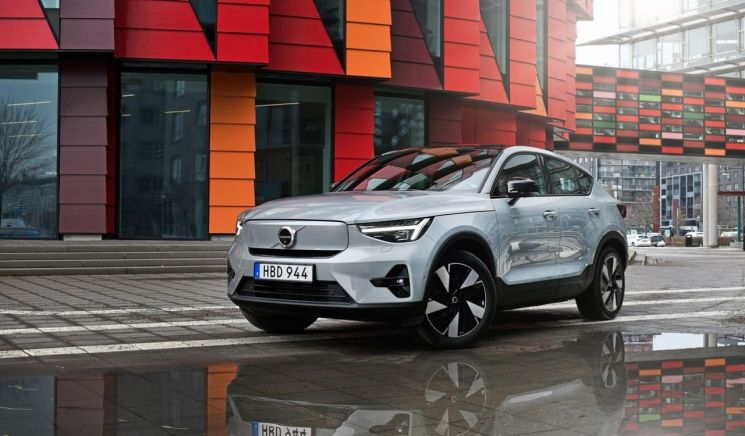 2024 Volvo C40 Recharge. The driving range has increased by 51 km compared to the previous model before the year change.
 The Volkswagen Golf has the best fuel efficiency among domestic and imported passenger cars sold in Korea. The 2.0ℓ diesel model achieves 17.8 km/L, tying for first place with the older Avante. It combines an engine with an SCR catalytic converter that reduces nitrogen oxide emissions and a 7-speed DSG transmission to enhance efficiency. The official fuel economy rating is already high, but actual owners report real-world fuel economy that exceeds this, resulting in high satisfaction.
Ford’s Ranger pickup truck, launched in Korea last March, features a 2.0ℓ bi-turbo diesel engine with a certified combined fuel economy of 9.0 to 10.1 km/L under Korean standards. Considering the vehicle’s weight of over 2400 kg and its four-wheel-drive pickup truck configuration, it ranks among the more fuel-efficient models. Ford, despite being the top-selling pickup truck brand in the United States?the home of pickup trucks?shows strong interest in sustainability. When it won first place in various categories at the famous off-road race Baja 1000, it used low-carbon blended biofuels, and it also introduced an electric pickup truck based on the F-150 early on.
© The Asia Business Daily(www.asiae.co.kr). All rights reserved.

![Clutching a Stolen Dior Bag, Saying "I Hate Being Poor but Real"... The Grotesque Con of a "Human Knockoff" [Slate]](https://cwcontent.asiae.co.kr/asiaresize/183/2026021902243444107_1771435474.jpg)
















