Increased Burden Due to Labor Shortage Leads to AI Adoption
Capable of Handling Everything from Production to Cooking and Customer Service
The Japanese food and restaurant industry, long plagued by labor shortages, has begun introducing artificial intelligence (AI) into the field. As AI takes an active role in food factories and restaurants, attention is focused on the limits of AI's capabilities.
On the 31st, Nihon Keizai Shimbun (Nikkei) introduced the factory of "Osaka Osho," a food brand of Japan's Eat & Holdings, which has adopted a smart factory system. Since January, Eat & Holdings has been operating a factory in Gunma Prefecture that produces Osaka Osho's dumplings. Osaka Osho began managing about 30 manufacturing machines there through the Internet of Things (IoT), which doubled the production volume per line compared to before.
However, as production increased, the inspection burden also grew. Usually, defective products are checked one by one by human eyes, and it takes about a month of training for a person to be able to identify them. Before the production increase, one employee checked one pack containing 12 dumplings every 2 seconds, but after the production increase with IoT, they had to quickly check more than one pack per second.
As it became difficult for employees to catch defective products individually, the factory assigned only three staff members for inspection and deployed 13 AI cameras to take over the inspection tasks. As a result, even with a 30% reduction in manufacturing personnel, production volume doubled.
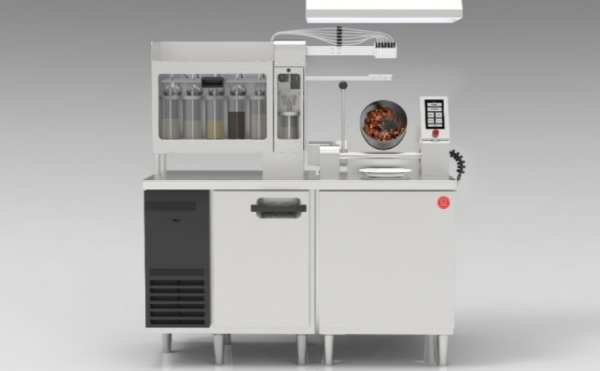
There are even places where AI completely takes over cooking. The Japanese family restaurant chain Royal Holdings is preparing to teach AI robots how to cook and aims to open stores operated by AI.
The pilot store that started this is the tempura specialty shop "Ten Labo," which opened in April. The robot AI in this store is equipped with technology to determine whether shrimp tempura is properly cooked. The robot will continue training to freely cook tempura using 10 types of ingredients, including shrimp, shellfish, and vegetables. Royal Holdings explained, "We will evolve it to the level where it can cook dishes that can be served to customers in the store."
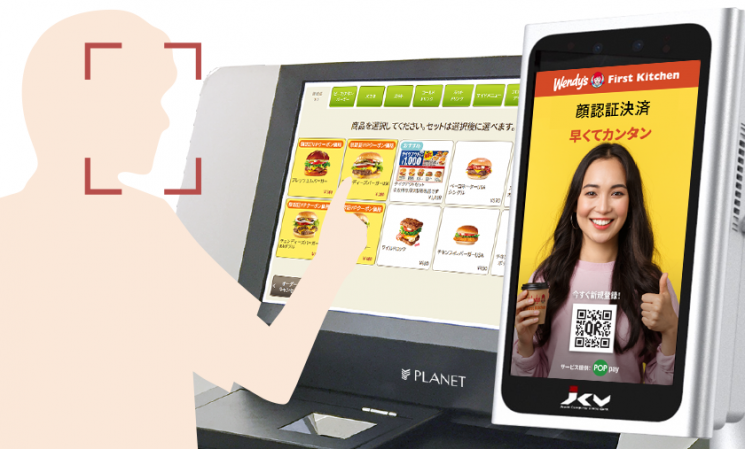
In addition, AI that remembers regular customers' tastes and reflects them when cooking has also appeared. First Kitchen, a franchise restaurant located in Shinjuku, Tokyo, is experimenting with facial recognition payment using AI cameras. When a face is authenticated by the AI camera installed at the self-checkout counter, the payment is completed. First Kitchen is using this to record the characteristics of regular customers. In the future, it plans to utilize AI customized to individual consumers' preferences, such as "Please remove pickles from the hamburger" or "Please exclude ingredients due to allergies."
The reason the Japanese food and restaurant industry is actively adopting AI like this is interpreted as an effort to resolve the serious labor shortage. Due to the labor shortage, the hourly wages paid to workers have risen, causing companies to suffer from the dual burden of labor shortages and labor costs.
According to the Japanese employment information company Recruit, the average hourly wage in the food industry in major metropolitan areas such as Tokyo, Tokai, and Kansai reached a record high of 1,114 yen (about 10,080 KRW) last month, up 4.9% from the same month last year.
Along with this, AI investment in the Japanese food industry is on the rise. The research institute Fujikimura General Research Institute forecasts that IT-related investment in the food industry will increase by 20% from 2021 to 2026, reaching around 120 billion yen.
Nikkei evaluated, "AI, which is evolving rapidly, has begun to become a pillar for the food industry struggling with labor shortages and rising raw material prices."
© The Asia Business Daily(www.asiae.co.kr). All rights reserved.
![Clutching a Stolen Dior Bag, Saying "I Hate Being Poor but Real"... The Grotesque Con of a "Human Knockoff" [Slate]](https://cwcontent.asiae.co.kr/asiaresize/183/2026021902243444107_1771435474.jpg)












