Victim Scope Defined Up to Direct Lineal Descendants
Full Committee Meeting of the Public Administration and Security Committee Scheduled for Tomorrow
Designated as Fast Track... Expected to be Processed in the National Assembly by Year-End
On October 30, the 'Itaewon Disaster Special Act' aimed at supporting the victims of the Itaewon tragedy that occurred on October 29 last year and investigating the truth passed the Subcommittee on Agenda Coordination under the National Assembly's Administrative Safety Committee solely by the opposition party.
During the Subcommittee meeting that afternoon, the 'Special Act for Guaranteeing the Rights of the Victims of the 10·29 Itaewon Disaster, Investigating the Truth, and Preventing Recurrence' was unanimously approved and forwarded to the plenary session. Four of the six subcommittee members attended the meeting, including Democratic Party lawmakers Song Jae-ho, Oh Young-hwan, Lee Hae-sik, and Basic Income Party lawmaker Yong Hye-in.
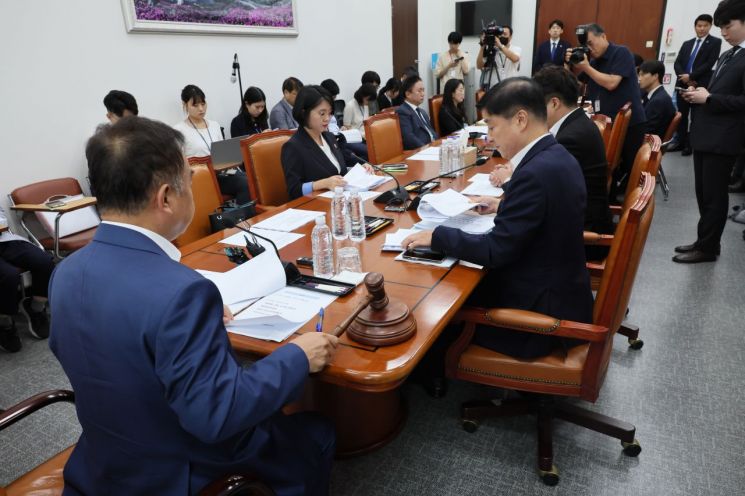
People Power Party members Kim Woong and Jeon Bong-min did not attend. The government and the People Power Party oppose the enactment of the special law. The special law that passed the Subcommittee on Agenda Coordination that day included many provisions that were not in the original bill proposed by Democratic Party lawmaker Nam In-soon. Democratic Party lawmaker Lee Hae-sik stated, "We reviewed the bill with consideration of the issues that the People Power Party had opposed so far," adding, "Especially since we removed the contents that the People Power Party was concerned about, I can confidently say that the bill was reviewed as a reasonable one even from the ruling party's perspective."
The revised bill defines victims of the Itaewon disaster as direct ascendants, descendants, and siblings, excluding simple residents. It also includes provisions recognizing those injured during rescue operations as victims after review by the Victim Relief Committee.
Furthermore, the investigative committee necessary for uncovering the truth will be composed of four members recommended by each party, one member recommended by the Speaker of the National Assembly, and two members recommended by the bereaved families. Democratic Party lawmaker Song Jae-ho emphasized, "We ensured that the investigative committee guarantees objectivity and neutrality, and separately established the Victim Relief Committee to clearly define the scope of victims' rights protection and the investigative committee's duties," adding, "We also set the scope of the Victim Relief Committee to faithfully fulfill the investigation, prevention of recurrence, and protection of victims' rights."
Regarding victim support, a declarative basis for compensation was established, but actual compensation procedures were omitted, according to lawmaker Song.
The Administrative Safety Committee is expected to hold a plenary session on the morning of the 31st to process the special law. The special law was designated as a fast-track bill on June 30 in the National Assembly plenary session, led by the Democratic Party and four other opposition parties.
The fast-track bill process involves stages of 'within 180 days in the standing committee → within 90 days in the Legislation and Judiciary Committee → within 60 days in the plenary session,' taking up to 330 days (11 months) for final processing. If it passes the Administrative Safety Committee on the 31st, it may take up to an additional 150 days. When the People Power Party delayed the bill review in the second subcommittee of the Administrative Safety Committee, chaired by a People Power Party member, the Democratic Party formed the Subcommittee on Agenda Coordination on the 23rd.
© The Asia Business Daily(www.asiae.co.kr). All rights reserved.
![Clutching a Stolen Dior Bag, Saying "I Hate Being Poor but Real"... The Grotesque Con of a "Human Knockoff" [Slate]](https://cwcontent.asiae.co.kr/asiaresize/183/2026021902243444107_1771435474.jpg)
















