"One-sided Development Against Residents' Will" Residents' Opposition
Growing Resentment Over LH's Reinforcement Omission Incident
The development of the 'Pyeongtaek Jije Station Area (Jije Station Area)' in Gyeonggi, which will include 33,000 housing units, is facing difficulties from the very beginning. There is strong opposition from local residents who claim that "the government is pushing unilateral development," and there is considerable resentment toward the project implementer, Korea Land and Housing Corporation (LH).
On the 31st, according to Pyeongtaek City and local residents, the 'Jije-Bangchuk Emergency Countermeasures Committee,' a group of residents in the Jije Station Area, held a rally in front of Pyeongtaek City Hall demanding the withdrawal of the Ministry of Land, Infrastructure and Transport's development plan, which was made without residents' consent. The committee also expressed strong rejection of LH's project implementation, which has recently caused controversy due to repeated incidents of missing rebar in apartment construction.
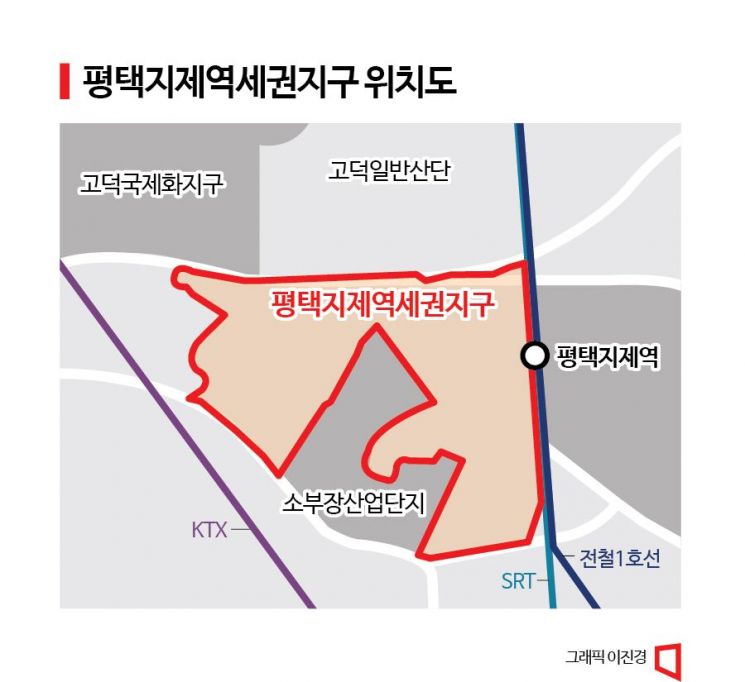
The Jije Station Area is a public housing district covering 4.53 million square meters in Jije, Sindae, Segyo, Mogok-dong, and Godeok-myeon in Pyeongtaek City. In June, the Ministry of Land, Infrastructure and Transport announced the designation plan for the district to support residential areas for advanced industrial complexes. This is part of the so-called 'Semiconductor Mega Cluster' plan that connects Pyeongtaek, Hwaseong, and Yongin. Within the district, 33,000 housing units will be supplied. The Ministry plans to complete the district designation process by next year and start pre-subscription as early as 2026.
The government intends to introduce a 'Compact & Network' development concept in the Jije Station Area. This urban spatial structure vertically develops the city center with high density and horizontally places various urban functions such as living infrastructure close together to improve residents' accessibility.
However, there is considerable opposition within the region to the forced land acquisition method for housing development. The committee stated, "Urban development projects have been underway in the Jije Station Area for over two years, and development permits for surrounding areas have been continuously issued. It is incomprehensible to now pursue forced land acquisition for housing development due to concerns about reckless development."
Lee Ji-eun, the administrative director of the committee, criticized, "Forced land acquisition for housing development against residents' will repeatedly infringes on individual property rights. As seen in the recent missing rebar incident, it ultimately only benefits the public corporation LH."
In the local real estate market, there are also significant concerns about oversupply due to the large-scale housing supply of over 30,000 units. With about 58,000 housing units currently being developed in Godeok International New City (Godeok District), which serves as the hinterland city for the Godeok General Industrial Complex where Samsung Electronics Pyeongtaek Campus is located, additional large-scale housing development could negatively impact the surrounding market.
A representative from a local real estate agency, A Office, said, "If nearly 100,000 housing units are developed in Pyeongtaek City, which has a population of about 500,000, the existing housing market in the old downtown and other areas will be hit. It seems the government is only focused on meeting numbers without considering the local supply and demand situation."
© The Asia Business Daily(www.asiae.co.kr). All rights reserved.

















