The prosecution's investigation into the 'Lime Incident,' which recently resumed, is expected to proceed more intensively and extensively than before.
According to the legal community on the 30th, a representative from the Seoul Southern District Prosecutors' Office stated the day before that they would "thoroughly investigate all raised suspicions" related to the Lime Incident. They added, "The specific direction and scope of the investigation have not yet been determined," without specifying the targets of the investigation. This indicates a determination to examine all suspicions raised regarding the period when Lime Asset Management's redemptions were suspended and to uncover the truth as much as possible. Accordingly, there is growing interest in whether the full story of the 'Lime Incident' will be revealed after about three and a half years.
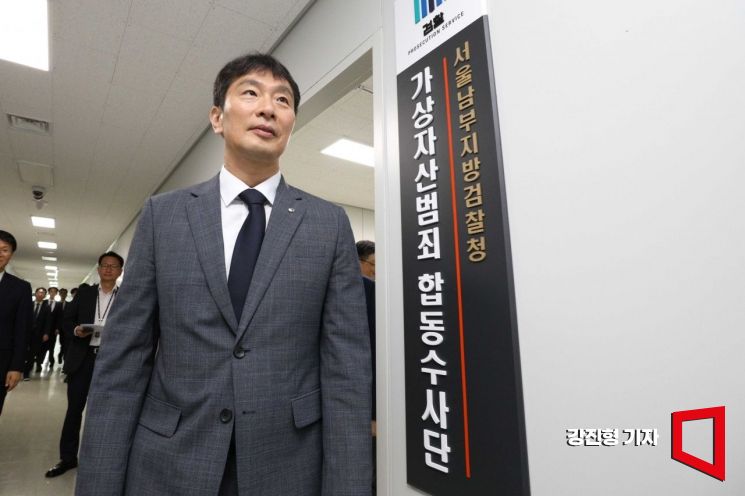 On the 26th of last month, Lee Bok-hyun, Governor of the Financial Supervisory Service, is seen touring the investigation team's office after the plaque ceremony at the launch event of the Joint Investigation Team on Virtual Assets held at the Southern District Prosecutors' Office in Yangcheon-gu, Seoul. Photo by Kang Jin-hyung aymsdream@
The 'Lime Incident' is a representative private equity fund scandal that caused large-scale damage. In January 2019, the suspension of redemptions amounting to 1.6679 trillion KRW caused damage to 4,035 individual investors and 581 corporations who had invested in 173 funds managed by Lime Asset Management. Financial institutions such as Woori Bank (357.7 billion KRW) and Shinhan Financial Investment (324.8 billion KRW) sold Lime funds. The investigation began in early 2020 when investors who suffered losses from the suspension of redemptions filed complaints against Lime and the sellers with the prosecution. After most of the main perpetrators of the Lime Incident were arrested and indicted and found guilty in court, the prosecution intended to conclude the investigation in June. However, the Financial Supervisory Service (FSS) discovered suspicious fund flows through additional inspections of three asset management companies?Lime, Optimus, and Discovery Asset Management?and handed over the materials to the prosecution, leading to a full-scale reinvestigation.
Expanded reinvestigation, lobbying suspicions spreading?
The reinvestigation of the 'Lime Incident' was triggered by the FSS and prosecution discovering multiple suspicious fund flows. In particular, the possibility that money flowed to opposition party figures has shaken the political sphere.
According to the legal community, the Financial Securities Crime Joint Investigation Team (Chief Prosecutor Dan Seong-han) of the Seoul Southern District Prosecutors' Office recently detected circumstances indicating that 2.5 billion KRW out of 30 billion KRW invested by the Lime fund in metropolitan private bonds of the real estate developer Metropolitan was delivered to individuals related to the Democratic Party of Korea, prompting an investigation. The prosecution suspects that this money flowed in the form of checks, coins, and other means. A representative from the Southern District Prosecutors' Office said, "The prosecution had already identified a significant portion and took sufficient measures." However, they added, "It is difficult to disclose what measures were taken." This is interpreted as meaning that they are currently verifying whether such coins existed.
Depending on the progress of the investigation, the Lime Incident could escalate into allegations of 'political lobbying.' The investigation is expected to first identify individuals related to the relationship between Lime and Metropolitan. Lime's actual investment amount in Metropolitan totals 350 billion KRW, and the chairman of Metropolitan, Kim Young-hong (50), is identified as the mastermind behind the Lime Incident. Kim is currently on the run overseas, evading the authorities' encirclement. He is on Interpol's red notice list.
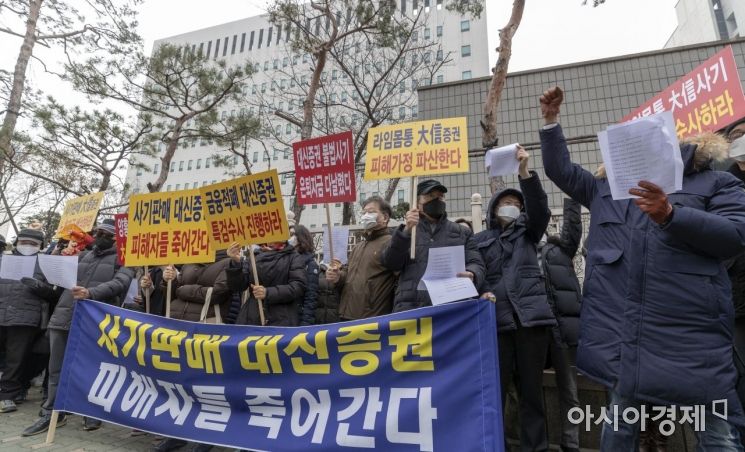 Victims of Lime Asset Management funds hold a press conference in front of the Southern District Prosecutors' Office in Yangcheon-gu, Seoul, urging the prosecution to conduct a prompt investigation. Photo by Yoon Dong-ju doso7@
Need to verify preferential redemption handling
The prosecution is also investigating suspicions of Lime's 'preferential redemptions' and 'embezzlement of investment funds.' According to the FSS investigation, just before Lime's redemptions were suspended in August-September 2019, some individuals, including the National Agricultural Cooperative Federation (200 billion KRW), a certain listed company (50 billion KRW), and Democratic Party lawmaker Kim Sang-hee (200 million KRW), withdrew their investments. The FSS revealed that Lime, facing a shortage of funds to repay, used 12.5 billion KRW from funds invested by other customers in the process. This is so-called 'fund recycling.'
Jung Gu-jip, co-representative of the Lime Fund Fraud Victims' Countermeasure Committee, told this publication in a phone interview, "Investigate whether there were any preferential conditions from the outset when initially investing in Lime." He added, "It is necessary to check how soon after the redemption request the money was received." For open-ended funds where redemption requests are possible, it usually takes more than a month for investors to receive their money after applying for redemption. If lawmakers such as Kim received their money within 2-3 days or 2-3 weeks after applying for redemption, it is highly likely that special conditions or preferential treatment were applied at the time of redemption. The FSS began an inspection of Mirae Asset Securities, which is known to have recommended redemption to lawmaker Kim the day before. The preferential treatment will likely be revealed through this inspection.
Korea Deposit Insurance Corporation may file unjust enrichment lawsuits
The legal community is also paying attention to the Korea Deposit Insurance Corporation's (KDIC) movements related to the 'Lime Incident.' KDIC is the bankruptcy trustee of Lime and may file lawsuits to recover unjust enrichment against institutions and individuals who withdrew investments just before the suspension of redemptions or who gained unfair profits during the suspension process. This means claiming that "you took unjust profits, causing Lime to go bankrupt," and seeking to recover those profits and hold them accountable. If the prosecution's investigation progresses and the substance of unjust enrichment becomes clear, KDIC is expected to take action.
KDIC was appointed trustee when the Seoul Bankruptcy Court declared Lime bankrupt in February. Typically, when a financial company is declared bankrupt, KDIC becomes the trustee. Accordingly, KDIC has the authority to manage and dispose of Lime's assets.
© The Asia Business Daily(www.asiae.co.kr). All rights reserved.


















