Roundworm Parasite Found in Python Brain
"First Case of Python Roundworm Living Inside Human Body"
A shocking discovery was made when an 8 cm long worm was found living inside the brain of a woman in her 60s from Australia who suffered from forgetfulness and depression. This worm is a roundworm typically found in carpet pythons, and this is the first time it has been found in a human body.
 Parasite 'Opidaskaris Robersi' Found Alive in the Brain of an Australian Woman [Photo by Yonhap News, CDC Website]
According to the British daily The Guardian on the 28th (local time), the woman from New South Wales, Australia, was admitted to a local hospital in January 2021 after complaining of symptoms such as abdominal pain, diarrhea, and fever. The following year, she began to show signs of forgetfulness and depression, and an MRI scan at a hospital in Canberra indicated that surgery was necessary. During the operation, neurosurgeon Hari Priya Bandi encountered a shocking scene. Not only was an 8 cm long parasite visible in the patient’s brain, but the worm was alive and wriggling.
Reaffirming the Risks of Shared Habitats Between Humans and Animals
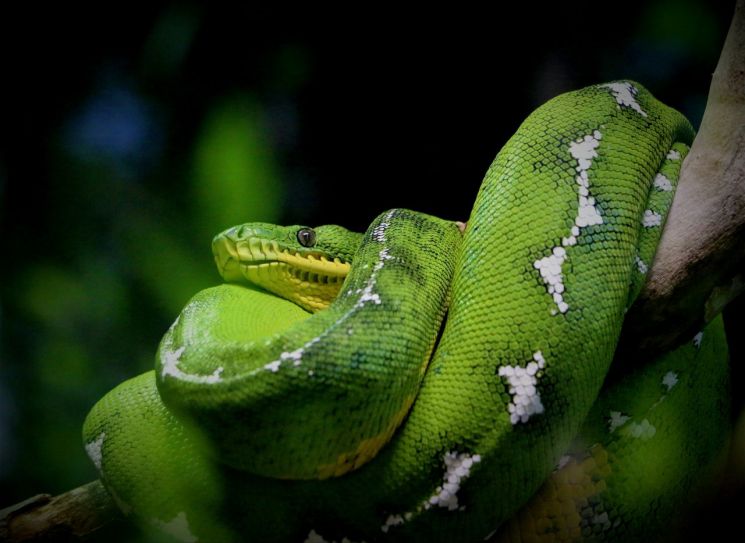 The Commonwealth Scientific and Industrial Research Organisation (CSIRO) of Australia identified this parasite as the roundworm "Opidaskaris Robersi." The photo is not related to the specific content of the article. [Photo by Pixabay]
The Commonwealth Scientific and Industrial Research Organisation (CSIRO) of Australia confirmed that the parasite was a roundworm called Opithascaris robertsi. The woman lived near a lake where carpet pythons mainly inhabit and reportedly collected wild grass from nature to use in cooking.
Experts believe that the roundworm’s eggs were deposited on the grass through carpet python feces, and the woman became infected by ingesting it either directly or indirectly.
Sanjaya Senanayake, an infectious disease specialist at the Australian National University, explained, "We proceeded with additional treatment considering the possibility that other larvae might have invaded the woman’s liver or other organs." He added, "No one would want to be the world’s first patient infected by a roundworm found in carpet pythons. She was very brave."
Senanayake noted that this case demonstrates how dangerous diseases transmitted from animals can be as human and animal habitats increasingly overlap.
According to the U.S. Centers for Disease Control and Prevention (CDC), three-quarters of newly identified infectious diseases are zoonotic viruses transmitted from animals. A representative zoonotic infectious disease is COVID-19.
Senanayake stated, "Opithascaris is not transmissible between humans," but added, "Since snakes and parasites exist everywhere, cases may be identified in other countries within a few years."
© The Asia Business Daily(www.asiae.co.kr). All rights reserved.