The Supreme Court has ruled that when a person who has received a refusal of information disclosure from a public institution files an objection and then files a cancellation lawsuit, the filing period of "within 90 days from the date of knowing the disposition, etc." under the Administrative Litigation Act should be calculated from the date of receiving the notification of the objection result, not from the date of the initial refusal disposition.
According to the legal community on the 28th, the Supreme Court's 3rd Division (Presiding Justice Ahn Cheol-sang) overturned the lower court's dismissal ruling on the grounds that the filing period had expired in the appeal trial of the cancellation lawsuit against the refusal of information disclosure filed by Choi, a member of the Citizens' Coalition for Economic Justice, against Korea Land and Housing Corporation (LH), and remanded the case to the Seoul High Court.
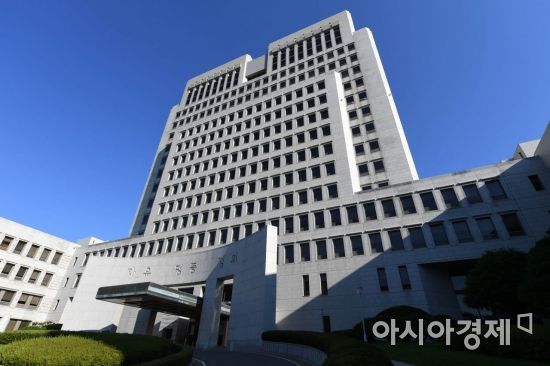
The court stated, "The lower court's judgment contains an error in the legal principle regarding the starting point of the filing period when filing an administrative lawsuit after an objection under the Information Disclosure Act, which affected the judgment."
Choi requested information disclosure from LH on April 10, 2019, demanding the disclosure of apartment construction cost details and other sales cost data, but on April 17 of the same month, LH issued a refusal disposition for information disclosure. The reason was that the information concerned matters related to the corporation's management and business secrets, and disclosure was recognized to pose a significant risk of harming the corporation's legitimate interests.
This non-disclosure decision was delivered to Choi on April 22, 2019. Three days later, Choi filed an objection with LH, but on May 2, 2019, LH dismissed Choi's objection and notified Choi of the objection result on the same day. Subsequently, on July 26, 2019, Choi filed a lawsuit against LH to cancel the refusal disposition for information disclosure.
The issue in the trial was whether Choi's lawsuit was filed within the proper filing period.
The Information Disclosure Act stipulates that if there is an objection to a public institution's decision on information disclosure, an administrative lawsuit can be filed according to the Administrative Litigation Act. Article 20, Paragraph 1 of the Administrative Litigation Act, which sets the filing period, states, "A cancellation lawsuit must be filed within 90 days from the date of knowing the disposition, etc." The proviso in the same paragraph provides that if an administrative appeal can be filed, the period should be calculated from the date of receiving the official copy of the administrative appeal decision.
In this case, if the period is calculated from the date Choi first received the refusal disposition from LH, the lawsuit was filed after 90 days, making it an improper filing. However, if calculated from the date of receiving the objection result notification, the lawsuit was filed within the proper period.
The first trial court ruled in favor of Choi.
The court did not accept LH's claims that the filing period had expired or that the information subject to non-disclosure could affect LH's business if disclosed.
It canceled the refusal disposition for the information requested by Choi, except for some information for which there was insufficient evidence regarding the likelihood that LH possessed or managed it.
However, the result was reversed in the second trial. The second trial court canceled the first trial's ruling and dismissed Choi's claims on the parts where LH had lost.
The reason was that if calculated from the date the refusal disposition was first notified, the lawsuit was filed after the 90-day filing period, making it an improper lawsuit.
The court reasoned that since the Information Disclosure Act allows filing an administrative lawsuit without going through an objection, it differs in nature from an administrative appeal, and the objection does not affect the filing of an administrative appeal or administrative lawsuit. In other words, if an administrative appeal is filed, the filing period should be calculated from the date of receiving the official copy of the appeal decision, but in the case of an objection, the period should be calculated from the date of the initial refusal disposition.
Article 18, Paragraph 4 of the Information Disclosure Act requires public institutions to inform the requester that they can file an administrative appeal or administrative lawsuit if the objection is dismissed or rejected. This is to inform that even if an objection is filed, one can still appeal through administrative appeal or administrative lawsuit, and it should not be interpreted as treating the objection decision as an independent administrative disposition or calculating the administrative appeal filing period or administrative lawsuit filing period based on the objection decision.
However, this second trial judgment was overturned again by the Supreme Court.
The court considered that under the Information Disclosure Act, ▲ an objection can be filed within 30 days from the date of receiving the notification of the decision on information disclosure or 20 days after the information disclosure request, ▲ the public institution must decide on the objection within 7 days from the date of receiving it and notify the requester in writing without delay, and ▲ if the public institution dismisses or rejects the objection, it must inform the requester that they can file an administrative appeal or administrative lawsuit. Based on these points, the court ruled that the filing period should not be calculated independently of the objection, contrary to the second trial's judgment.
The court concluded, "Considering the content and purpose of the related laws, it is reasonable to view that when a requester files a cancellation lawsuit after filing an objection to a public institution's non-disclosure decision and receiving the result notification of the objection, the filing period should be calculated from the date of receiving the notification of the objection result."
© The Asia Business Daily(www.asiae.co.kr). All rights reserved.

















