A study has found that the reason cats particularly like tuna among fish is due to its "umami" flavor. Cats' tongues have the necessary structure to detect the umami taste of tuna.
On the 27th, the science journal Science introduced research results showing that cats' tongues have evolved to prefer specific components that produce the umami flavor in tuna.
The paper, published by Dr. Scott McGrane's research team at Waltham Petcare Research Institute under Mars Petcare UK, a British pet food manufacturer, was released on the 8th through the international academic journal Chemical Senses.
It is generally known that cats like fish and particularly favor tuna, but when they started liking it remains a mystery. Cats began living with humans about 10,000 years ago in the deserts of the Middle East, where fish was hard to come by.
Academia suggests that cats living in Middle Eastern ports during the medieval period likely encountered fish, including tuna, by eating scraps left by fishermen.
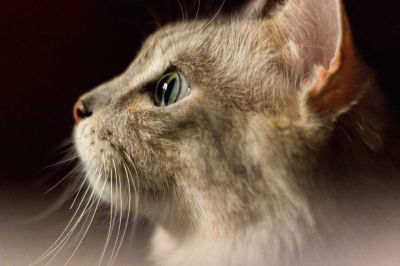
It is already well known that cats' tastes differ from humans'. Cats lack the key protein to detect sugar, so they cannot taste sweetness, and they have fewer bitter taste receptors than humans, making them less sensitive to bitterness. Instead, like other carnivores, they are known to be sensitive mainly to umami, which is typically found in meat.
On the tongues of humans and various animals, taste buds contain the genes ‘Tas1r1’ and ‘Tas1r3’, which together synthesize the umami taste receptor protein. Taste buds are areas on the tongue where sensory cells cluster. In 1985, it was discovered that cats have the ‘Tas1r3’ gene on their tongues, but whether they had the other gene was not confirmed.
McGrane's team hypothesized that cats have a more developed umami taste than sweet or bitter tastes and analyzed the tongue of a six-year-old male cat euthanized for health reasons. They discovered for the first time that cats have both ‘Tas1r1’ and ‘Tas1r3’ genes in their taste buds, synthesizing the umami taste receptor protein just like humans.
However, while humans experience umami when amino acids first bind to the umami receptor and then nucleotides, which are DNA units, amplify the response, in cats, nucleotides activate the receptor first, followed by amino acids enhancing the effect.
Additionally, the umami flavor preferred by cats differed from the general umami taste. Experiments with 25 cats showed they preferred the umami combination of histidine (a type of amino acid) and inosine monophosphate (a type of nucleotide), substances particularly abundant in tuna.
The research team stated, "We confirmed that umami is as important a motivator for cats as sweetness is for humans," adding, "This trait can be utilized in developing pet food and veterinary medicines."
© The Asia Business Daily(www.asiae.co.kr). All rights reserved.
!["The Woman Who Threw Herself into the Water Clutching a Stolen Dior Bag"...A Grotesque Success Story That Shakes the Korean Psyche [Slate]](https://cwcontent.asiae.co.kr/asiaresize/183/2026021902243444107_1771435474.jpg)
















