Fishermen and Residents Near Nuclear Plant File Lawsuit Against Government and TEPCO
"Following Nuclear Accident, Discharge of Contaminated Water Is Double Negligence," Criticize
Amid the Japanese government and Tokyo Electric Power Company (TEPCO) announcing the discharge of contaminated water from the Fukushima Daiichi Nuclear Power Plant at 1 p.m. on the 24th, residents of Fukushima Prefecture and nearby areas have announced plans to file a lawsuit demanding the suspension of the release.
On this day, Asahi Shimbun reported on a press conference held the previous day in Iwaki City by fishermen and residents near the nuclear power plant in Fukushima Prefecture and Iwaki City. They are demanding the cancellation of the approval granted by the Nuclear Regulation Authority of Japan to TEPCO for the plan to discharge contaminated water into the ocean, and plan to file a lawsuit at the Fukushima District Court requesting TEPCO to prohibit the discharge of contaminated water. The filing date is scheduled for the 8th of next month, and this lawsuit demanding a ban on the discharge of contaminated water is the first of its kind nationwide in Japan.
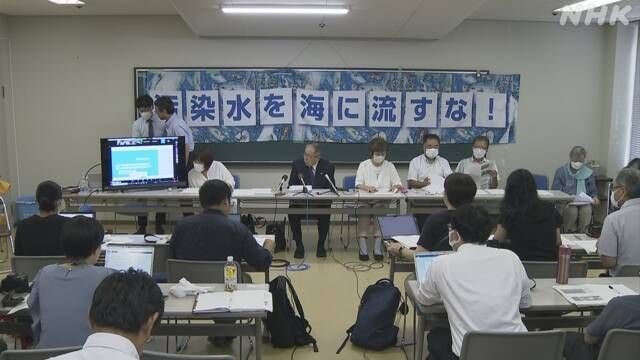 On the 23rd, fishermen and residents from the affected areas of Fukushima Daiichi Nuclear Power Plant held a press conference announcing their intention to file a lawsuit against the Japanese government and Tokyo Electric Power Company. (Photo by NHK)
The fishermen and residents in the affected areas cite a promise made in August 2015 between the Japanese government, TEPCO, the Fukushima Fisheries Cooperative Federation, and the National Federation of Fisheries Cooperative Associations as the basis for prohibiting the discharge. The core of the promise is that no disposal of contaminated water would be carried out without the understanding of the concerned parties.
They argue that since the Japanese government proceeded with the discharge of contaminated water without persuading the fishermen, the government has effectively broken this promise. Plaintiff Shigeo Suzuki stated, "Breaking the promise is unacceptable. It renders all previous efforts futile and rather delays the revitalization of Fukushima."
The plaintiffs' legal team also emphasized at the press conference, "The state and TEPCO have already caused damage due to the nuclear accident and are now causing additional harm through the discharge of contaminated water. This is double negligence," and added, "The government needs to consider alternatives that do not impact the environment."
They also mentioned the damage fishermen would suffer after the discharge of contaminated water. The legal team said, "If contaminated water is discharged, it will become significantly difficult for fishermen to sell seafood, and residents will experience anxiety about potential health risks from consuming seafood," adding, "This infringes on the right to live peacefully."
They plan to continue persuading fishermen and residents until the day of filing the lawsuit, gathering more than 100 plaintiffs to proceed with the case. Plaintiff Chiyo Oda, residing in Iwaki City and participating in the press conference, appealed, "Please do not pollute the sea."
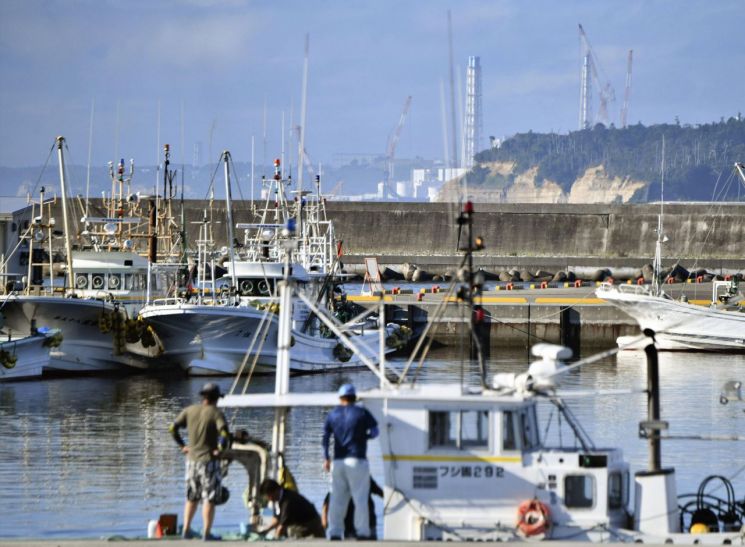
This suggests that the Japanese government's efforts to appease local public opinion have been largely ineffective. Previously, the government announced plans to actively respond by establishing an 80 billion yen fund to address damage caused by rumors (fake news). TEPCO also stated it would set up a cross-departmental task force (TF) directly under the president to handle compensation.
Additionally, on the previous day, Minister of Economy, Trade and Industry Yasutoshi Nishimura met with heads of retail industry groups, including the chairman of the Japan Chain Stores Association, and appealed, "We hope you will definitely handle Sanriku and Joban seafood," and "We will ensure safety and disclose data related to the discharge of contaminated water to reassure consumers." Sanriku and Joban refer to the eastern parts of the Tohoku region, including Fukushima, Miyagi, and Iwate Prefectures.
Despite domestic opposition, the Japanese government is pushing forward with the discharge of contaminated water, and Japanese media are paying close attention to whether court rulings might overturn this decision. At 9 a.m. on the same day, TEPCO judged that weather conditions and the tritium concentration in the diluted contaminated water met safety standards and announced it would begin discharging the contaminated water from 1 p.m. that day.
© The Asia Business Daily(www.asiae.co.kr). All rights reserved.