Novo Nordisk Obesity Drug Gains Global Popularity
Currency Strengthens Amid Pharmaceutical Industry Export Boom
Interest Rates Kept Low to Reduce Currency Value
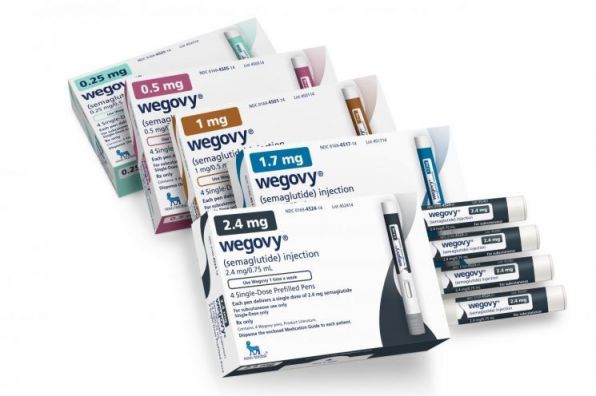
Elon Musk, CEO of Tesla, and model Kim Kardashian are known to have used the diet drug 'Wegovy,' which was developed by the Danish pharmaceutical company Novo Nordisk.
As global demand for diet drugs has surged, Novo Nordisk has grown into a giant company that now influences Denmark's economy. The amount of foreign currency the company earns is so large that Denmark's currency value has risen, forcing the central bank to keep the benchmark interest rate low.
 Kim Kardashian is known to have lost weight using Novo Nordisk's obesity treatment drug Wegovy.
 [Photo by Instagram]
According to the US Wall Street Journal (WSJ), Novo Nordisk's obesity treatment Wegovy is gaining tremendous popularity worldwide, including in the United States. In the second quarter of this year alone, sales reached $735 million, a sixfold increase compared to the same period last year. Another obesity treatment, Ozempic, recorded sales of $2.155 billion, a 59% increase year-over-year.
In August, Novo Nordisk's market capitalization averaged $420.3 billion, surpassing Denmark's gross domestic product (GDP) of $406 billion. While it is not entirely appropriate to compare a company's market capitalization directly with a country's GDP, this indirectly highlights the significant position Novo Nordisk holds within Denmark.
Surge in Exports Due to Popularity of Obesity Drugs... Interest Rates Adjusted to Lower Currency Value
The popularity of obesity treatments is even affecting Denmark's macroeconomic situation. Danske Bank, Denmark's largest bank, recently analyzed that "the increasing role of the pharmaceutical industry within the Danish economy is putting upward pressure on the currency value," adding that "this is directly related to the lowering of policy interest rates."
Denmark uses its own currency, the Danish krone, but to maintain export competitiveness with its neighboring country and largest trading partner, the Eurozone, it keeps its currency slightly weaker than the euro. For this reason, Denmark's central bank tends to align its benchmark interest rate with the European Central Bank (ECB) policy rate.
However, with the strength of the pharmaceutical industry, including Wegovy, export volumes have increased, leading to an inflow of dollars into Denmark and a rise in the krone's currency value. This has created a paradoxical situation where the benchmark interest rate must be kept somewhat low to weaken the krone relative to the euro.
Regarding this, the WSJ stated, "The Danish central bank is responding by keeping interest rates lower than the ECB to weaken the krone," and evaluated that this response could help stabilize the housing market.
© The Asia Business Daily(www.asiae.co.kr). All rights reserved.


















