Environmental Group "IAEA Overlooks Japan's Contaminated Water Discharge Without Proper Review"
"Japan's recent decision could set a bad precedent."
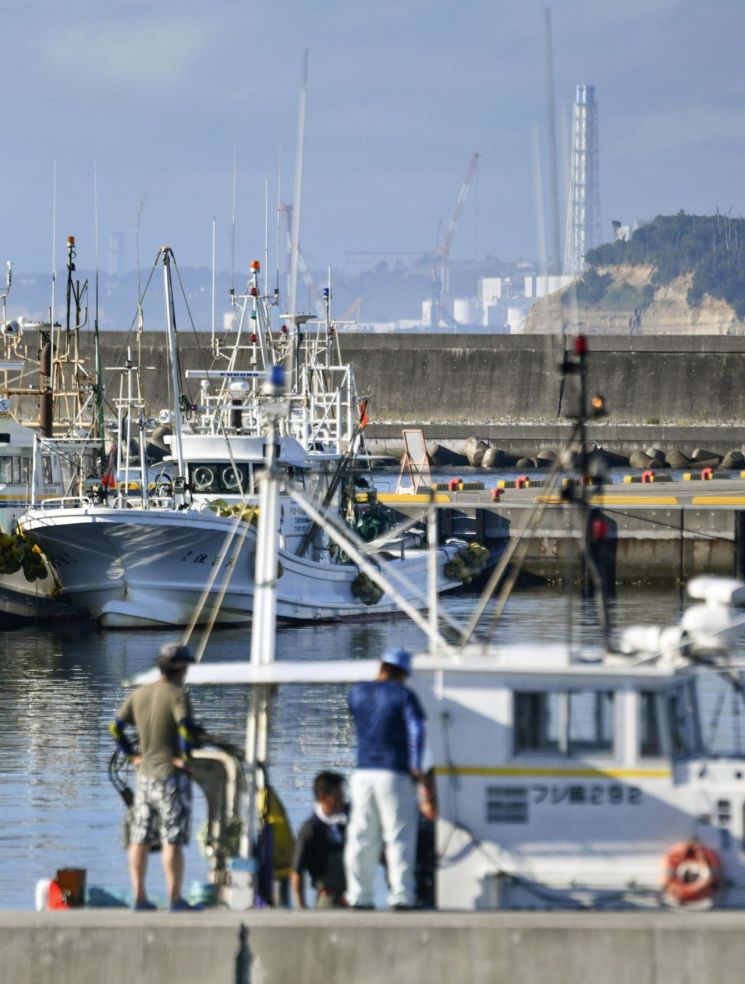
As the Japanese government plans to discharge contaminated water from the Fukushima nuclear power plant on the 24th, foreign media are paying attention to the repercussions. Asbee Brown, senior researcher at the radiation monitoring organization SafeCast, stated in a New York Times (NYT) op-ed on the 22nd (local time) that Japan's decision could set a bad precedent.
He argued, "The Japanese government and Tokyo Electric Power Company decided on the discharge through a process that was neither fully transparent nor sufficiently inclusive of key stakeholders in Japan and abroad," adding, "They have planted the seeds for decades of distrust and controversy." He continued, "Japan has set a precedent for other governments that could be even less transparent," emphasizing, "This is especially dangerous in Asia, where more than 140 nuclear power plants are already in operation."
Brown noted that China and India are leading the construction or planning of dozens of nuclear power plants, saying, "If even Japan, a country with an internationally respected culture and economy, can discharge contaminated water and get away with it, what can stop other countries?"
The environmental organization Greenpeace claimed that the International Atomic Energy Agency (IAEA) failed to properly review and overlooked Japan's decision to discharge contaminated water. In a statement released that day, Greenpeace said, "The IAEA failed to investigate the Advanced Liquid Processing System (ALPS) and completely ignored the melted high-radioactivity fuel debris," adding, "The discharge plan did not conduct a comprehensive environmental impact assessment." They emphasized, "While the IAEA has no obligation to protect the world's marine environment, it must not encourage its degradation."
U.S. CNN reported that the Japanese government and the IAEA argue that tritium, the core issue in the contaminated water controversy, naturally occurs in environments such as rain and tap water, and therefore the discharge is safe. However, experts' opinions are divided. CNN stated that most national agencies agree that small amounts of tritium are not significantly dangerous, but it can be hazardous when ingested in large quantities. Some scientists have expressed concerns that diluting contaminated water could harm marine life if pollutants accumulate in already vulnerable ecosystems.
CNN also mentioned that an expert supporting Pacific island nations expressed that the decision was hasty and that there is still insufficient research and data to assess the long-term effects of tritium.
Experts also emphasized that nuclear power plants worldwide, including in the United States, regularly discharge treated water containing low concentrations of tritium. Tony Hooker, a nuclear expert at the University of Adelaide in Australia, explained in an interview with the UK Guardian, "Tritium has been discharged over the past several decades without evidence of harm to the environment or health."
© The Asia Business Daily(www.asiae.co.kr). All rights reserved.

















