Director Kang Dong-woo of Seonguihak Clinic
"Sexual dysfunction side effects may exceed 10%"
"May not recover even after stopping medication"
"Sexual dysfunction side effects caused by taking hair loss medication can occur in more than 10% of cases. Once sexual dysfunction side effects occur, they may not return even if the medication is stopped, so caution is necessary."
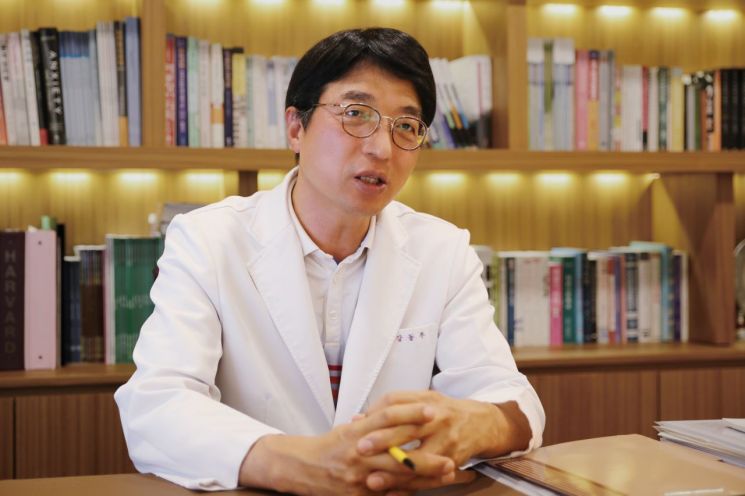
On the 4th, Kang Dong-woo, director of Kang Dong-woo Sexual Medicine Clinic, recognized as Korea's first couple with PhDs in sexual medicine and a leading sexual medicine expert in the country, told Asia Economy, "Hormones, if tampered with recklessly, will exact a price," adding, "The U.S. Food and Drug Administration (FDA) has added a warning that sexual dysfunction caused by side effects may not recover even after stopping hair loss medication, which was not included when the drug was first released, so caution is needed." He emphasized the need to raise awareness about indiscriminate use of hair loss medication and the resulting sexual dysfunction side effects such as erectile dysfunction, decreased libido, and ejaculation disorders.
The biggest cause of male pattern baldness (androgenetic alopecia) is dihydrotestosterone (DHT). Testosterone, a male hormone that triggers and promotes secondary sexual characteristics, binds with 5-alpha reductase (5AR) enzymes found in hair follicles and sebaceous glands to become DHT. DHT causes hair follicles on the scalp to shrink and induces miniaturization, leading to hair loss. Therefore, currently used male pattern hair loss treatments such as finasteride and dutasteride work by inhibiting the action of 5AR to prevent hair loss. Director Kang pointed out, "DHT is not just a substance that causes hair loss but plays an important role in secondary sexual characteristics and sexual function," adding, "It is one of several male hormones, and disrupting the balance among these hormones can cause problems." There are concerns that mental issues such as depression and suicidal impulses, including the representative side effect of sexual dysfunction, may also arise.
DHT, the cause of male pattern baldness, is divided into type 1 and type 2. Finasteride blocks only type 2, while dutasteride blocks both types 1 and 2. However, unlike finasteride, which is approved by the FDA as a hair loss treatment, dutasteride is only approved in Korea and Japan. According to data approved by the Ministry of Food and Drug Safety, after 12 months of administration, 3.8% of the treatment group and 2.1% of the placebo group experienced one or more sexual function-related adverse reactions with finasteride. For dutasteride, erectile dysfunction was reported in 5% of the treatment group and 3% of the placebo group.
Director Kang explained, "In fact, these ingredients originated from research on disorders," adding, "They were developed after observing individuals whose secondary sexual characteristics did not properly develop." The research began with the study of "Guevedoces," a condition in the Dominican Republic where male fetuses with XY chromosomes are born with underdeveloped penises and are mistaken for girls. Guevedoces is caused by a genetic deficiency of 5AR, resulting in no DHT production. Observing that these individuals do not experience significant hair loss as they age and have abnormally small prostates led to the development of prostate enlargement drugs and hormone-based hair loss medications with the same ingredients.
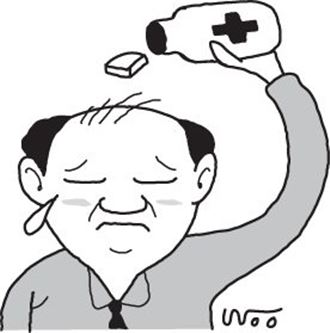
Regarding the possibility of side effects, he emphasized the need to consider individual factors such as age. Director Kang said, "Not everyone who takes hair loss treatments will develop erectile dysfunction, but about 10% should be cautious," adding, "Those who originally have poor sexual function such as premature ejaculation or erectile dysfunction, middle-aged or older individuals whose sexual function may decline, or those whose sexual function worsens after taking hair loss medication should avoid using it." In fact, the approved indications for male pattern hair loss treatment in adult men are finasteride for ages 18 to 41 and dutasteride for ages 18 to 50. He also mentioned, "Recently, a topical finasteride product applied directly to the scalp was introduced domestically, and clinical trial results show that the overall frequency of side effects is lower compared to oral medication, opening new possibilities for hair loss treatments."
Director Kang also pointed out, "Many people believe that sexual function will return if they stop taking the medication, but in many cases, it does not recover on its own." This is also stated in the approval information for both ingredients, indicating that sexual dysfunction may persist even after discontinuation. He said, "Sexual function is ultimately a function, and 'performance anxiety' about failing repeatedly can worsen dysfunction," adding, "This aspect must also be addressed when treating sexual dysfunction side effects."
Director Kang emphasized, "Prescribing erectile dysfunction medication to treat erectile dysfunction caused by hair loss medication is not a causal treatment," adding, "Sexual dysfunction side effects caused by hair loss medication require drug therapy or separate hormone therapy to restore hormonal balance, along with correcting diet and lifestyle habits, and rehabilitation treatment to restore the balance of sexual response by improving overlapping underlying issues such as vascular or psychological problems." He stressed, "Since this is a somewhat complex field that general physicians may find difficult to handle, the role of specialists who have thoroughly studied sexual medicine is necessary."
© The Asia Business Daily(www.asiae.co.kr). All rights reserved.
![Clutching a Stolen Dior Bag, Saying "I Hate Being Poor but Real"... The Grotesque Con of a "Human Knockoff" [Slate]](https://cwcontent.asiae.co.kr/asiaresize/183/2026021902243444107_1771435474.jpg)
















