Public Debt-to-GDP Ratio Surges to 100.8%
Public debt in the United Kingdom has surpassed the size of the economy for the first time in 60 years. This is the result of expansive fiscal policies relative to the economic scale implemented during the COVID-19 pandemic and the Ukraine war. As soaring government and public institution debt worsens fiscal soundness, analyses suggest that the UK, following the United States, is exposed to the risk of credit rating downgrades.
According to the UK Office for National Statistics (ONS) on the 20th (local time), the UK's public debt swelled to ?2.6 trillion (approximately 4,442 trillion KRW) as of the end of June, surpassing the annual Gross Domestic Product (GDP). The ratio of public debt to GDP in the UK surged to 100.8%. This is the first time in over 60 years since World War I and II that the UK's public debt has exceeded the size of its economy.
During the COVID-19 pandemic and the Russia-driven energy price surge, the government expanded fiscal policies by injecting public funds to support households and businesses, resulting in a more than 40% increase in the UK's public debt. Last month, the UK Office for Budget Responsibility (OBR) warned that "(if the current severe fiscal deficit situation is not corrected) the UK's public debt could surge to more than three times its GDP within the next half-century."
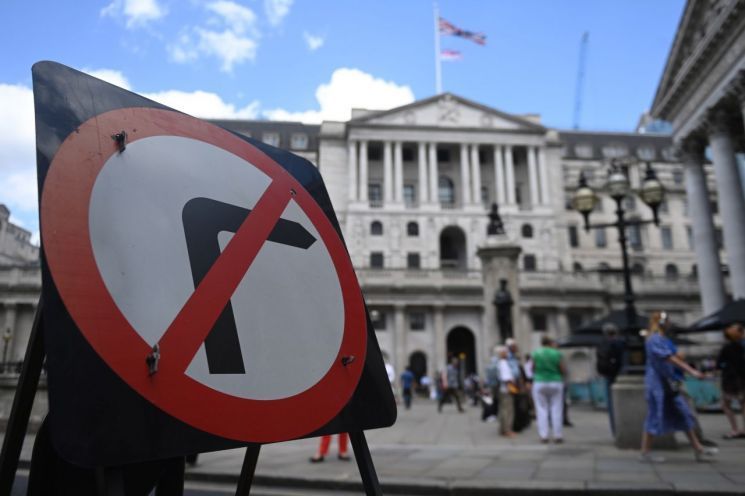
The deterioration of fiscal soundness has triggered red flags regarding the possibility of credit rating downgrades. Bloomberg reported earlier this month that after Fitch unexpectedly downgraded the United States' top sovereign credit rating, questions have arisen about the UK's credit rating. At that time, Fitch downgraded the US long-term foreign currency issuer default ratings (IDRs) from 'Triple A (AAA)' to 'AA+' citing a significant expansion of the US fiscal deficit over the next three years. Sam Ziff, Head of FX Strategy at JP Morgan Private Bank, pointed out, "Unlike the US dollar, the British pound does not have reserve currency status, so it may be more vulnerable to debt concerns."
Currently, the UK spends 10.4% of government revenue on interest payments, the highest proportion among advanced countries, Bloomberg noted. Maxim Livnikov, Senior Analyst for UK Government Bonds at S&P, said, "The current fiscal situation is putting pressure on the credit rating," and hinted at the possibility of a downgrade by stating, "There is no way out of the current situation."
The UK lost its top credit ratings from the three major global rating agencies a decade ago. After the 2009 global financial crisis, Moody's and Fitch stripped the UK of its top AAA rating, and following Brexit and COVID-19, the UK's credit ratings have continued to decline. After Brexit in 2016, due to risks such as worsening external financing conditions, S&P downgraded the UK's credit rating two notches from 'AAA' to 'AA', and Moody's lowered the rating one notch from 'Aa2' to 'Aa3' citing Brexit concerns and deteriorating fiscal capacity due to the COVID-19 shock.
The UK currently maintains an 'investment grade' rating from all three major rating agencies, but all outlooks are 'negative' (Fitch and S&P). S&P and Moody's are scheduled to update their evaluations of the UK's sovereign credit rating on October 20, and Fitch on December 1.
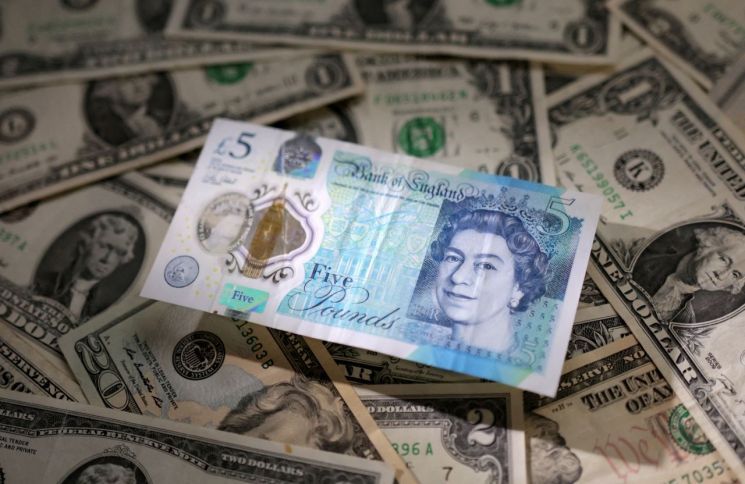
Inflation, which is not easily controlled, is further pressuring the UK economy. Eiko Siebert, Director of Sovereign and Public Sector at German rating agency Scope Ratings, pointed out, "If inflation becomes entrenched, it will place a more serious burden on the UK's public debt." To combat inflation, the UK has raised its base interest rate 14 consecutive times, reaching the highest level in 15 years since April 2008 (5.25% annually). The Bank of England (BOE) was the first major central bank to shift to tightening in December 2021, raising the base rate from 0.1% without pause.
However, as inflationary pressures have not easily eased, financial markets have raised their forecasts for the peak base rate, with some expecting the rate hike cycle to reach an annual 6%, the highest since 2001. Bloomberg reported, "The UK is expected to reach a 6% interest rate by February next year," adding, "In this case, the UK economy will face mass unemployment, and the BOE will have no choice but to induce a recession to slowly stabilize prices."
© The Asia Business Daily(www.asiae.co.kr). All rights reserved.
![Clutching a Stolen Dior Bag, Saying "I Hate Being Poor but Real"... The Grotesque Con of a "Human Knockoff" [Slate]](https://cwcontent.asiae.co.kr/asiaresize/183/2026021902243444107_1771435474.jpg)

















