In July, nationwide housing prices turned to an increase for the first time in 14 months. The Seoul metropolitan area, including Seoul, rose for two consecutive months, while the provinces saw a reduction in the rate of decline.
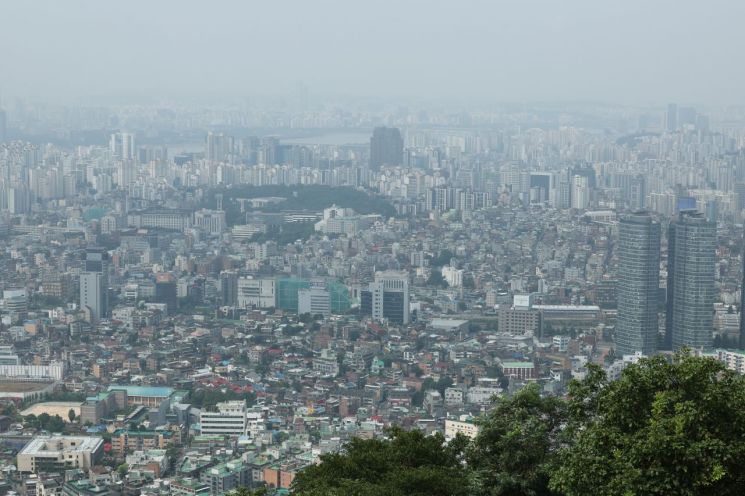
On the 16th, the Korea Real Estate Board announced that according to the July nationwide housing price trend survey, the comprehensive housing price index (including apartments, multiplex houses, and detached houses) rose by 0.03%, reversing the previous month's decline of -0.05%. Since January this year (-1.49%), the rate of decline had been narrowing, marking an increase for the first time in 14 months since May last year (0.01%).
By region, Seoul (0.05%→0.15%) and the metropolitan area (0.03%→0.15%) rose for two consecutive weeks, and the provinces (-0.13%→-0.09%) also saw a reduced rate of decline.
In Seoul, after stabilizing at 0.00% in June last year and falling by 0.09% in July, prices turned to an increase last month for the first time in a year and continued to rise. By district, Songpa-gu (0.56%), Gangnam-gu (0.33%), Gangdong-gu (0.29%), and Seocho-gu (0.16%) showed strength with rising transactions in major complexes, while Yeongdeungpo-gu (0.21%) rose mainly around Yeouido-dong, where redevelopment projects are underway. In the northern area, Seongdong-gu (0.34%) and Mapo-gu (0.33%) rose mainly in newly built complexes.
In Gyeonggi Province (0.16%), prices rose mainly in preferred complexes or large complexes near stations in Hanam-si (1.63%), Gwacheon-si (1.47%), and Hwaseong-si (1.33%), while Incheon (0.14%) was led by Yeonsu-gu (0.86%) and Jung-gu (0.57%), where residential conditions are favorable. The Real Estate Board explained, "In Seoul, price recovery expectations played a role, and in Incheon and Gyeonggi, prices of major complexes rose after the exhaustion of urgent sale properties."
Among the five major metropolitan cities in the provinces, only Daejeon (-0.07%→0.01%) turned to an increase. Busan (-0.29%→-0.23%) and Daegu (-0.23%→-0.15%) saw a slowdown in the rate of decline. Sejong (0.82%) rose for the fourth consecutive month.
Last month, the nationwide comprehensive jeonse (long-term lease) price fell by 0.04%, narrowing the decline from the previous month (-0.16%). Seoul turned to an increase from -0.06% to 0.12%, and supported by this, the metropolitan area also turned to an increase from -0.09% to 0.10%. The provinces reduced the rate of decline from -0.23% to -0.16%. The Real Estate Board explained, "As tenant demand increased mainly in areas with favorable residential conditions, Seoul rose mainly in large complexes and mid-to-small sized units, while Incheon showed mixed trends with some areas experiencing continued inventory accumulation and price declines."
In Seoul, in the northern area, Seongdong-gu (0.39%) and Mapo-gu (0.27%) rose, while Nowon-gu and Gangbuk-gu (each -0.05%) fell. In the southern area, Gwanak-gu and Geumcheon-gu (each -0.05%) and Guro-gu (-0.01%) declined, but Songpa-gu and Gangdong-gu (each 0.40%) and Gangnam-gu (0.28%) rose. Jeonse prices in Gyeonggi rose by 0.13%, while Incheon fell by 0.11%. In the provinces, areas affected by supply volume continued to decline, with Daegu (-0.37%) and Ulsan (-0.31%) falling.
In July, nationwide monthly rent prices fell by 0.05%. In the metropolitan area (-0.03%), regional fluctuations varied: Seoul changed from -0.01% to 0.03%, Gyeonggi from -0.15% to -0.03%, and Incheon from -0.19% to -0.15%. The provinces (-0.09%→-0.06%) saw a reduced rate of decline.
© The Asia Business Daily(www.asiae.co.kr). All rights reserved.
![Clutching a Stolen Dior Bag, Saying "I Hate Being Poor but Real"... The Grotesque Con of a "Human Knockoff" [Slate]](https://cwcontent.asiae.co.kr/asiaresize/183/2026021902243444107_1771435474.jpg)
















